



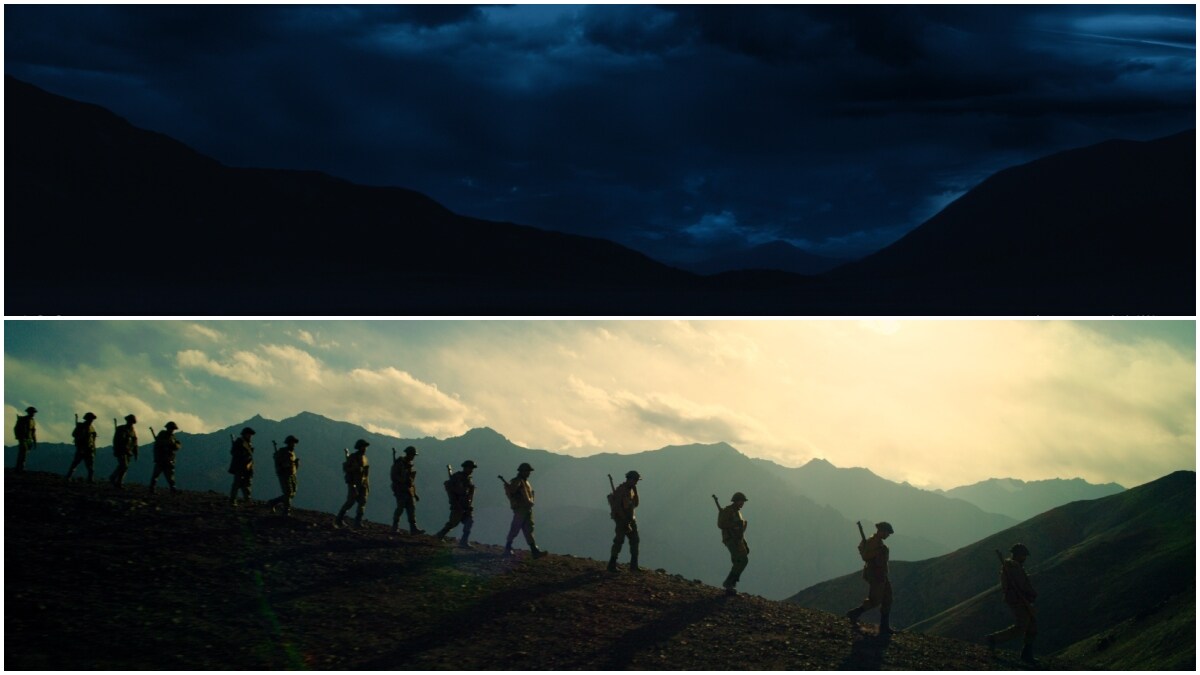
With the release of Farhan Akhtar-starrer '120 Bahadur', the unparalleled story of the Charlie Company, 13 Kumaon Regiment, will reach more parts of the world. While a cliché often used in military action dramas, fighting to the last round and last man happens rarely in modern battlefields. But that is exactly what Major Shaitan Singh's men did against the numerically superior Chinese PLA during the Battle of Rezang La.
With no artillery support and limited supplies, Major Singh's men stood their ground—hell-bent not to let the invaders pass. When their guns had no more bullets, they charged at the enemy with bayonets. They wrestled and smashed the heads of the Chinese together when their daggers could not penetrate the thick gear. Such was the ferocious fight that all except six of the 120 Bahadurs (courageous/valiant) had laid down their lives, including Major Shaitan Singh.
ALSO READ | War of 1962: How Kumaoni, Sikh, Gorkha soldiers fought back valiantly in Namti
Major Shaitan Singh was posthumously awarded the Param Vir Chakra, as his Company's stand cost the PLA around 1,400 men.
Why India had to defend Rezang La?
What made the snowy ridges of Rezang La special? Why did Major Shaitan Singh's men decide to stand and fight instead of falling back? From a strategic perspective, the area was important for India.
Rezang La is a pass located in the Chushul sector of Ladakh. It was key for India to protect Rezang La as it led to the vital all-weather landing strip at Chushul. For India, it was the pivotal point of frontier posts in the sector which offered an alternate route into Tibet from Leh in the west, The Hindu said in a report. During the war, China had built a road from Rudok in Tibet right up to the Spanggur Gap, which is not far from Chushul. PLA's battle tanks could move through these roads and by October 1962, they managed to overrun Indian border posts on the line between Daulat Beg Oldi near the Karakoram Pass to Damchok astride the Indus on the border with Tibet. As a result, Chushul remained the only Indian position east of Ladakh, the report said. The terrain favoured further Chinese advancement towards Chushul, and India was becoming increasingly vulnerable.
Aftermath
Originally, it was the 1/8 Gorkha Rifles that was in charge of Chushul's defences. But New Delhi soon realised it was going to be a major PLA offensive in the region and reassigned the 13 Kumaon from Baramullah to the crucial sector. They hardly got time to get acclimatised with the surroundings as trenches and bunkers had to be ready in Rezang La, which was 3,000 yards long and 2,000 yards wide and at an average height of 16,000 feet. By late October, the Indian defenders had set up their headquarters at Chushul—waiting for the imminent Chinese push.
ALSO READ | Revisiting 1962 war with China: When India's prestige was in a shambles
In January 1963, a shepherd wandered onto Rezang La. He found many of the fallen soldiers' bodies in the battlefield frozen. Many of them even had rifles in their hands, reports said. Following the discovery, arrangements were then made to recover the dead under International Red Cross supervision.
