



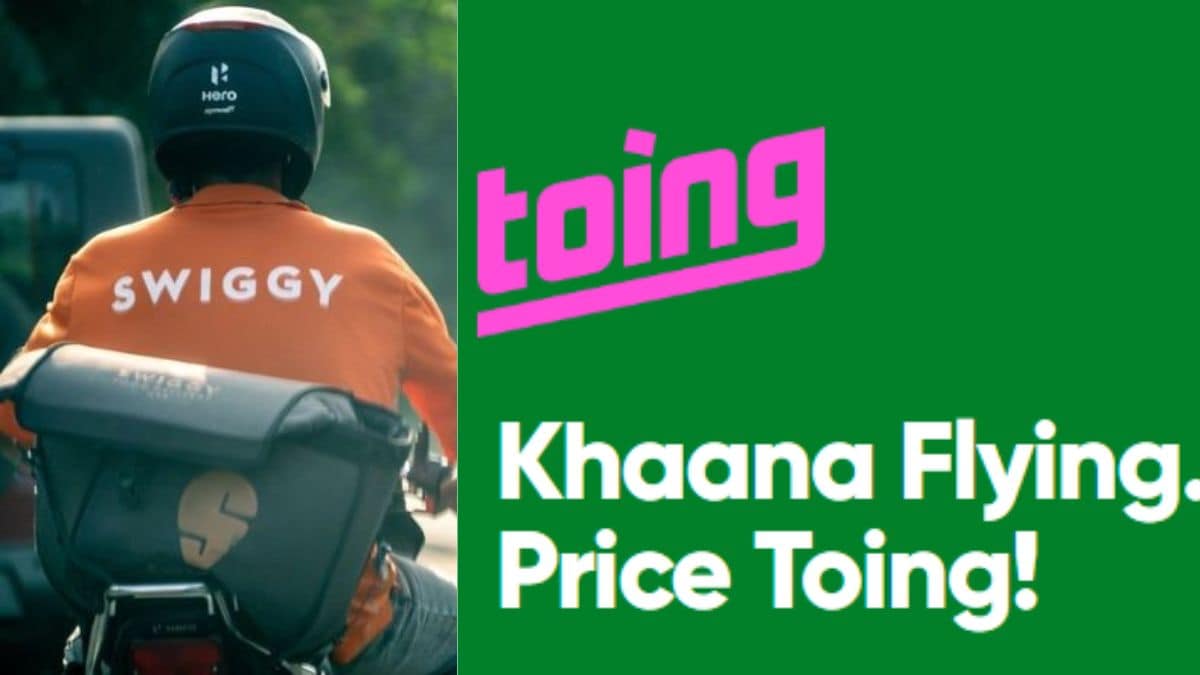
A year after the strange introduction of Toing, both investors and consumers remain puzzled about Swiggy’s own low-cost food delivery app. While investors struggle to find a reason for the cash-burning machine Swiggy has wilfully invented, customers are left in a dilemma over which app to choose.
For instance, my mother downloaded the app just to compare prices and restaurant choices with Swiggy, while my next-door neighbour has abandoned the original and now solely relies on Toing to order food.
In a shareholder’s letter, Swiggy acknowledged this, admitting that its new app, which offers dishes priced between ₹49 and ₹199, has driven customers away from the core app.
“In the short term, there was some interplay of demand levers on one platform vs the other which was hard to predict as we built out both the offerings,” the company said.
So why is Swiggy taking the risk with a capital-intensive business that can potentially eat into its own core offering? Is it creating a new, affordable market for budget-conscious customers or moving its own high-value customers into a lower-margin app?
Let’s start with Swiggy’s recent Q2 results announcement. Despite the company posting overall revenue growth and showing signs of future profitability, the company’s outlook disappointed investors. The stock plummeted 15 per cent.
Investor sentiment was largely driven by Swiggy’s quick commerce business, Instamart, failing to turn EBITDA positive and posting a loss of ₹895 crore, while its direct competitor, Eternal’s Blinkit, crossed into positive EBITDA. This came ahead of the company's decision to run Instamart as an inventory-led model.
With the company running a cash-intensive quick commerce model that is yet to turn profitable, investors turned to Swiggy for answers regarding Toing.
"Our Food delivery business delivered its highest-ever profits and margins while we continue to unlock new category growth through Toing, our standalone offering for affordable meals” said Swiggy’s CEO Sriharsha Majety.
Swiggy reported that Toing operates in over 50 cities. “Two out of three new users on Toing were new to the food delivery category itself, and the high-volume demand is helping a substantial number of restaurant partners achieve unprecedented economies of scale”, the company statement read.
However, Toing’s economics are uncomfortable. According to Fortune India, the app’s revenue was estimated at ₹500 crore while its losses stood at ₹400 crore.
JP Morgan analysts went further and reportedly told clients, “Toing is not adding new supply but potentially poaching price-sensitive customers with lower menu prices, no platform fees and fixed/lower delivery fees.”
But Toing is best read as both a defence and attack strategy. The attack targets Rapido’s Ownly, a budget food-delivery entrant that works on a zero-commission model. It completely disrupted the Swiggy-Zomato duopoly in cities like Bengaluru.
The defence is against a price war. If Ownly, or another low-cost entrant such as Flipkart’s new food delivery arm, succeeds in normalising ultra-cheap food delivery, Swiggy could potentially lose price-sensitive customers without having a credible low-price offering of its own.
The strategy is not entirely irrational. Swiggy is betting that controlled losses in a separate app are better than allowing a competitor to attack its core platform from below. This way, it stays relevant on the premium front even if the field is dragged to the bottom.
Eternal, Zomato’s parent company, does not think so. Founder Deepinder Goyal argued that Toing and Ownly have not unlocked a new market. According to him, they offer the same restaurants, similar or longer delivery times and lower prices supported by lower commission and delivery fees. He says that this creates an unsustainable revenue gap.
However, Eternal has not completely avoided the problem and has responded selectively without launching a separate app.
Lessons from China’s $21 billion food-delivery war
China’s story offers a cautionary tale. Meituan, the country’s dominant player in the food delivery market, held roughly 70 per cent of the market share till 2025.
Suddenly, JD.com, China’s major e-commerce entity, pushed into the food delivery segment with extreme discounts such as lattes for 3.9 yuan and milk tea for 5 yuan. Meituan and Alibaba Taobao Instant Commerce responded strongly, and together the three platforms spent the equivalent of about €28 billion in meal-delivery subsidies.
Combined daily orders surged from 85 million to 160 million per day. But as the platforms burned cash and withdrew discounts, order numbers dropped to around 110 million.
Currently, Meituan has returned to profit as subsidy spending eased. Alibaba and JD.com reduced losses. However, the war shifted market share and left restaurant margins damaged.