



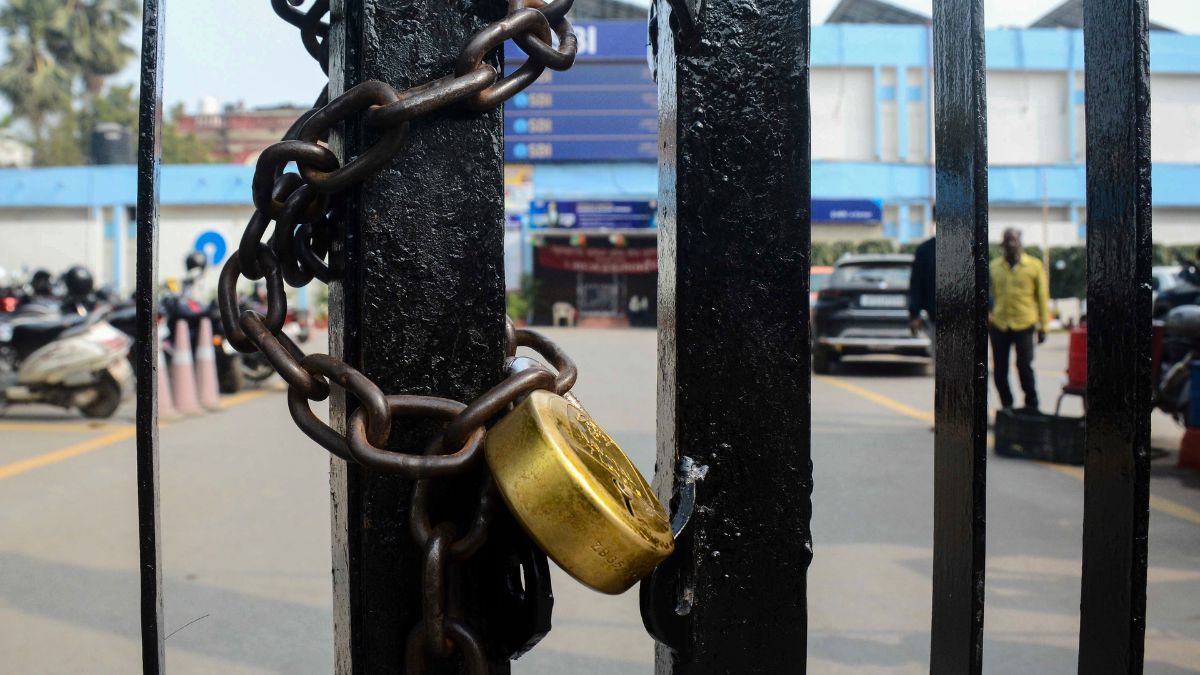
Banks will remain open on Sunday, September 27, offering some relief to customers ahead of the three-day nationwide bank strike from September 28 to 30.
Customers were worried about a five-day consecutive closure as September 26 is a second Saturday bank holiday, and September 27 is a Sunday. However, banks will continue to function on Sunday, giving customers a day in between to complete any physical transactions.
The government’s announcement comes after the United Forum of Bank Unions (UFBU) decided to proceed with the strike as the conciliation meeting with the Deputy Chief Labour Commissioner on Tuesday proved futile.
The meeting was held after the Finance Ministry invited bank employees to resolve their remaining demands through dialogue instead of a strike.
The UFBU has called for a 3-day strike from September 28 to 30. This coincides with the half-yearly closing period for banks, which can affect functioning once they reopen on October 1.
Most public sector banks, including the State Bank of India, will remain completely or partially closed, affecting services like cash deposits, withdrawals, cheque clearances, applications for new fixed deposits and physical loans. However, digital services, including UPI, internet banking, mobile banking and ATM services, will be available.
The strike will not affect major private sector institutions like HDFC Bank, ICICI Bank, Axis Bank and Kotak Mahindra Bank, which will remain open on regular working days. However, the functioning of some old-generation private banks, including Federal Bank, South Indian Bank, Dhanlaxmi Bank, RBL Bank, Karnataka Bank, CSB Bank and Jammu and Kashmir Bank might be affected.
State Bank of India (SBI) , Bank of Baroda (BoB) and Canara Bank have advised customers to complete banking transactions ahead of the proposed strike.
“A nationwide bank strike is proposed from 28 September to 30 September. Please avail branch services, if required, by 25 September. Digital channels including Mobile/Internet banking, UPI, ATMs and Phone Banking will remain available,” an advisory issued by Canara Bank read.
SBI and BoB also have sent similar messages, asking customers to plan and complete banking requirements in advance. BoB’s digital and self-service channels will remain available, including bob World, internet banking, UPI-bob e-pay, bob World Business, WhatsApp Banking, ATMs and cash recycler machines for routine banking transactions.
Why are banks going on strike?
The bank unions have called a fresh strike after their demands were not met during the recent strike on September 11.
The UFBU has been pushing for multiple demands, including a regular corporate five-day banking week for employees. Currently, the second and fourth Saturdays are bank holidays. The revised structure proposes that all Saturdays be holidays. However, employees have agreed to work an additional 40 minutes from Monday to Friday to adjust working hours.
The unions have also raised objections to the current Performance Linked Initiative (PLI) structure prescribed by the Department of Financial Services. The PLI scheme is an annual variable pay structure designed to reward PSB employees based on performance parameters. Under the current structure, the union argues that a large share of the bank’s budget goes to the top 5 per cent employees.
Other demands such as updating and improving pensions, a uniform dearness allowance formula for all pensioners and an option for employees to switch to the Old Pension Scheme (OPS) from the National Pension System (NPS) also remain unresolved.
