



The 2026 summit of the Shanghai Cooperation Organisation (SCO) takes place at a time when India is on its path to diversify 75 per cent of its global trade. On the other hand India and China, both of whom are SCO members, have been keen on expanding their trade relations. The aggregate trade between the two nations has grown by 24 per cent over the first six months of this year.
“75 per cent of global trade will be covered through our free trade agreements, opening India to become a part of the global value chain as a trusted partner,” Union Minister of Commerce and Industry Piyush Goyal said on August 24 during a meeting with business representatives at Tokyo.
He added that the government is in talks with at least eight to nine groups of countries and individual nations that could together account for another $15 trillion of GDP (Gross Domestic Product).
The statement comes almost a week prior to the SCO Summit to be held at Bishkek, Krygz Republic, as India aims to position itself as a trusted partner in global value chains, and to expand its market access to its exporters.
As per a press release by the Ministry of External Affairs (MEA), India will look forward to advancing its vision for connectivity and security at the SCO Summit which will be held from August 31 to September 1 at Bishkek.
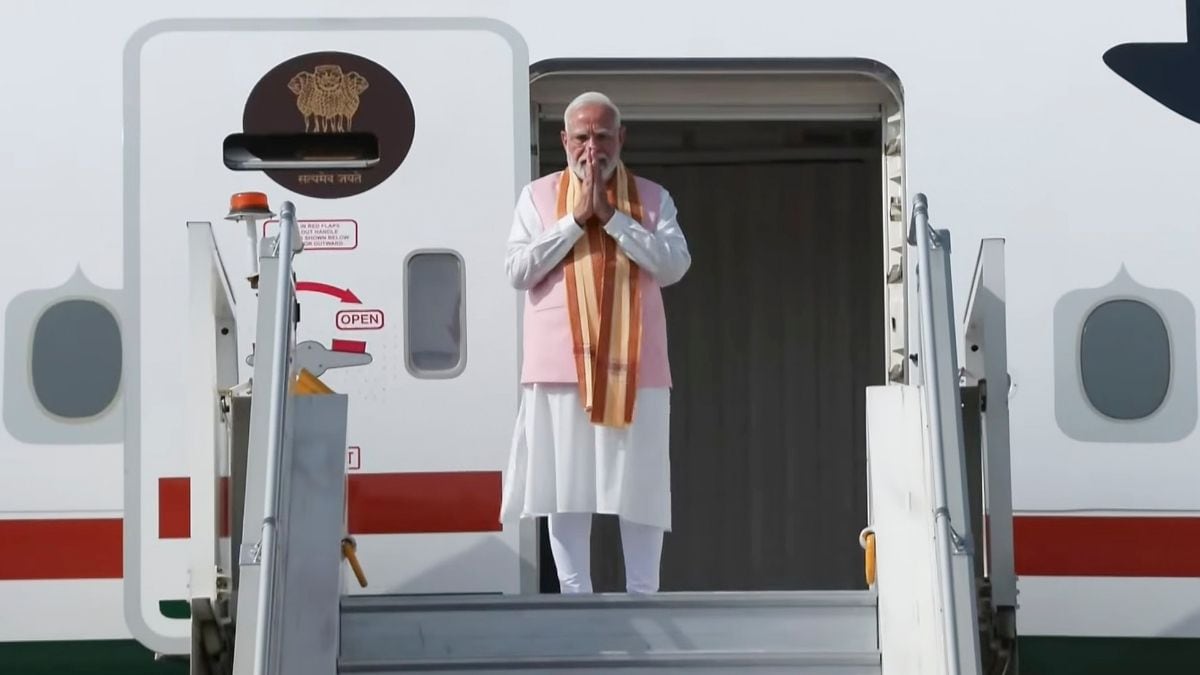
This vision is also reflected in PM Modi's visit to Uzbekistan, ahead of the SCO Summit in a bid to strengthen cooperation in trade and investment, digital connectivity, defence, and energy.
Knowing who all are the SCO members is essential in understanding India’s foreign policy decisions over the recent past to advance its outreach to the Central Asian countries. The Central Asian countries of Uzbekistan, Kazakhstan, Kyrgyz Republic, and Tajikistan—along with India, China, Russia, Iran, Pakistan, and Belarus—form the 10 member nations of the SCO. It also includes Afghanistan as one among its two observer states. The SCO also has 15 dialogue partner nations.
Connectivity and security play an important role in India's ambitions with the Central Asian countries. In 2012, India introduced the ‘Connect Central Asia Policy', aimed at enhancing trade and connectivity with the region. Yet, the India-Pakistan tensions, wars, and the Taliban takeover of Afghanistan have resulted in the policy not yielding the expected outcomes.
India had been using the Chabahar Port in Iran, bypassing Pakistan and Afghanistan, to connect with the Central Asian countries through the International North-South Transport Corridor (INSTC), a 7,200-km route connected through rail, road, and the sea that links India with Iran, Central Asia, Azerbaijan, Russia, and China. The current US-Iran war and the Russia-Ukraine war have depleted the route’s trade possibilities.
Apart from India, China’s Xi, and Russia’s Putin are also keen on increasing their bilateral trade with the Central Asian countries.
But why are these nations keen on building strategic trade relations with Central Asia?
The region is known for its extremely rich mineral and natural resources. Kazakhstan and Uzbekistan have rich reserves in uranium. Kazakhstan is also rich in coal, zinc, iron ore, and lead. Turkmenistan and Tajikistan have large reserves of natural gas. The Kyrgyz Republic is known for its hydropower generation.
Lately, India has taken steps to restore its bilateral relations with the Taliban-ruled Afghanistan, which is speculated as New Delhi's pathway to regional connectivity and trade ambitions with the wider Central Asia.
The increased bilateral dialogue with China—including efforts to solve the border issues—and India’s advancing bilateral relations with Uzbekistan also hint at the country's bid to boost trade relations with SCO member nations.
The decisions and deals to be taken at the 26th SCO Summit will decide if India’s ‘Connect Central Asia’ policy will finally be effective or not.
