



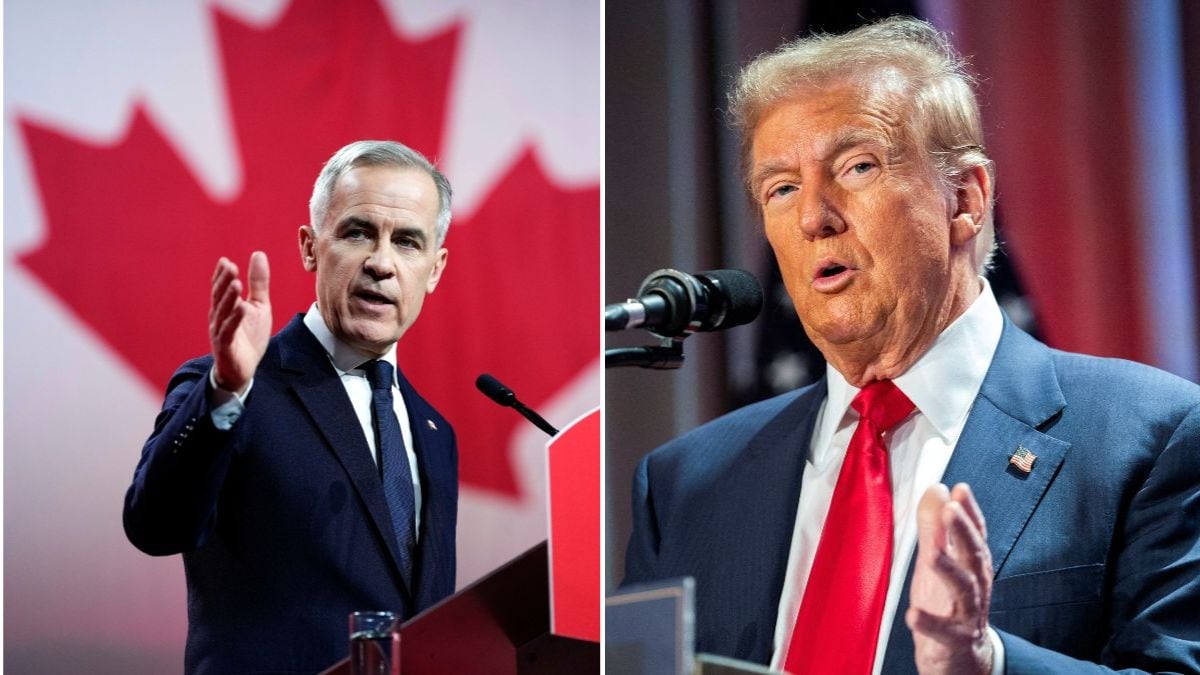
US President Donald Trump on Monday threatened to sharply increase tariffs on various Canadian products to 50 per cent as the trade war between the two close allies rages on.
Calling Canada "one of the worst nations in the world to deal with", he explained that the new tariffs would be levied on all of their cars, trucks, automotive parts, and steel from January 1, 2027 onwards.
"(Canada's) ridiculously high tariffs on our Farmers and farm products has made life impossible for these great American Patriots, and has long created a 60 Billion Dollar Deficit between our two Countries ... They feel entitled, and yet, WE DON’T NEED CANADA, THEY NEED US!" he wrote in a Truth Social post on Monday.
The Monday move by the Trump administration comes after weeks of trade talks with Canadian PM Mark Carney collapsed on August 21, leading to the US imposing 50 per cent tariffs on a number of Canadian products on August 22.
Canada has since vowed a "dollar for dollar" retaliation against the August 22 tariffs, which have targeted $20 billion worth of key goods, such as forest produce, alcohol, clothing and textiles, and dairy products.
Framing the August 22 decision as the result of “last‑minute changes” in US demands, Carney said that they were “unfair, uneconomic, and called into question the reliability of any deal".
“You’re at war when you’re attacked, and we got attacked ... We cannot accept what they’ve offered and we will not give what they’ve asked," he added.
Canada's reciprocal tariffs will go into effect from September 8 onwards, sparking questions of whether the Trump tariffs have reached a limit that now prompts retaliation from US trade partners, rather than negotiation.
Canadian politicians across the political spectrum have also backed Carney’s move, including Opposition leader Pierre Poilievre of the Conservative Party.
However, Trump's tariffs, which have been one of the most divisive policies of his second term in office, have not received the same backing at home, with furious Democrats and policy analysts warning that the sweeping tariffs—and Ottawa's pushback—could create economic shocks that add to existing fiscal and inflation pressures.
Maine Senator Susan Collins was among the Republican voices warning that the trade war with Canada could have a "negative impact".
“I urge both sides to return to the negotiating table," she wrote in an X post, describing the specific impact on her state of Maine as well.
