



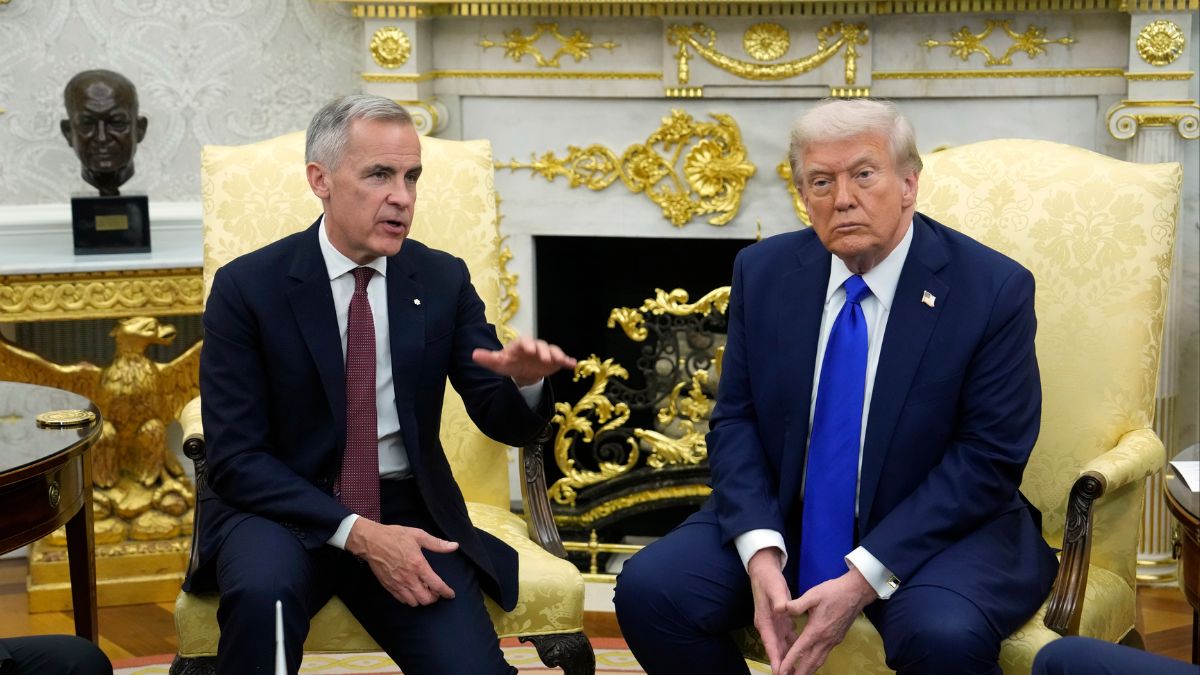
Canada has responded sharply to the collapse of last‑ditch trade talks with the United States, suspending negotiations and pledging to match Washington’s new 50 per cent tariffs on Canadian goods “dollar for dollar.”
Prime Minister Mark Carney recently revealed that he ordered Canadian negotiators to return from Washington after nearly two weeks of intensive discussions failed to secure what Ottawa considered a fair and durable trade arrangement.
In a formal statement, he framed the decision as the result of “last‑minute changes” in US demands. Carney said these demands were “unfair, uneconomic, and called into question the reliability of any deal.”
US President Donald Trump proceeded to slap additional tariffs of 50 per cent on a wide range of Canadian imports, imposed under Section 338 of the 1930 Tariff Act. The US Trade Representative’s office stated that the new measures covered nearly 20 billion dollars’ worth of Canadian goods—about 5 per cent of Canada’s exports to the American market—with no exemption even for products that qualify for preferential treatment under the US–Mexico–Canada Agreement.
Carney’s statement, however, put the targeted value at roughly 28 billion dollars of exports.
Ottawa’s response is two‑pronged.
First, it will mirror the new levies on an equivalent value of US exports in order, in Carney’s words, “to protect our workers and businesses.”
Second, the federal government will roll out additional support for affected sectors, on top of nearly 25 billion dollars in relief and adjustment measures announced over the past 18 months.
To dispel fears about geopolitical developments at the border, Carney underlined that the tariff fight does not alter Canada’s broader economic strategy of “building our strength at home and diversifying our partnerships abroad.”
Moreover, he announced plans for nearly 500 billion dollars in infrastructure investment, efforts to double Canada’s preferential market access from 1.5 billion to about 3 billion consumers, and plans for lifting foreign direct investment.
The latest developments may have come as a shock to Canadian businesses, especially since the two countries traded around 880 billion dollars in goods and services last year. Of course, the latest tariffs directly cover only a part of that, but this has reopened questions about the long‑term stability of North America’s trade architecture and the future of Canada’s privileged access to its largest market.
