



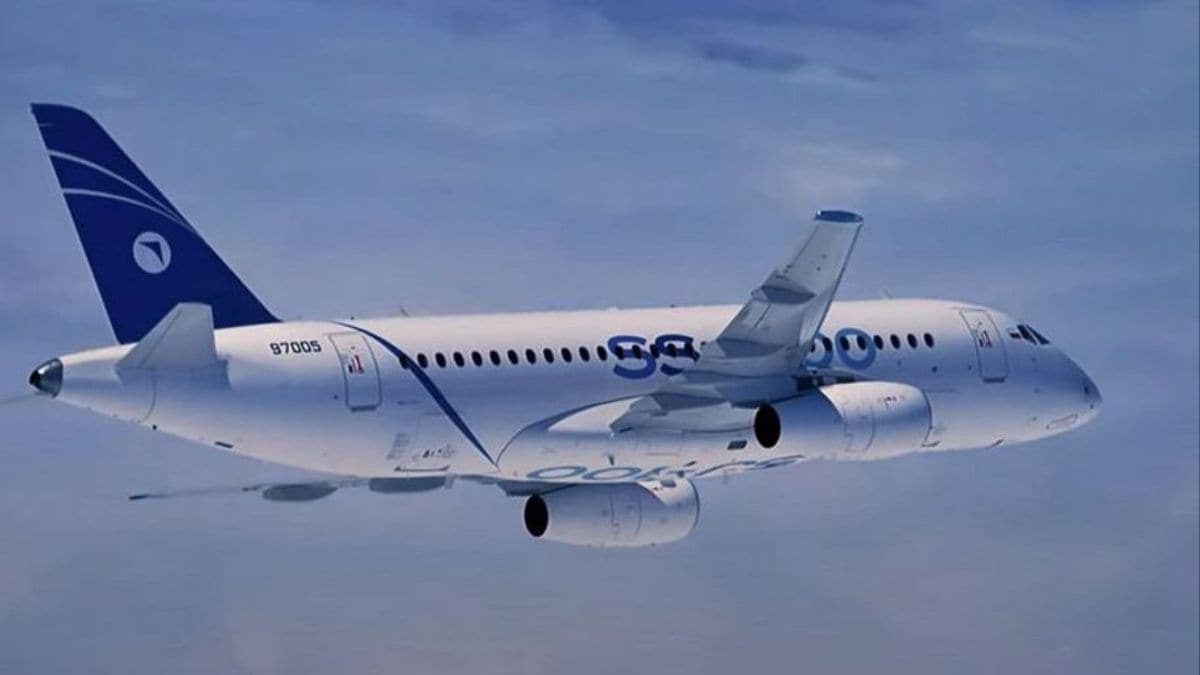
India's dream of building commercial aircraft is finally gaining real wings. The potential is huge. India is now the world's fastest-growing aviation market, with well over 1,800 aircraft on order by carriers like Air India, IndiGo and Akasa. That kind of guaranteed, long-term demand is something most countries can only envy.
The capability foundation is taking shape too. HAL's SJ-100 marks the first time in more than three decades that a complete passenger aircraft is being positioned for production within India. The bigger headline came from Adani Defence & Aerospace, which tied up with Embraer to set up what could become India's first commercial passenger aircraft assembly line. Smaller private players, such as Sakthi Aircraft, are already assembling trainer aircraft on Indian soil—proof that the ecosystem is slowly widening.
But the challenges are very real. A full assembly line demands a deep supply chain, a large skilled workforce, and proper certification capability—areas where India is still thin. We have the engineers, the ambition, and a booming market; what we still lack is the layered network of component suppliers that mature aviation nations enjoy.
So the market and the intent are firmly in place. The talent and resources are steadily growing.
Bubbling under
India's aviation component industry has quietly become a serious global supplier. Together, the two giants (Airbus and Boeing) now source close to $2.7 billion worth of parts and services from India every year—Airbus around $1.4 billion, heading toward $2 billion before 2030, and Boeing about $1.25 billion, which has grown fivefold in just a decade.
More than 100 Indian companies supply Airbus with parts like flap-track beams, aircraft doors and fuselage sections, while Boeing works with over 300 suppliers, many of them small and medium enterprises that have steadily climbed from simple parts to complex assemblies and advanced composites for the 737, 777 and 787.
So the deeper question—a full commercial passenger-plane plant—is now genuinely on the table.
India offers the demand, with well over 2,000 jets on order, a deep pool of engineers, and a fast-maturing supplier base. Both giants already run assembly lines here for other aircraft in partnership with Indian industry.
But they remain cautious. Their order books are full into the mid-2030s, and Airbus's leadership has suggested India should play to its strengths in engineering and sub-assemblies rather than rush to replicate full assembly.
So a dedicated commercial plant looks plausible this decade, but more likely once the ecosystem deepens further—and the Adani–Embraer move may well hurry that thinking along.
The cost factor
For their current planes, setting up a factory in India doesn't really save Airbus or Boeing the money people imagine—and both companies know this well.
Most of us assume that because labour is cheaper in India, building planes here would cut costs in a big way. But here's the catch. A finished aircraft is made of thousands of parts—engines, wings, seats, computers, landing gear—all coming from a fixed set of suppliers around the world. These costly parts are bought at the same price no matter where the plane is finally put together. The last step, where all these parts are joined into a complete aircraft, is actually a tiny slice of the total cost—only about 7 per cent. So doing just that final step in India saves very little, while setting up a brand-new factory would cost them billions to begin with.
There's another reason too. Airbus already has around ten such factories across the world, and Boeing's American plants still have room to spare. Neither is short of space.
And quietly, they carry an old worry—in China, once they allowed local plane-building, it helped China create its own rival aircraft company. They don't want to repeat that here.
For the next generation of aircraft, or for smaller regional planes, it could one day make real sense. That is most likely the door India will open first.
India’s horizons
Of the two announcements, the Embraer–Adani tie-up looks far more likely to actually take off—though slowly. Embraer's regional jets are proven, fully certified aircraft, and there is real hunger for them: smaller Indian airlines simply cannot get delivery slots from Boeing or Airbus before the mid-2030s, so the demand is genuine.
But it is still only at the agreement stage—an MoU. Going by similar projects already underway, expect three to four years just to build the line, and another year before the first aircraft rolls out. So it is real and promising—but a late-2020s story, not something for tomorrow.
The HAL–Sukhoi (SJ-100) deal is the shakier of the two, though it is steadily moving forward. The aircraft's new Russian engine recently cleared certification, which is solid progress, yet it is not in stable serial production even in Russia just yet. The older Superjet earned a poor reliability name, and big Indian carriers like IndiGo and Air India—whose fleets are built around Western planes—are unlikely to buy it. On top of that, the Russian makers sit under Western sanctions, which adds real risk for HAL. So there is genuine momentum here, but also more ways for it to slip—and a chance it ends up as a low-value assembly job rather than true homegrown manufacturing.
Fly by wire
On the bigger question—will India become a full-fledged aircraft manufacturing hub? My honest view is: not for large passenger jets, at least not in this decade.
The far more realistic and rewarding path is the one India is already winning at—becoming a global centre for components, sub-assemblies, spare parts and MRO (the maintenance and repair of aircraft). That is where the steady money, the jobs and the real skill-building genuinely lie. Full aircraft assembly will, for now, likely stay limited to smaller regional and military planes.
Think of India less as the kitchen that cooks the entire meal, and more as the trusted supplier of the finest ingredients—and, increasingly, the busy workshop that keeps the world's planes flying.
The author is a leading aerospace and defence analyst.
The opinions expressed in this article are those of the author and do not purport to reflect the opinions or views of THE WEEK.
