



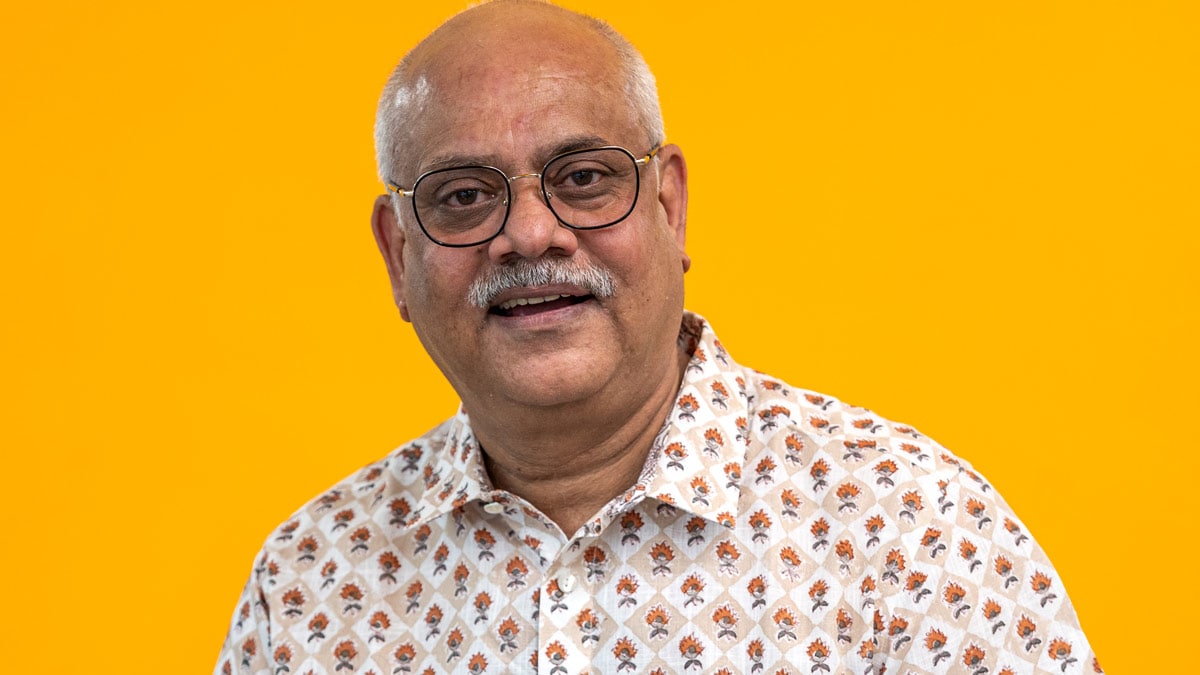
India’s urbanisation story is gathering pace, with nearly 600 million Indians expected to live in urban areas by 2030. This will put greater pressure on housing, transport, water, public spaces and civic infrastructure. But Dr Sanjeev Vidyarthi, Provost of Anant National University and an urban planning scholar who has studied cities in India and the US, says India needs to widen its definition of urban preparedness.
In a special interaction with THE WEEK, Vidyarthi says India has made considerable progress in infrastructure creation over the past decade. But creating cities where people can live healthier, safer and more fulfilling lives remains a work in progress.
Cities, he says, are not only engines of economic growth but also spaces that support communities, cultures and everyday life. This makes the development of smaller towns and peri-urban settlements particularly important. With stronger urban governance, better planning, innovative financing and citizen participation, these settlements can become economically dynamic, socially inclusive and environmentally sustainable.
The experience of the Smart Cities Mission provides a mixed picture. The mission helped shift the focus from conventional infrastructure to integrated area planning, technology-enabled governance, public spaces and citizen-oriented service delivery. It also accelerated investments in urban infrastructure.
But much of the work remained project-specific instead of triggering citywide transformation. Vidyarthi says a smart city cannot be built through individual technology projects or beautification initiatives. Housing, mobility, public spaces, environmental resilience and governance have to be planned together.
Climate risks are adding urgency to this approach. Floods, heatwaves and water shortages are increasingly becoming urban concerns, making climate resilience a central requirement of city planning.
India also has an opportunity to build resilience into its future housing stock. More than half of the housing that will be required by 2070 is yet to be built, Vidyarthi points out. Future construction can, therefore, incorporate climate-responsive design instead of relying primarily on retrofitting after disasters.
For flood-prone cities, he recommends identifying high-risk areas, improving drainage, expanding green and blue infrastructure and installing flood-warning systems. Kolkata’s city-level flood forecasting and warning system and Chennai’s efforts on stormwater management and flood preparedness are examples of such measures. Ahmedabad’s Heat Action Plan, meanwhile, demonstrates how advance planning can protect lives and maintain economic productivity during extreme heat.
Vidyarthi also points to Jaipur as an example of how urban development and heritage can work together. The city’s historic core was planned in the 18th century around local knowledge, climate and topography, with a grid-based street network, public squares, mixed land uses, uniform built form and thriving bazaars.
For him, heritage extends beyond monuments. Traditional construction practices, craft traditions, knowledge systems and community patterns also form part of a city’s heritage and contain lessons in resource efficiency and climate responsiveness. Integrating these with modern planning and technology can help cities retain their identity while adapting to future needs.
Governance, however, remains a major constraint. The 74th Constitutional Amendment provided the foundation for decentralised urban governance, but urban local bodies in most states continue to have limited financial autonomy and decision-making powers. Vidyarthi argues that cities need greater devolution of functions, finances and institutional capacity to respond effectively to local requirements.
The same institutional gap is visible in the implementation of Master Plans. While these plans can provide frameworks for sustainable urban growth, they often remain disconnected from how cities actually expand. Vidyarthi advocates more flexible, implementation-oriented planning, backed by stronger urban local bodies and greater citizen participation.
There are lessons India can draw from international experience. Copenhagen’s people-centric planning and sustainable mobility offer one model, while Singapore’s integrated approach to land use, housing and environmental management offers another. India, he says, can also contribute to the global conversation through its traditional planning principles, climate-responsive architecture and community-centred neighbourhoods.
Technology is set to play a larger role in this transformation. Artificial intelligence, digital twins, GIS, IoT and data analytics can help planners understand urban systems, anticipate future scenarios and improve public services. But Vidyarthi cautions that technology cannot substitute for governance. Issues of equity, privacy, accountability, citizen participation and the digital divide will require appropriate policies and regulatory frameworks.
For Viksit Bharat 2047, Vidyarthi identifies three priorities. The first is to strengthen urban local bodies with greater financial resources, institutional capacity and citizen participation. The second is to give greater attention to class III and IV towns by improving their infrastructure, economic opportunities and social amenities. Planned growth in these towns could reduce migration pressures on larger cities and support more balanced regional development.
The third is to expand the definition of urban planning beyond physical infrastructure.
Air and water quality, public spaces and the ecological systems supporting cities, he says, must be considered alongside roads, buildings and other physical assets.
As India prepares for its next phase of urbanisation, the focus, Vidyarthi argues, needs to shift from individual projects to citywide planning, from reactive disaster management to climate preparedness, and from centralised decision-making to stronger local governments.
