



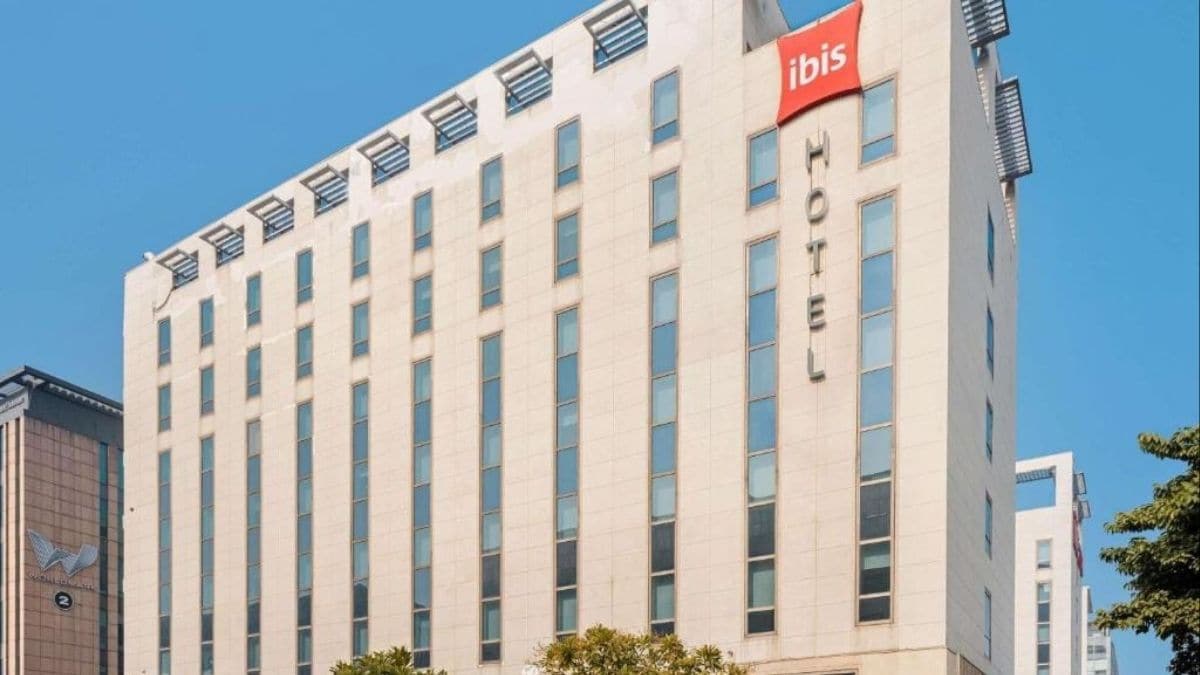
India's hospitality sector is entering a new growth phase, but the sector’s success will depend on adaptability. The demand in the sector no longer depends on a single traveller segment or season.
It is now a healthy mix of corporate travel, leisure movement, MICE (meetings, incentives, conferences, and exhibitions) and events, weekend breaks, and a growing appetite for destinations beyond the usual tourist circuits.
This diversification is creating demand that stays active through the year, fuelled by domestic mobility and improving connectivity. The focus of the industry is being changed from revival to the creation of long-term value through efficiency, guest satisfaction, and growth. These observations were made by Tejus Jose, Director of Operations, ibis and ibis Styles India, during an interaction with THE WEEK.
As per the HVS ANAROCK MONITOR, in Q1 of 2026, national hotel occupancy was recorded at 67–69 per cent, Average Room Rates (ARR) at around ₹10,000–10,200, and RevPAR, which is typically the revenue per available room, was documented at ₹6,700–7,038. March 2026 was especially strong, with most markets recording double-digit ADR growth and occupancy above 75 per cent nationally. Bengaluru led the year with ARR growth as high as 15–17 per cent, Pune close behind at 11–13 per cent, and New Delhi topped the occupancy at 78–80 per cent in March 2026.
“While we have had some obstacles, such as air disruptions towards the end of 2025 and the geopolitical instability early this year, the outlook for 2026 has been encouraging so far. Economic activities continue to support corporate business, while increased disposable income and lifestyle changes continue to drive more leisure travel. Domestic tourism is one of the main pillars of the sector. Travellers have also become far more discerning. The value is not judged only on the basis of the room rates but also in terms of the experience that includes efficient service, thoughtful design, digital convenience, sustainability, and consistency across every touch point. As we move into the next quarter, we expect demand conditions to remain favourable since corporate travel is accelerating,” said Jose.
As per this expert, conferences and social events support occupancy through the festive and wedding season, and weekend leisure travel will also gain momentum.
“Domestic corporate tourism, transient tourists, MICE and leisure travel have created a well-balanced demand that sustains across the year. The increasing focus on dependable and design-focused hotels has helped the economy segment grow as travellers look for assured quality irrespective of destinations. Domestic tourists still remained the dominant demand driver, whereas there was acceleration in the interest towards lifestyle and experience-led hospitality among younger tourists,” added Jose.
Interestingly, as per reports, commercial activity is expanding beyond metros and has opened further opportunities. Tier II and Tier III cities like Jaipur, Kochi, and Nashik are becoming important demand contributors as infrastructure improves. Branded hotels are expected to roughly add 20,000 hotel rooms for Tier II and III locations. India's branded supply pipeline has also crossed 100,000 rooms for the first time in over a decade, a 58 per cent five-year jump spanning 177 new markets once outside the organised hospitality map.

Jose points out that hotels are now benefiting from multiple demand streams instead of one dominant segment. Weekday occupancies are now driven by corporate travel, weekends benefit from leisure short-breaks, and MICE (Meetings, Incentives, Conferences and Exhibitions) and social gatherings. Jose says that short-term plans add stability year-round for the hospitality industry. This balance helps hotels optimise occupancy and pricing while reducing seasonal volatility, helping room and F&B revenues contribute steadily to overall performance.
According to Jose, running a hotel business has grown more complex.
“Factors like rising costs, changing workforce expectations, inflationary pressure and evolving guest preferences all demand constant adaptation. Guests visiting the hotels now expect us to offer seamless digital experiences without losing personalised hospitality. Also, sustainability has moved from an optional initiative to an operational necessity,” Jose told THE WEEK.
He further pointed out that the state of Goa is one of the clearest examples of shifting traveller behaviour, and it deserves an honest look. Citing an example from the data shared by the Goa Tourism Department, foreign tourist arrivals have fallen from close to 9 lakh in 2017 to roughly 5 lakh in 2025, but domestic arrivals climbed from around 68 lakh to over 1 crore.
International flight traffic through Dabolim and Mopa has recovered steadily since 2021's pandemic low, reaching 1,784 flights and roughly 2.36 lakh foreign passengers in 2025, though still well below pre-pandemic charter numbers.
“Factors like reduced global promotional spend, rising airfares, visa friction, and competitively priced alternatives like Vietnam, Sri Lanka and Thailand are drawing away the long-stay European traveller who once anchored Goa's winter season. However, reports suggested consecutive month-on-month growth for Goa, suggesting the market is stabilising even as its guest mix looks structurally different from a decade ago. Shorter breaks, experiential travel and wellness stays are gaining ground, and Goa is a market where independent properties convert into branded ones. For leading hotel businesses, success depends on understanding evolving traveller behaviour and appealing across multiple segments rather than one source market alone,” remarked Jose.
Recently, in India, hotel signings have reached record levels with year-to-year growth of 36 per cent, reaching over 64,000 room keys at 586 properties, with projections of nearly 690 hotels and 76,000 keys by year-end. Experts say that the opportunity now lies in delivering experiences that stay relevant to the changing traveller. Companies with a perfect balance of operational efficiency along with agility, flexibility, and an understanding of guest needs will thrive.
