



Every generation inherits an opportunity that defines its future. For India, that opportunity is our demographic dividend, a number most policy documents love to quote. Nearly two-thirds of our population is of working age, and this is a great advantage. But demographics alone cannot build prosperity. Skills and talent can, and that is why Indian academia and industry need to come together and co-create for building a Skills-First India.
This World Youth Skills Day, the conversation must move beyond creating jobs to creating talent ready for those jobs. India does not have an employment problem so much as an employability problem, and that is the uncomfortable truth. The challenge does not begin at the interview table; it begins with a curriculum that has not kept pace with the world it is meant to prepare students for.
The World Economic Forum estimates nearly 39 per cent of today's core workplace skills will change by 2030, even as millions of new jobs continue to be created.
Continuous learning is no longer a virtue we admire from a distance; it is going to be necessary for survival. The real question is not whether our youth can find jobs; it is increasingly about whether our education system is preparing them for the future of work. And if the answer is no, a sharper question follows: what is the industry willing to do about it?
If India is serious about a Viksit Bharat by 2047, and about becoming the world's skills capital rather than a mere talent exporter, we must first focus on building a Skills-First India. That will not arrive through academia and industry working in their own silos.
They need to come together and collectively co-create the curriculum so that learning translates into livelihood.
Educational institutions can no longer design curriculum in isolation and expect employers to absorb whatever walks out the gate. Similarly, industry cannot keep playing spectator, lamenting the lack of job-ready talent while staying absent from the process that produces it. It is time both sides moved onto the same track.
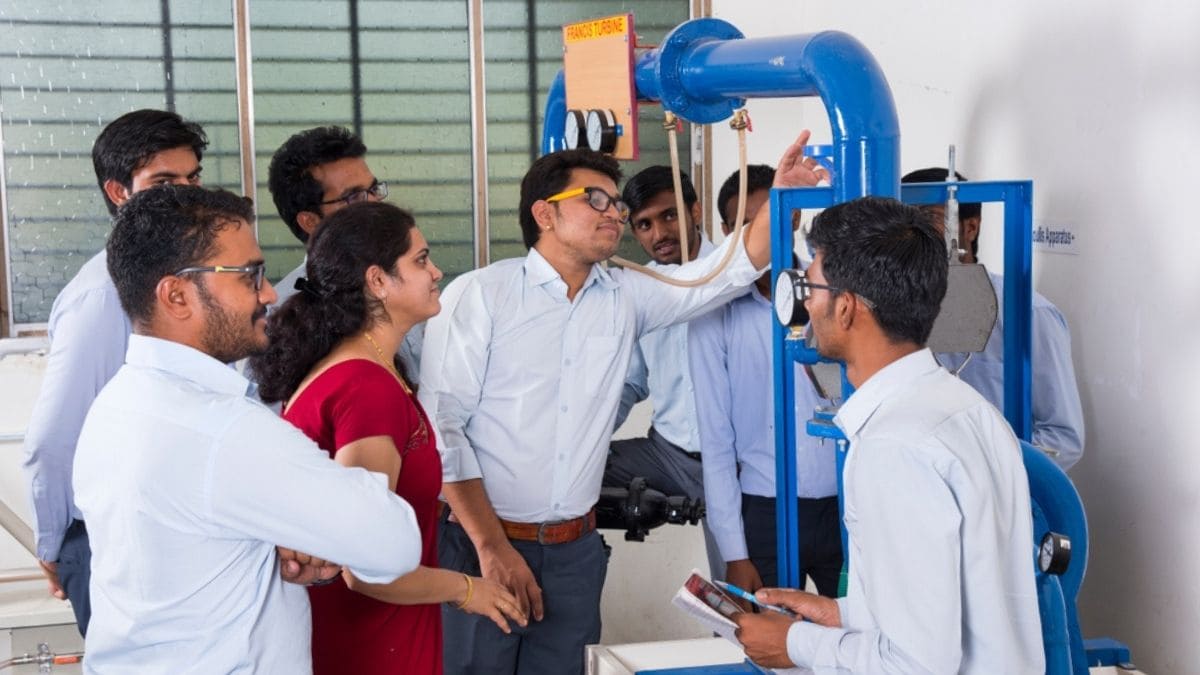
Imagine classrooms where curriculum evolves at the speed industry evolves: business leaders co-design courses, engineers mentor students, and internships and live industry projects form the spine of learning, not a footnote before placements.
When industry becomes a co-creator of education rather than its end consumer, employability stops being a hoped-for outcome and becomes baked into the learning itself.
Rethinking what we teach and how
The future will not reward technical competence alone. Young professionals will need to navigate ambiguity, learn continuously, and work across cultures and technologies that did not exist when their syllabus was written. None of this is built through rote memorisation; practical, applied learning is the real game-changer, and that is where deep industry integration emerges as an ultimate solution.
Our education system needs a fundamental rethink, from curriculum to assessment, from information to application, from memory to mastery, from teaching subjects to solving problems that exist outside the textbook. True learning happens when students build, experiment, fail, and feel the friction of the real workplace before they graduate into it. Without industry inside that process, this remains a slogan, not a system.
Building India's skills economy
The world increasingly competes for talent, not capital. India has a historic opportunity to become the world's supplier of skilled human capital. We rank among the world's most AI-ready economies on paper, yet the gap between potential and actual workforce readiness remains wide.
Closing that gap demands a new social compact between the government, academia and industry, one that places skills, not degrees, at the centre of national development. The National Education Policy has laid the groundwork through multidisciplinary learning and vocational integration. What comes next has to be execution at scale, ensuring every learner has access to education aligned to the realities of work.
Our classrooms must become innovation hubs, not information warehouses. Our campuses must become talent ecosystems, not credential factories.
It is about time that, on this World Youth Skills Day, we reflect on asking a tough question. It is not whether India's youth are ready for the future. It is whether our institutions are ready to empower the next generation of learners for the future of work.
Because when academia and industry stop competing for credit and start building together, we move past employability as a metric and create something larger- confident innovators, responsible citizens, and a workforce equipped to carry India's journey to a Viksit Bharat.
The future of India's economy will not be built by degrees alone, but by skills that create opportunity and deep-rooted industry partnerships that can prepare learners to thrive in an ever-evolving workplace with real-world problem-solving capabilities and unmatched confidence.
Note: World Youth Skills Day is celebrated annually on July 15.
The author is co-founder and pro-chancellor, Medhavi Skills University.
The opinions expressed in this article are those of the author and do not purport to reflect the opinions or views of THE WEEK.
