



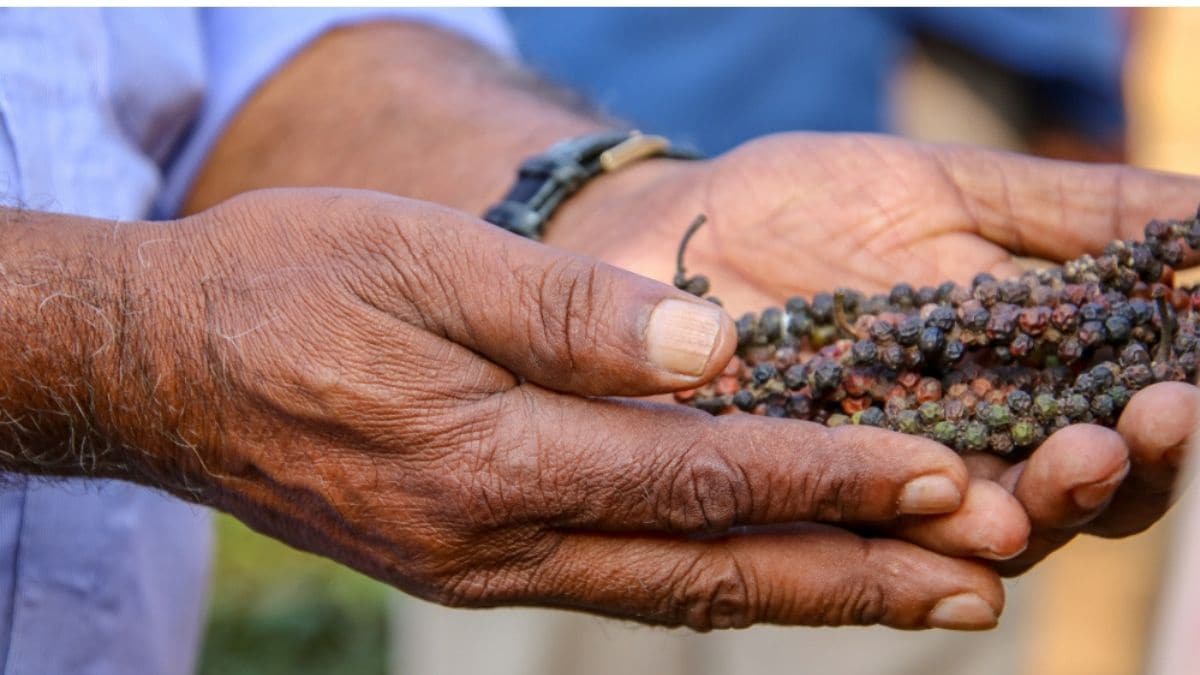
Much like many moments in history, Kochi played host to yet another milestone for one of India's renowned spices, the humble black pepper, which inspired the Muziris spice route. The National Commodity and Derivatives Exchange (NCDEX) formally relaunched its Black Pepper Futures contract, more than a decade after the original contract was scrapped over quality disputes.
The announcement, made at a press meet, also marked the second stop of NCDEX's flagship "Har Ghar Investor" campaign, following its debut launch in Guwahati earlier this year.
Black Pepper futures were once among the most actively traded contracts on NCDEX, serving as a key price benchmark for domestic and global trade until they were discontinued around 2012–13 following quality-related and legal challenges.
NCDEX has set out major quality guidelines for Black Pepper, including a proposed minimum bulk density of 550g per litre, and amaximum moisture content oof 11.5 per cent (May-Oct) and 11 per cent (Nov-April). This and many more parameters, along with stringent warehouse standards is what the exchange hinges the latest move on.
With most of the past issues now resolved and fresh approval secured from the Securities and Exchange Board of India (SEBI), NCDEX finalised Kochi as the exclusive delivery centre for the new contract, within a 60-kilometre radius of the municipal limits.
The new contracts are expected to launch monthly each with a 4-month expiry cycle, except for February. The futures contract is on compulsory delivery, with a tick size of 10 paise. The delivery unit is 1 metric tonne. The world produces 4-6 lakh MT of black pepper a year.
India produces roughly 60,000MT of black pepper annually, with Kerala and Karnataka together accounting for more than 90 per cent of domestic output, even as Vietnam has overtaken India to become the world's largest producer, followed by Brazil and Indonesia.
The event in Kerala also went beyond pepper as NCDEX used it as a platform to introduce its "Har Ghar Investor" vision, aimed at drawing household savings from India's hinterland into regulated financial markets, alongside its recently announced foray into equities, equity derivatives and mutual fund distribution.
The exchange, which commands roughly 98 per cent market share in India's agricultural derivatives segment, has raised over ₹770 crore to fund this expansion and secured SEBI's in-principle approval to launch equity and equity derivatives segments.
NCDEX MD and CEO Arun Raste doubled down on the broader investor-awareness push by the exchange. He was joined by Chief Equity Business head Tojo Banerjee, hinting that their move towards mutual fund distribution could commence as early as the end of this month.
