



This week, the BRICS nations were busy. India hosted a slew of high-profile ministerial meetings while Brazil announced a landmark financial move in China.
Union Minister Jitendra Singh used the valedictory session of the BRICS Heads of Space Agencies (HOSA) meeting in Bengaluru to pitch a bold new idea: a "BRICS Space Economy" as the next frontier of global growth. The two-day meeting, hosted by ISRO under India's BRICS Chairship in 2026, brought together the heads of space agencies from Brazil, China, Egypt, Ethiopia, Indonesia, Iran, Russia, South Africa and the United Arab Emirates.
Discussions centred on the BRICS Remote Sensing Satellite Constellation, debris-free mission management, and a proposed BRICS Space Council, an institutional body that, if established, would give the grouping permanent machinery for space cooperation.
ISRO Chairman V. Narayanan highlighted the constellation's potential for disaster management, climate change monitoring and socio-economic development across member countries.
Energy on the agenda
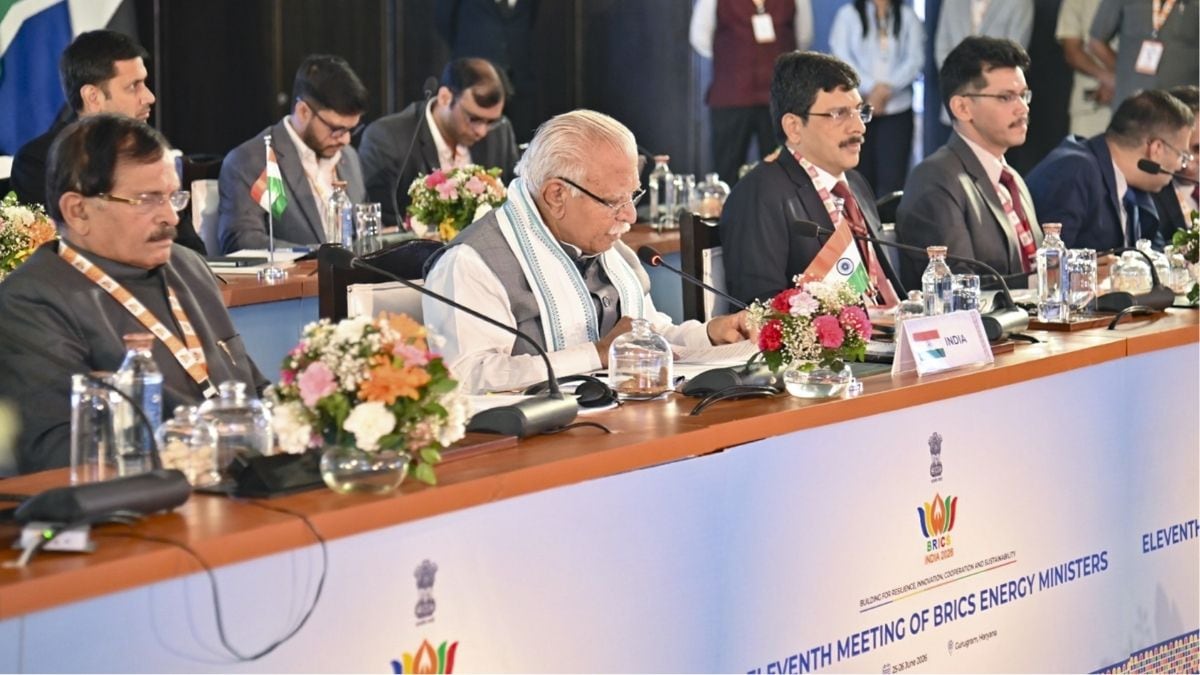
Separately, Union Power Minister Manohar Lal Khattar addressed the 11th BRICS Energy Ministers' Meeting in Gurugram, where he highlighted India's rapid expansion in solar and wind energy and called for affordable and sustainable energy access for all developing nations, groups that, he noted, bear a disproportionate burden from global climate change despite contributing least to it.
The meeting, which was to continue a second day, focused on energy security, sustainability, access and innovation.
Brazil's Yuan gambit
On the financial front, Brazil's Finance Minister Dario Durigan confirmed in Beijing that the country plans to raise up to 5 billion yuan (approximately $735 million) through its first-ever issuance of panda bonds, making it the largest debut of yuan-denominated sovereign debt by a foreign nation in China.
Brazil would become the fifth sovereign issuer in the past twelve months to tap China's onshore debt market, following Pakistan, Kazakhstan, Slovenia and Hungary.
Durigan described the move as a "test" to help private Brazilian firms, including mining giant Vale and manufacturer WEG, deepen their presence in China and manage currency volatility.
Durigan also confirmed there was "no development" on proposals for a BRICS common currency to challenge the dollar, even as the bloc's individual members quietly expand their exposure to the yuan.
