



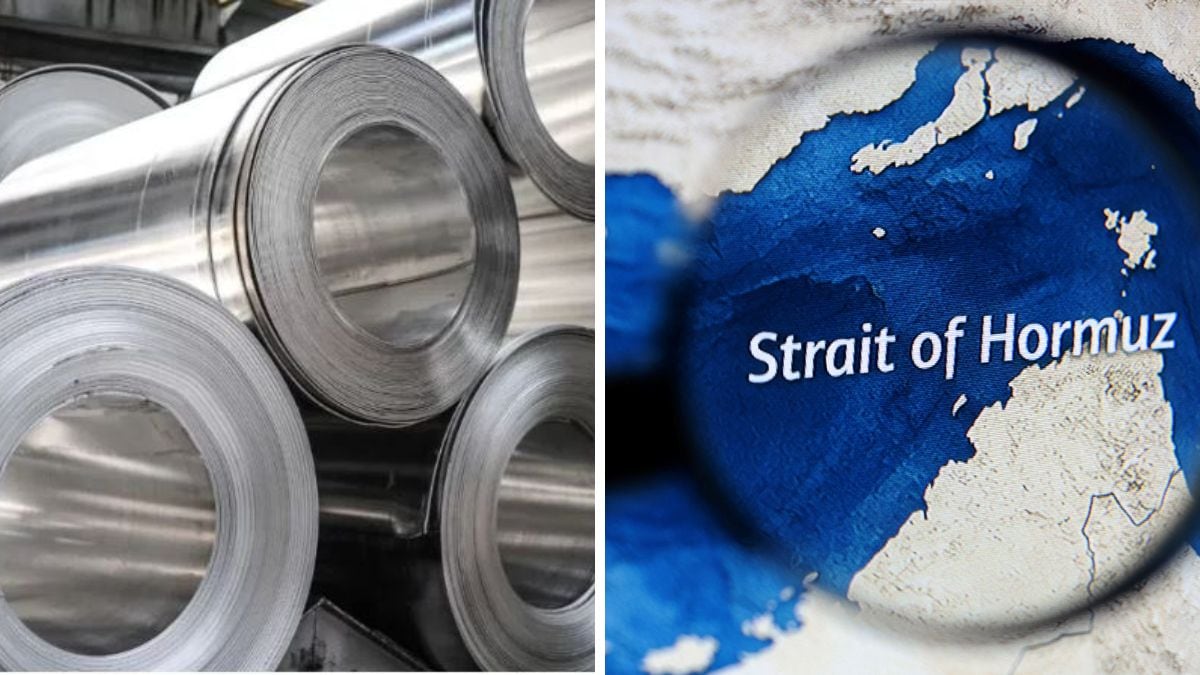
When the Strait of Hormuz effectively shut down on February 28, it didn’t just disrupt an energy corridor. It revealed how fragile a key assumption of globalisation is, the belief that goods can move across oceans without interruption.
Within weeks, shipping through the strait dropped by over 95 per cent. The impacts were felt across not just one industry or region, but the entire global system of production and trade. Energy prices surged, freight rates increased, insurance premiums for war risk rose, and factories from East Asia to Europe faced shortages of materials they expected to receive on time. This crisis highlighted that supply chains designed for efficiency are also prone to breaking easily.
Aluminium struck
Aluminium is central to this disruption. The Gulf Cooperation Council (GCC) plays a crucial role in global aluminium production, making up roughly 8-8.8 per cent of the total. With 5 to 5.5 million tonnes passing through the Strait of Hormuz, this region is a key production and supply hub. The ongoing conflict has targeted these facilities directly.
Strikes hit the Al Taweelah smelter in Abu Dhabi and the Aluminium Bahrain facility. EGA has warned that restoring primary aluminium production at Al Taweelah could take up to a year. Consequently, production in the region has dropped 63 per cent year-on-year, and US Midwest aluminium premiums have hit a record high.
The impact is felt throughout global manufacturing. Aluminium's disruption is not sectoral; it is systemic. Automotive assembly lines are cutting output, aerospace deliveries slipping, construction costs rising, and renewable energy rollouts stalling. Beverage cans, electrical grids, defence procurement and EV manufacturing all draw from the same strained supply. When one metal tightens, entire economies feel it.
China’s shift to a net importer
China has set a national limit of 45 million tonnes per year on primary aluminium production. As production approaches this cap, the country is shifting from being a consistent net exporter to potentially becoming a net importer. Beijing has further complicated this situation by removing export tax rebates for primary aluminium.
This, along with slowed production, means that China's exports could drop by as much as 9 per cent in 2025, with further declines expected in 2026. The era of abundant, low-cost aluminium from China— which had masked vulnerabilities in importing nations—is nearing its end. Countries like India that expected a steady supply must now make an abrupt adjustment.
India’s paradox
India faces a paradox of its own making. It is the second-largest primary aluminium producer, which is a point of pride. However, this strength of primary aluminium production has not resulted in resilience downstream. In fact, the opposite is true.
Around 10,000 Medium and Small-scale and Micro Enterprises that make up India's downstream aluminium sector—turning primary metal into extrusions, rolled products, foil, cables, tubes, and components for industries like construction and automotive—are being hurt by the pricing practices of the upstream producers they depend on.
This practice is known as import-parity pricing. It means that India's primary aluminium producers price their metal to domestic buyers as if it were imported.
This effectively adds a 7.5 per cent basic customs duty (8.25 per cent including the social welfare surcharge) to the price on primary aluminium regardless of country of origin. This adds an estimated $600 million in extra costs for downstream manufacturers each year.
The three upstream producers run at 98 per cent capacity utilisation with about 10 per cent profit margins, exporting nearly half of their output internationally. In comparison, the downstream enterprises they nominally supply operate at only 65% capacity with profit margins around 5 per cent.
The disparity is clear: upstream aluminium processes create 2 to 3 jobs per crore of investment, while downstream manufacturing generates 8 to 10. The tariff structure is effectively subsidising capital intensity while reducing job opportunities.
Far greater impact
The crisis caused by the Hormuz disruptions has transformed this chronic structural issue into a pressing problem. India's midstream and downstream aluminium segments now face a contraction of 40 to 50 per cent. Despite having a capacity of 4.2 million tonnes, utilisation levels remain far below potential.
The Indian downstream extrusion industry has had to cut back production amid the West Asia crisis, squeezed between high input costs due to import-parity pricing and the disruption of GCC supply chains that some manufacturers once relied on as alternatives.
Downstream MSMEs, already facing tight margins, are now getting pressured from both sides: domestic primary producers pricing like imports and a troubled import market.
The import situation makes this even more difficult. India imports around 800,000 MT of downstream aluminium products each year. Three of its top four import sources—Qatar at 17.4 per cent, Bahrain at 12.12 per cent, and the UAE at 10.1 per cent—are GCC countries impacted directly by the Hormuz disruption. Together, they account for nearly 40 per cent of India's downstream import volume.
Malaysia, the largest source at 22.9 per cent, benefits from zero tariffs under the ASEAN-India Free Trade Agreement. The absurdity of the situation is laid out in the policy note: imported finished products from ASEAN countries and South Korea enter India duty-free, while domestic manufacturers pay 8.25 per cent on the primary aluminium they need to produce those same goods.
India has created a tariff system that rewards foreign competitors while penalising local aluminium products manufacturers.
Need for policy correction
The necessary policy correction isn’t complex or radical. Lowering the primary aluminium import duty from 7.5 per cent to a level that reflects international norms—where the European Union charges 3 to 6 per cent, the United States 0 to 2.6 per cent, and South Korea 1 to 3 per cent—would cut input costs for India's downstream MSMEs. This change would enable them to compete on price with foreign finished goods both in the domestic and foreign markets.
The customs revenue lost would be more than offset by increased GST collections, corporate taxes, and job-related contributions from a downstream sector operating at higher capacity. With 4.2 million tonnes of installed downstream capacity significantly underutilised, the resources are there. What is missing is the right policy to make it work.
The Strait of Hormuz is still largely closed, and its impacts are spreading through the global economy, disrupting energy flows, raising prices, and increasing financial pressure on developing nations. India must act now.
Mehta is the secretary general, and Banerjee is a research assistant with CUTS International.
