



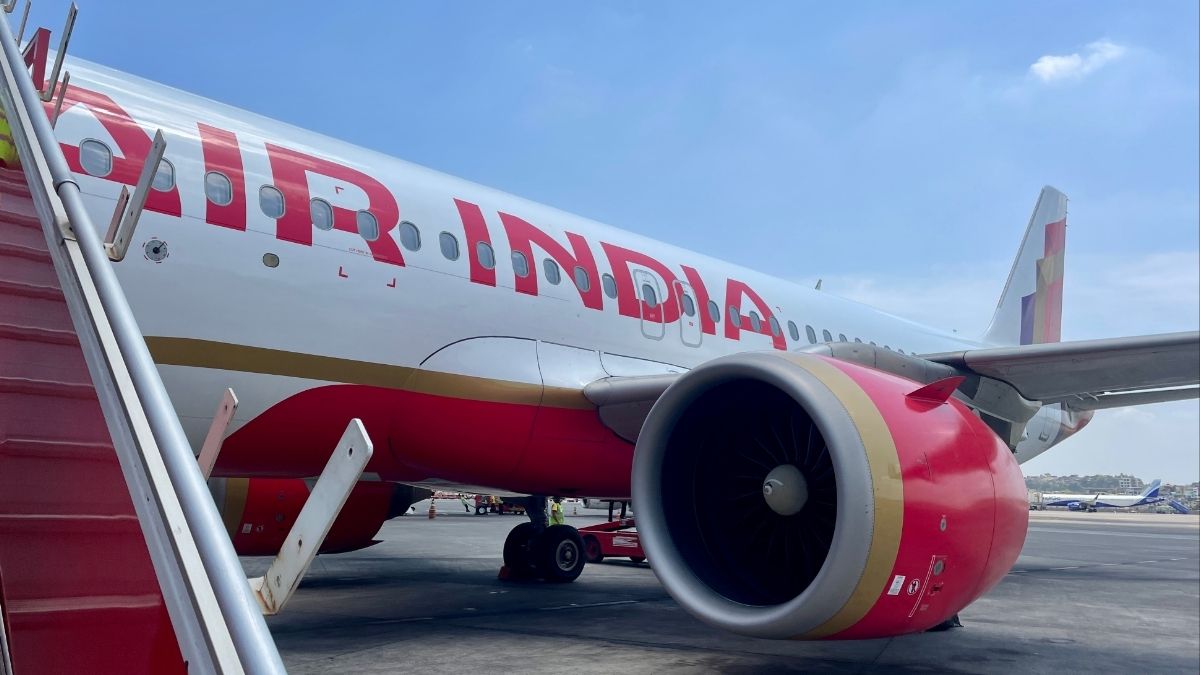
What should have been a season of bounty is turning into a period of uncertainty, churn and discontent in India’s airline space. With planes going full and passengers forking out above-average fares to travel domestically for either their summer vacations back home, to pilgrimage spots, or to tourism hubs, it really shouldn’t have been the case.
Yet, the truth is that India’s aviation majors are in an unhappy state of mind. And to blame it all on the obvious—the conflict in the Middle East—leading to a spike in fuel costs, is to miss all the turbulence hiding in plain sight.
First and foremost, there is the internal strife going on in both IndiGo and Air India, which, between them, control about 91 per cent of India’s domestic passenger air travel.
Both airlines saw their CEOs ousted internally, as multiple pressures reached a boiling point. Indigo CEO Pieter Elbers, whose days were numbered after the airline’s meltdown back in winter saw hundreds of flights cancelled and impacting anywhere upto 4 lakh passengers, bowed out, with founder Rahul Bhatia quickly replacing him with Willie Walsh, the former chief of the International Air Transport Association (IATA) and a veteran of airline companies such as British Airways and Aer Lingus (Ireland).
At Air India, things are murkier. CEO Campbell Wilson put in his papers on April 7, though he continues to run the airline until the Tatas find a replacement. To make matters worse, questions have been raised in Tata Sons boardrooms about thousands of crores of rupees being invested in the airline, in what is turning out to be a bottomless pit—with no sign of any distinct resurgence or revamp (unless you are happy with Manish Malhotra uniforms and a new logo).
Worse, the repeated pampering of the ‘white elephant’ even became a question hanging over the reinstatement of N.Chandrasekharan as Tata Sons chairman in the board meeting, the hint being as to why, even into its fourth year of a five-year transformation plan, the airline seems to be ambling along without any marked difference.
The irony couldn’t be more stark. The situation, at least on paper, is ripe for Air India to knock it out of the park, considering how the Iran war has weakened the Middle East biggies. For the last two decades or so, Dubai’s Emirates (and to a smaller extent, Qatar and Abu Dhabi’s Etihad) had lorded it over international air traffic globally, much of that success riding on its hub-and-spoke model of bringing in international passengers from dense markets like India, China and Australia for onward travel into Europe and the US. And back. Now, with Emirates on its knees, it would have been ‘Advantage Air India’, if only it weren’t mired in its own internal struggles and confusion, including not having enough world-class planes (and sometimes, sending the wrong aircraft type to the wrong destination, as happened last month on its Delhi-Vancouver route).
With jet fuel prices surpassing ₹2 lakh per kilolitre in early April, doubling after oil companies hiked it, India’s airlines are again facing the bogey of an oil doom—something that has crippled Indian aviation (and many an airline) repeatedly over the course of its modern history. The big worry now is whether this could increase further if the imbroglio over oil tanker passage through the Strait of Hormuz doesn’t clarify soon enough.
As such, India’s international airline traffic is suffering from the closure of Pakistan’s airspace since Operation Sindoor. Now, with war in the Middle East (not to forget that the Ukraine war is yet to be permanently resolved) blocking off the pivotal westward routes that bring in the most profits, this pain looks set to remain and deepen.
The problem in India is the very nature of the business—margins are but wafer-thin even when things are hunky dory. So all it takes is a small issue, a little oil price hike here or having to take a longer route there (which means not only more spending on oil, but the fact that if a plane has to load more fuel due to longer routes, it also has to reduce weight elsewhere, which means cutting down on revenue-earning passengers or cargo; either way, it is loss-loss) for an airline’s books to run into red.
Making matters worse has been India’s unique trifecta—the market is dominated by two big players, with the rest being fringe players. That means a disadvantage to the country’s price-conscious air travel customers.
With oil not having been an issue in the last few years, the Indian aviation companies had bet on an ambitious growth target, spurred by the clamour for travel for lockdown-sick citizens. This meant splurging thousands of crores on new aircraft orders. Not only are these plane deliveries running delayed from Airbus and Boeing, but the likes of Indigo and Air India might just be seeing an opportunity also slipping out of their hands.
