



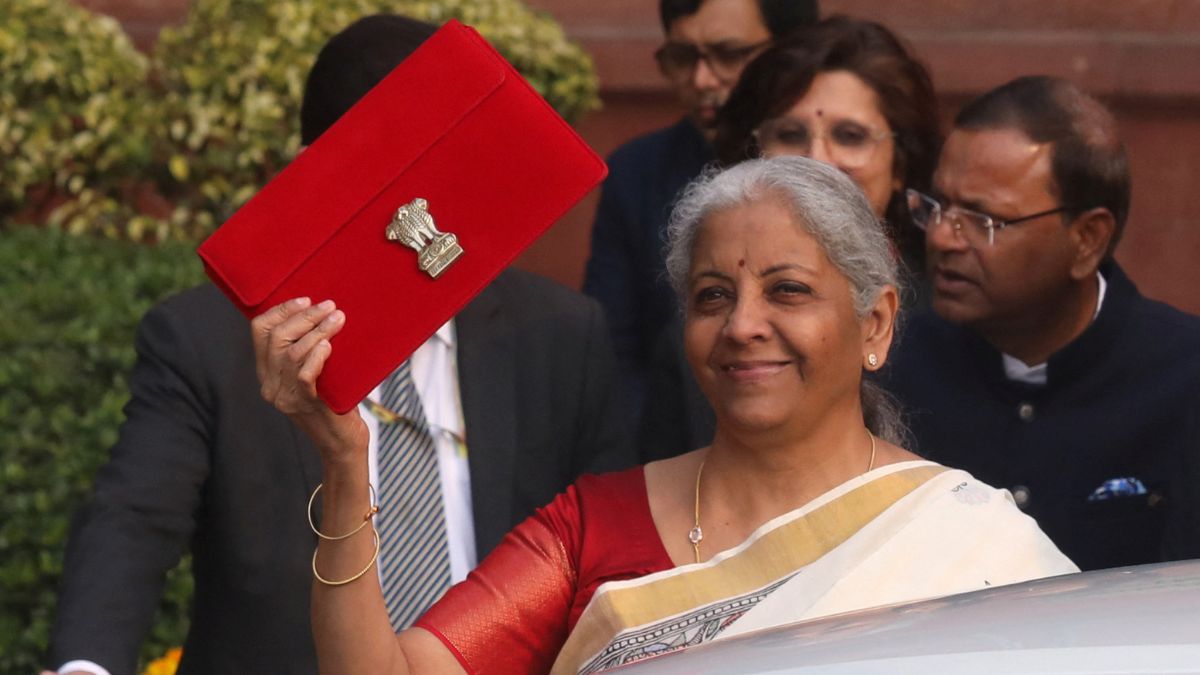
Finance Minister Nirmala Sitharaman’s Union Budget 2026, presented on Sunday, has been broadly viewed as a calibrated exercise that prioritises infrastructure expansion, digital capacity, education and emerging growth sectors, while largely avoiding headline-grabbing populist measures.
A capital expenditure outlay of Rs 12.2 lakh crore for FY27 remains the centrepiece of the Budget, signalling continuity in the government’s infrastructure-led growth strategy. Experts say the renewed emphasis on Tier-2 and Tier-3 cities could reshape urban development patterns and ease pressure on India’s largest metros.
Vishwas Chitale, Fellow at the Council on Energy, Environment and Water (CEEW), said the higher allocation could strengthen climate resilience in smaller cities, which are increasingly vulnerable to extreme weather events. He noted that the 16th Finance Commission’s recommendation to raise the Disaster Risk Management Fund to Rs 2.04 lakh crore for 2026–31, a 28 per cent increase over the previous cycle, was significant.
The Budget’s education and skills agenda has also drawn attention, particularly its attempt to link learning outcomes with employability and innovation. Alison Barrett MBE, Country Director India, British Council, said the proposals bring education, skills and the creative economy together in a “practical, future-focused way”. She pointed to initiatives such as support for women in STEM, youth engagement in technology, the creation of five University Townships, and the proposed education-to-employment and enterprise standing committee as signals of deeper academia-industry collaboration. The recognition of the “Orange Economy”, she added, underlined the role of creativity and the arts in India’s economic growth.
Real estate and urban development stakeholders have responded with cautious optimism. Anshul Jain, Chief Executive for India, Southeast Asia, the Middle East, Africa and APAC offices and retail at Cushman & Wakefield, said the Budget balances long-term bets on future sectors with near-term relief for manufacturing and export-oriented businesses. He said the emphasis on data centres, healthcare, tourism, education, semiconductors and critical minerals reflects the government’s intent to build new growth engines, while customs duty rationalisation and greater flexibility for SEZ occupiers could offer immediate operational relief.
From a technology perspective, the Budget’s focus on AI, data centres and digital infrastructure has been interpreted as a strategic shift. Sharing Microsoft’s perspective, Puneet Chandok, President, Microsoft India & South Asia, said the Budget places AI at the heart of India’s next growth phase. He said long-term policy certainty for data centres and cloud infrastructure recognises digital capacity as strategic national infrastructure and would be critical as AI adoption scales across sectors.
Knight Frank India Chairman and Managing Director Shishir Baijal described the Budget as signalling continuity in India’s macro growth trajectory, supported by fiscal discipline and sustained infrastructure investment. While he said the focus on Tier-2 and Tier-3 growth corridors and urban connectivity would support medium-term demand in residential and logistics markets, he flagged the absence of real estate-specific fiscal incentives, particularly for affordable housing, as a missed opportunity.
On the taxation front, experts have highlighted a key change affecting service exports. Saurabh Agarwal, Tax Partner at EY India, said aligning the ‘place of supply’ for intermediary services to the location of the global customer removes a long-standing barrier for IT services, digital marketing, financial services and insurance. He said the move could reduce litigation, unlock working capital for intermediaries in GIFT City, and improve the global competitiveness of Indian brokers, describing it as a shift from “taxing at source” to “enabling at scale”.
