



In FY2025, India imported $8.6 billion worth of goods from the United Kingdom. And with it came thousands of crores of rupees in customs revenue. Now, with the latest free trade agreement with the UK, thinktank Global Trade Research Initiative (GTRI) estimates that India would lose out on at least ₹4,060 crore in customs revenue in the first year.
GTRI also projected an annual loss of ₹6,345 crore by the tenth year of the FTA. According to the bilateral trade deal, tariffs imposed on 85 per cent of product categories (tariff lines) of UK imports by India would be eliminated. Another 5 per cent of tariff lines would see heavily reduced duties.
“India’s revenue foregone in the first year of the agreement is estimated at ₹4,060 crore,” GTRI Founder Ajay Srivastava told agencies.
However, it is not just India that is losing out on customs revenue. Taking into account the FY2025 data, GTRI projects an annual revenue loss of £375 million or ₹3,884 crore for the UK as it would eliminate tariffs on 99 per cent of Indian imports according to the terms of the comprehensive economic and trade agreement (CETA).
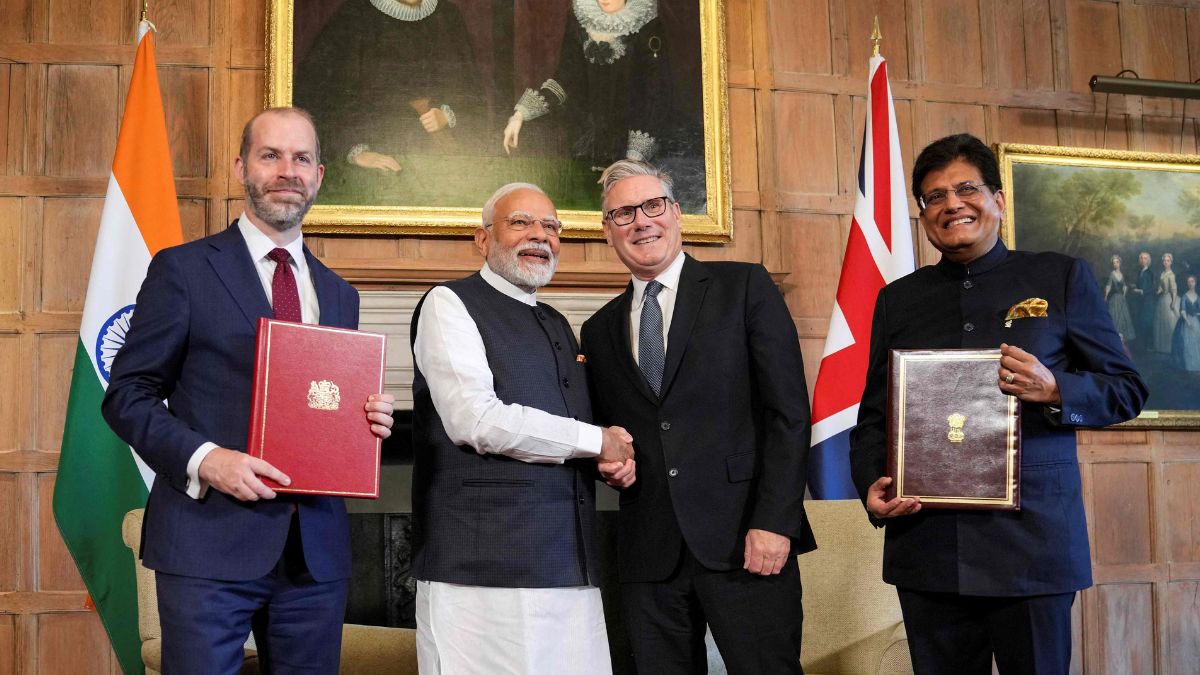
Another marked impact of the CETA, signed between India and the UK on July 24, would be the entry of British firms into the telecom and construction sectors in the country.
According to the Ministry of Commerce and Industry, “UK companies can now provide telecom, construction, and related services in India without establishing a local presence, enjoying full national treatment, meaning they will be treated on par with Indian firms.”
The FTA also opens Indian companies to more than 130 sub-sectors in the UK. On the other hand, UK firms will have access to 108 sub-sectors (some subject to FDI caps).
There is a lot of ground to cover for the Centre before the CETA comes into effect. In line with this, the Indian government plans to organise around 1,000 outreach programmes, according to agencies. These include workshops, awareness drives, discussion forums, and stakeholder meetings, among others, to address any local interference.
