



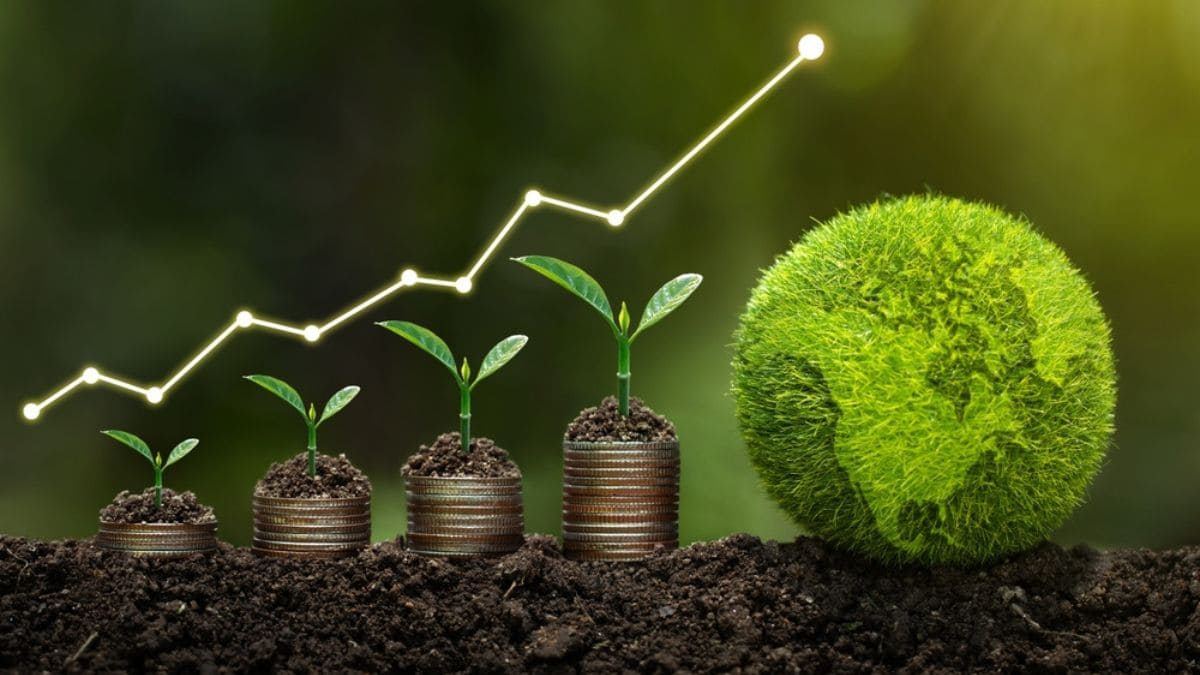
India has recently surpassed Japan to become the world’s fourth-largest economy, crossing the $4 trillion milestone. But the nation’s ambition doesn’t end there. The target is clear: to become a $5 trillion economy, and the dream isn’t very far-fetched. However, while the growth is inspiring, it comes at a significant environmental cost.
Rapid urbanisation and Increasing Consumption are straining our natural resources, bringing challenges like pollution, poor waste management, and inefficient use of resources coming to the forefront.
To tackle these problems, the solution lies in adopting a circular economy, a system that reimagines the way we use and reuse.
What is a Circular Economy?
Ever since the Industrial Revolution, the global economy has followed a linear model: first, we take resources, build required machinery, make the product, use them and throw them away. However, it is the same model/approach that has led to the depletion of our resources, growing landfills and escalating pollution.
In contrast, a circular economy contributes to solving the issue at hand as it is designed to keep materials in use for as long as possible. It promotes reusing, repairing, refurbishing, and recycling existing materials and products, thereby closing the loop of production and consumption. It seeks to lower environmental impact and optimum resource utilisation through smarter design and innovation.
Essentially, it defies the idea that prosperity is gained at the planet’s expense. Instead, sustainability is framed as a driver of innovation and competitiveness.
Why does India need a circular economy?
The urgency is pressing. A place like India, with 1.44 billion people, generates over 62 million tonnes of solid waste annually. Shockingly enough, only 75–80 per cent of this is collected, and a mere 25 per cent is treated (Ministry of Housing and Urban Affairs).
Furthermore, India generates over 1.7 million tonnes of electronic waste every year (Tejimandi by Motilal Oswal, April 2025) and is among the biggest generators of e-waste in the world.
Not only is this an environmental issue, but it also acts up to be a massive economic inefficiency. Every tonne of waste not reused or recycled is a lost economic opportunity.
Hence, embracing a circular economy would benefit India by reducing the burden of rethinking manufacturing and consumption habits. India can reduce its dependence on imports, save energy, generate green jobs, and minimise environmental damage through this approach adoption.
Real-life circular economy in action
Not just theoretical ideas, India is already witnessing circularity in action across sectors.
Agriculture: To combat hazardous pollution levels caused by stubble burning, the Indian Agricultural Research Institute has developed bio-decomposers called “Pusa Decomposer” that convert stubble into compost, reducing smoke and improving soil fertility.
Manufacturing: Tata Steel, India’s largest steel producer abides by the “Zero Waste” principle through its 3Rs approach—Reduce, Reuse, Recycle. They have implemented a circular approach by recycling steel slag into materials for road construction and reusing treated water within its facilities (Tata Steel Sustainability Report, 2024).
Textiles: One of the major contributors towards irregular waste management has been the fashion industry. However, an Indian brand, Doodlage, creates fashionable and high-end clothing from factory scraps, turning waste. This reduces landfill pressure and promotes conscious consumerism.
E-waste: Whilst we have companies like Tata Steel and Doodlage, there are also organisations like Karo Sambhav that have built networks to collect used electronics and partner with recyclers to safely extract materials like copper, gold, and aluminium for further processing. They have been a major contributor to India’s E-Waste Programme.
Construction: The Smart Cities Mission encourages the use of recycled construction materials and eco-friendly design standards. Cities like Pune and Ahmedabad have introduced incentives for builders to use green materials. These initiatives are needed right now and show the correct measures taken by the Government of India to promote a circular economy.
Government policies supporting circular economy
India has taken several policy strides to promote a circular economy. The Extended Producer Responsibility (EPR) framework mandates manufacturers to collect and recycle end-of-life products like plastics, batteries, and electronics.
Its objective is to prevent waste from ending up in landfills or polluting the environment, encourage the adoption of eco-design principles, and reduce environmental impact from the product design stage along with the promotion of efficient collection and recycling infrastructure. These together would reduce reliance on virgin resources, promoting a circular economy.
The National Resource Efficiency Policy also aims to reduce the consumption of raw materials per unit of GDP and promote reuse across industries, changing the face of industries in India.
Furthermore, India and the European Union (EU) have launched two major research and innovation initiatives under the India-EU Trade and Technology Council (TTC), focusing on two coordinated calls in the areas of Marine Plastic Litter (MPL) and Waste-to-Green Hydrogen.
What’s needed to scale the impact?
To truly incorporate scalability, we need to take a few steps, like public awareness, which includes citizens of India, to understand the benefits of reuse and recycling. Awareness campaigns, curriculum additions, and community engagement can help to begin this.
Secondly, industry collaboration majorly highlights companies working with suppliers, waste managers, and designers to create circular products.
This is followed by investment in infrastructure, which has recycling plants, repair hubs, and collection centres under it, which are required to support circular models.
Lastly, policy enforcement, where stronger monitoring and penalties are needed to ensure compliance with recycling and waste management rules. By taking all these steps, we will be able to scale the impact of the circular economy.
India’s green growth opportunity
India stands at a critical juncture. By embracing the circular economy, the nation can align economic growth with environmental sustainability. It reduces dependence on raw materials, lowers emissions, and creates resilient systems that are future-ready.
The circular economy is not merely an environmental necessity but a strategic route to green industrialisation, local manufacturing, and inclusive growth for India.
From cleaner cities to innovative startups and green jobs, the benefits are many, and India is preparing itself for the change. This is not just about saving the planet; it’s about creating a smarter, cleaner, and more inclusive economy. If implemented effectively, the circular economy can be the engine that powers India’s green future for generations to come.
The author is Associate Professor, Finance, at the Great Lakes Institute of Management in Chennai.
