



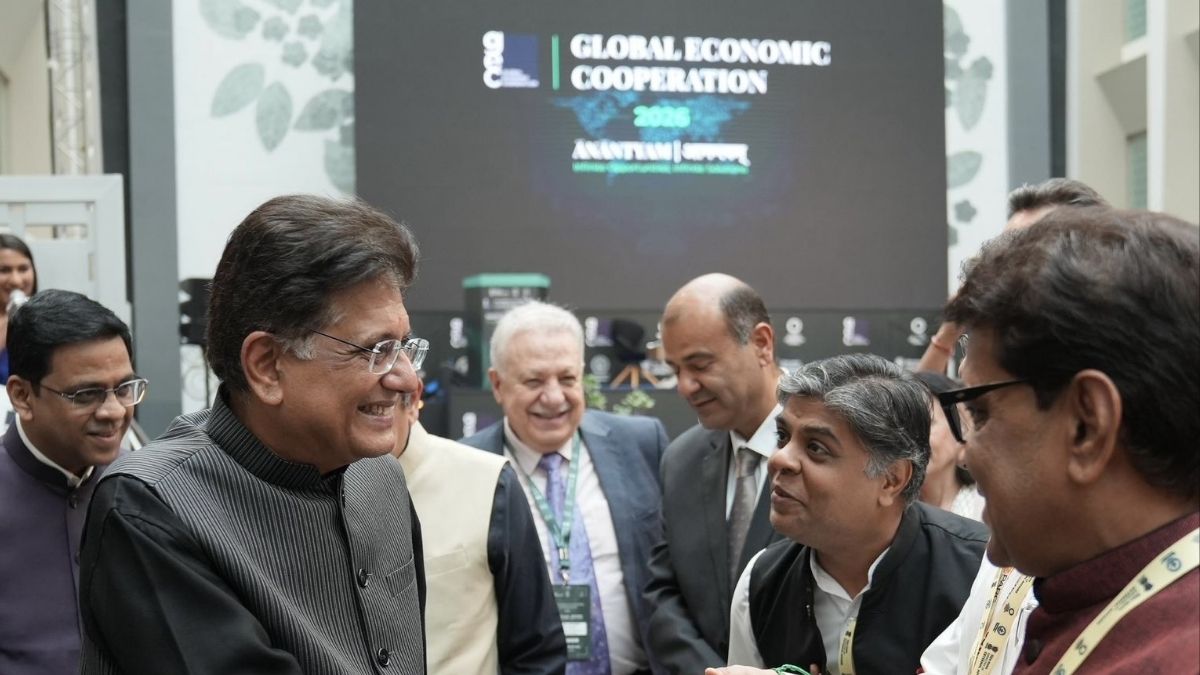
India could add a staggering $26 trillion to the world economy between now and 2047, a scale of growth “unparalleled in history and unlikely to be replicated anywhere else,” Union Commerce and Industry Minister Piyush Goyal announced in Mumbai on Wednesday.
Speaking at the Global Economic Cooperation (GEC) 2026 conference, he said this transformation will take India from the world’s fourth-largest economy today to the third by 2027–28, and eventually to a developed nation with a GDP of 30–35 trillion dollars by 2047.
From ‘Fragile Five’ to trusted growth engine
Goyal contrasted India’s current position with a decade ago, when it was clubbed among the “Fragile Five” emerging markets vulnerable to external shocks.
He argued that India now offers the world a combination of stability, growth and trust, underpinned by macroeconomic discipline, political stability and structural reforms.
The minister said the era of economic isolation is over and that India is responding by “building alliances, deepening friendships, and concluding trade agreements from a position of strength.”
Since 2022, India has signed nine free trade agreements (FTAs) in roughly four years and now has arrangements with 39 developed countries, he noted. For New Delhi, each FTA is “an invitation to partner in India’s future,” aimed at creating win–win outcomes rather than one-sided concessions, he added.
FTAs with shield for farmers, bridge for exports
Goyal stressed that India’s FTAs are being crafted to simultaneously protect sensitive sectors and open new markets. “Farmers’ interests have been fully protected,” he said, adding that the agreements are designed to safeguard MSME growth, protect fishermen and preserve domestic jobs.
These pacts also secured better market access for Indian textiles, footwear and leather, expanded opportunities for pharmaceutical, farm and marine exports, and attracted technology and investment flows into the country. Partner nations, he argued, have accepted India’s positions because of the government’s “honest and transparent” approach and a clear national purpose behind each negotiation.
GEC 2026 was organised by the Future Economic Cooperation Council in cooperation with the Ministry of External Affairs and the Maharashtra government.
