



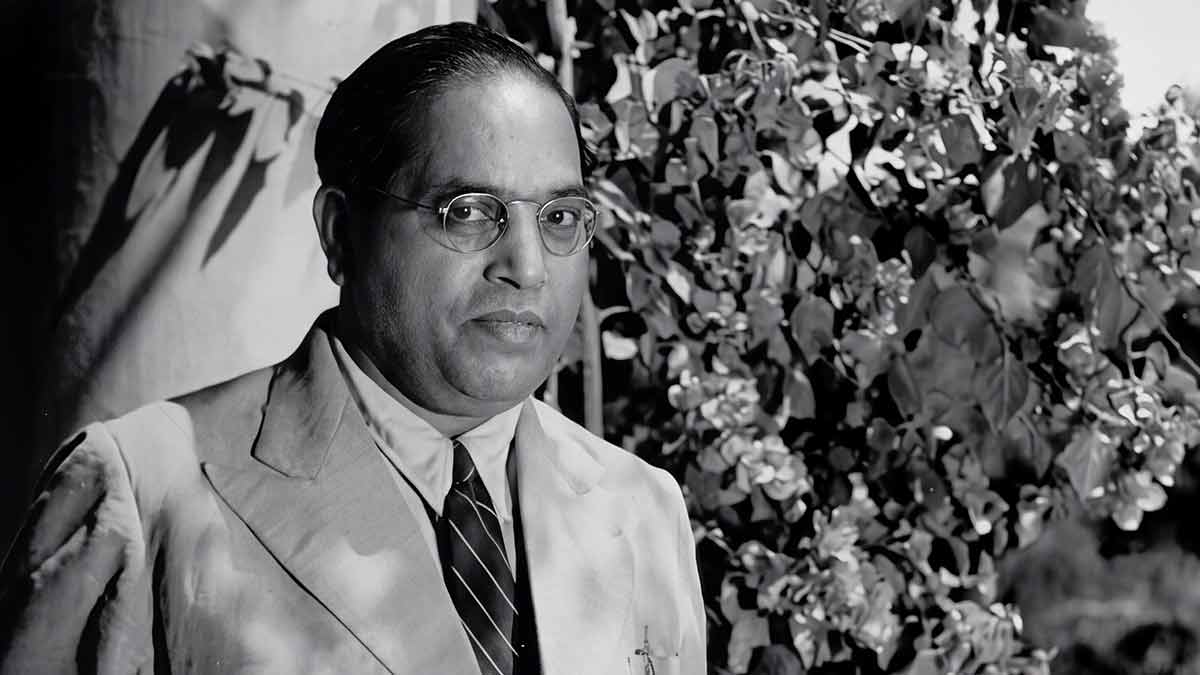
June 9, 1950. In Thiruvananthapuram, then capital of the Thiru-Kochi state—which would merge with Malabar to form Kerala in 1956—B.R. Ambedkar found himself drawn into an unexpected public engagement. He was persuaded to address a gathering at the Constituent Assembly Hall, even though it was not part of the itinerary.
“I had not intended to make a speech,” he told the audience. “Nor had I prepared one. My wish was simply to spend two peaceful days here. Although I could have declined this programme—which was arranged without informing me—I have chosen not to do so despite my physical fatigue.”
Thiru-Kochi chief minister Paravoor T.K. Narayana Pillai wanted Ambedkar to speak on the Constitution. Ambedkar politely declined. “For the past three years, I have been continuously engaged in drafting the Constitution, and, quite frankly, I have grown weary of the subject,” he said.
The organisers then suggested the Hindu Code Bill. Ambedkar set that aside, too, observing that only a small section of the audience would find the subject relevant.
Instead, he chose to speak on something different: constitutional moral practices. “It is a subject of even greater importance than the Constitution itself. The reason is that, in many countries, there has been no harmony between constitutions and the constitutional morality of people. Those constitutions remained merely theoretical because they bore little relationship to the people’s way of life or their moral outlook. Constitutional morality is therefore of fundamental importance,” he said.
For Ambedkar, constitutional morality was inseparable from the struggle against caste oppression and the need to build a social democracy alongside a political one. However, Ambedkar himself appears to have become an unwitting victim of the caste prejudices of the bureaucracy that had prepared his Thiruvananthapuram itinerary.
Although Ambedkar had said that he wanted to spend a couple of peaceful days in Thiru-Kochi, bureaucrats drew up a packed schedule for him. In doing so, they excluded what could have become Ambedkar’s historic visit to a dalit (officially Harijan then) colony. There were proposals for such a meet from government departments and caste organisations, but these were never carried through. Nor is there any indication that Ambedkar was told about them.
Instead, his programme was reworked to prioritise engagements with the state’s political and social elite. Drawing on confidential correspondence, government notes and internal communication, THE WEEK reconstructs this untold story of how Ambedkar was kept from the people he had always fought for.
SOUTHERN SOJOURN
Ambedkar’s visit to Thiruvananthapuram came as the tail end to an extensive visit to Ceylon (now Sri Lanka). On May 13, 1950, K.V.K. Sundaram, the law secretary to the Government of India, informed K.G. Menon, chief secretary of the Thiru-Kochi government, that Ambedkar wanted to spend a few days in the state while returning from Ceylon. He had gone there to attend the First General Conference of the World Fellowship of Buddhists, between May 25 and June 6.
The visit came at a significant moment in Ambedkar’s intellectual and political journey. Although his historic conversion to Buddhism at Deekshabhoomi in Nagpur was still six years away, the religion had already become central to his search for a moral and social alternative to caste oppression.

In Ceylon, Ambedkar and his wife, Savita, attended the conference as observers. Speaking at the inaugural session at Kandy’s Temple of the Tooth, he made it clear that he had travelled not as a ceremonial guest but with a purpose. “I am an interested observer, not a delegate....,” he said. “There are people in India who think the time has come to revive Buddhism in India. I am one of them.”
He said he wanted to understand whether the Buddhist Sangha remained an active social institution or had become concerned only with preserving ritual purity. He wanted to know if Buddhism continued to function as a living moral force capable of serving ordinary people—a question that reflected his growing conviction that the religion offered a path to the emancipation of India’s oppressed communities.
In a speech he delivered in Colombo Town Hall, he appealed to the ‘untouchables’ in Ceylon to embrace Buddhism and urged the island’s Buddhists to accept them as equals and safeguard their interests.
Back in Thiru-Kochi, meanwhile, extensive discussions were underway about Ambedkar’s visit. Sundaram’s letter to the chief secretary had only one specific programme request from Ambedkar—he wished to use the visit to hold discussions with a select group on the application of the Marumakkathayam and Aliyasantana laws (systems of matrilineal inheritance), as well as other local laws affecting Hindus in the state.
In a subsequent letter, M. Massey, Ambedkar’s private secretary, informed the chief secretary that Mrs Ambedkar, Massey and a personal assistant would accompany the law minister. Ambedkar was initially scheduled to arrive at Dhanushkodi from Ceylon on the evening of June 7, 1950, before travelling by train to Thiruvananthapuram.
The travel plan was later revised. Instead of entering India through Dhanushkodi, Ambedkar was to fly from Ceylon to Tiruchirappalli and continue his journey to Thiruvananthapuram. However, his scheduled arrival on the evening of June 8 and his stay until June 11 remained the same.
SKEWED PRIORITIES
Once the visit was confirmed, the state bureaucracy sprang into action to prepare an itinerary. Ambedkar was opposed to alcohol and intoxicants of any kind. He had urged marginalised communities to give up drinking and later included abstinence among the 22 vows he administered to himself and his followers upon embracing Buddhism. Yet, the superintendent of the state guests department wrote to the chief secretary, seeking instructions on whether liquor should be served. He also sought a permit for two bottles of whisky from Messrs Spencer & Co., Quilon.
Though prohibition was in force in Thiru-Kochi, the state formally exempted the guests from the prohibition laws and directed the board of revenue to issue the permit and facilitate the whisky’s transport to the state guest house in Thiruvananthapuram.
As officials worked on the itinerary and lined up programmes and meetings, K.R. Vishwambharan, then commissioner for the advancement of backward communities, wrote to V.K. Velayudhan, secretary to the development department, on May 29, 1950, proposing that Ambedkar visit some of the state’s Harijan colonies. “I would like to take him to some of the Harijan colonies in the state, where intensive ameliorative work is being done at the instance of this department. This is to request that the government may be pleased to arrange for the same, if Ambedkar agrees to such a programme,” he wrote. The letter reached the chief secretary the same day. In a handwritten note, the chief secretary remarked: “Will secretary see if there was anything worthwhile visiting round Trivandrum?”
The proposal went no further. Also, there is no indication that Ambedkar was told about it. The top bureaucracy, drawn largely from affluent castes, appears to have decided against it, noting that Vishwambharan himself had identified Sachivothamapuram Colony at Kurichy, near Kottayam—about 130km from Thiruvananthapuram—as “the best Harijan colony”. Since Ambedkar had no programme in Kottayam, officials concluded that no arrangements for that visit were necessary.
Sachivothamapuram, named after Sir C.P. Ramaswami Iyer, the diwan of Travancore from 1936 to 1947, had emerged from a struggle by marginalised communities for a place to live with dignity. The settlement, originally known as Anandan Colony, began in the 1920s when Pampadi Anandan Isaac put up a hut for dalits. After upper-caste landlords demolished it, he rebuilt it and, with two others, began settling people from the “untouchable” castes along both sides of the road.
Seeking legal recognition for the settlement, Anandan Isaac and his associates approached Ayyankali, then a member of the Praja Sabha (assembly) and a leading voice for marginalised communities. Ayyankali took up their demand, seeking one-and-a-half acres of land, houses and other facilities. After negotiations with the diwan, the government agreed to allot 75 cents, along with houses and other facilities, including a lower primary school. And, in 1939, the colony was officially inaugurated and renamed, while Anandan Isaac’s contribution gradually faded into oblivion.
Notably, Vishwambharan’s original request did not mention Sachivothamapuram. He referred only to “some of the Harijan colonies in the state”. Yet, the top bureaucracy did not consider any of the other colonies—or hamlets with a significant dalit population in Thiruvananthapuram—for Ambedkar to visit. Instead, it ensured that the elite of Thiru-Kochi met the law minister.
Although the princely state of Travancore had been integrated into the Indian Union, the maharaja of Travancore remained the head of the Thiru-Kochi state as its “Raj Pramukh”, by virtue of the covenant entered into by the rulers of Travancore and Cochin.
The Thiru-Kochi bureaucracy ensured that Ambedkar had a morning meeting with, and dinner hosted by, the Raj Pramukh on June 9, followed by another meeting with him on June 10. It also arranged a lunch with members of the Rotary Club and tea at the Sri Mulam Club. Also included were visits to the zoo, museum, aquarium and art gallery.
A five-member delegation from the Backward Class Christian Federation had sought an interview with Ambedkar. P. Chacko, its president and a member of the legislative assembly, had raised the request well in advance, on May 29. The secretary of the Central Distress Relief Institute of Trivandrum, which provided industrial training and employment opportunities to members of backward communities, had also sought permission to participate in Ambedkar’s reception and requested that he visit the institute at Kuravankonam, within the city. The bureaucracy rejected both requests. A note dated June 7—on the eve of Ambedkar’s visit—said: “As details of his programme have already been fixed up, it appears to be too late to interfere with it.”
Notably, these confidential records of Ambedkar’s historic but largely forgotten visit were marked for destruction in 1971. Yet, inexplicably, they survived in the Kerala State Archives—perhaps to serve as a quiet testament to how independent India inherited a state machinery in which caste and its prejudices were deeply embedded.
