



PANNA
Daybreak comes softly to the Panna Tiger Reserve in Madhya Pradesh. An overnight shower has cooled the forest, leaving the scent of wet earth hanging in the air. Peafowl call from the scrub, parakeets streak through and a lone drongo announces the morning. Outside the gate of the reserve, safari vehicles line up—some visitors cradle expensive camera lenses, others simply hope for a glimpse of the animal that has become the face of one of the world’s greatest conservation stories.
At precisely 5:30am, the gates open.
Among the first vehicles to enter is driven by Mahesh, a veteran of countless safaris. Beside him sits Rishana Pardhi, Panna’s first female safari guide from the Pardhi community, once known for its hunting and tracking skills. She spots a fresh pug mark pressed into damp earth. A langur’s alarm call echoes through the forest. The birds fall silent. Every sign points to a predator nearby.
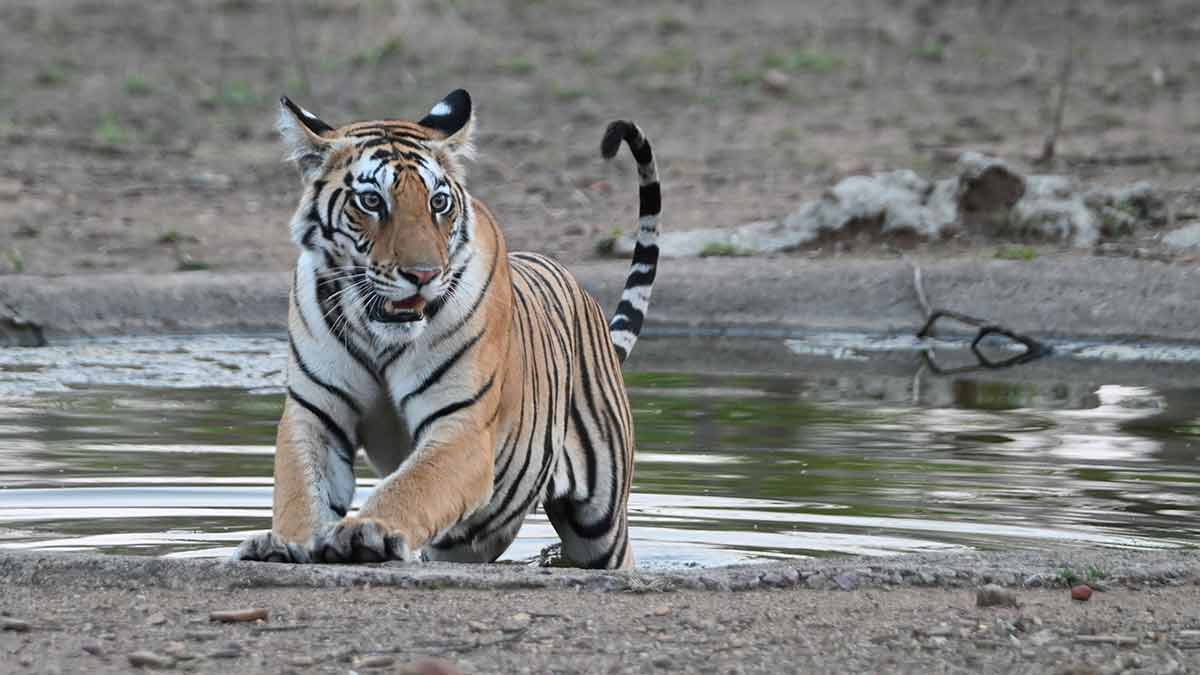
Then comes the radio message every safari-goer hopes to hear. A tigress called P-151 has been sighted near a waterhole with her cub. Within minutes, vehicles converge. Conversations quieten. Cameras rise in unison. From the edge of the undergrowth emerges the unmistakable form of a Royal Bengal tiger. She moves with quiet confidence, her cub close behind, before slipping silently back into the forest.
For the tourists, the sighting lasts only moments. For Panna, it represents years of painstaking conservation.
When Project Tiger was launched in 1973, India’s national animal stood on the brink. Decades of hunting, habitat destruction and shrinking forests had driven tiger numbers to dangerous lows. More than five decades later, India is now home to an estimated 3,925 wild tigers, nearly three-quarters of the global population. From the mangroves of the Sundarbans to the rainforests of the Western Ghats and the forests of central India, the tiger has reclaimed landscapes where its future once seemed uncertain.

Nowhere is that recovery more visible than in Madhya Pradesh, which today has an estimated 785 tigers. In 2009, when the Panna reserve lost all its tigers, forest officials and conservationists carefully reintroduced tigresses from Kanha and Bandhavgarh reserves, and a male tiger from Pench. Every movement was monitored, every territory mapped.
Among the founding animals was T-2, the tigress who would become the matriarch of modern Panna. Before her death at 19, she gave birth to 21 cubs. Her descendants now roam far beyond the reserve, strengthening tiger populations across central India. While other reserves in the country might have more tigers, none of them has seen a recovery like Panna. “What happened in Panna opened a new chapter in global tiger conservation,” says retired Indian Forest Service officer R. Sreenivasa Murthy, who played a pivotal role in the reserve’s recovery. “We reintroduced seven tigers and there was no looking back.” When Murthy left Panna, the reserve had 32 tigers. Today, it is more than 100.
Dr Yadvendradev Vikramsinh Jhala, one of India’s foremost wildlife scientists and former dean of the Wildlife Institute of India, Dehradun, says the answer lies beyond the tiger itself. “Tiger conservation begins with healthy ecosystems,” he says. “Restore the prey base, reduce pressure on forests and tigers will reclaim landscapes on their own.”
Across Madhya Pradesh, reserves attract thousands of visitors every year. Wildlife tourism has become an important economic engine, supporting hotels, safari operators, guides, drivers, artisans and transport providers. For many communities living around these forests, conservation is no longer seen only through the lens of restrictions. It has become a source of livelihood.
Researchers, however, have increasingly questioned whether repeated exposure to vehicles and people alters tiger behaviour, particularly during peak tourist seasons. The debate has prompted a broader conversation about where the line should be drawn between public engagement and ecological sensitivity.
Jhala argues that the focus should not be on limiting tourism but in managing it responsibly. “Tourism doesn’t threaten tigers,” he says. “Poorly managed tourism does. Ethical tourism that benefits local communities is indispensable to securing long-term public support for tiger conservation.”
That distinction matters. Tourism has generated employment, strengthened local economies and built broad public support for conservation. But it succeeds only when the welfare of wildlife remains at the heart of every decision.
“Tigers have existed for centuries. Their growth is a natural process,” says Ajay Dubey, a Bhopal-based wildlife activist who has spent decades studying conservation across central India. “The real responsibility is conservation, and ensuring habitats remain intact and animals are allowed to thrive without unnecessary disturbance.”
For decades, the challenge was preventing extinction. Today, it is about sustaining the success.
As young tigers disperse in search of territory, they increasingly move through farmland, villages, highways and industrial landscapes. The future of India’s tiger story will therefore be shaped not only inside national parks, but also in the spaces where wildlife and development increasingly meet, and where the country’s next conservation challenge is already unfolding.
Madhya Pradesh recorded 55 tiger deaths in 2025. While poaching remains a concern, electrocution, territorial conflict, road and rail accidents, disease and encounters with people have emerged as equally significant causes of death. Many of these deaths occur beyond the relative safety of protected reserves.
“As populations grow, available space comes under pressure and territorial conflicts naturally increase,” says Murthy.
His observation reflects a broader shift in thinking. Counting tigers is no longer enough. The quality of the landscapes sustaining them has become the more meaningful measure of success.
For instance, recent tiger deaths linked to suspected canine distemper virus in Kanha have highlighted the growing importance of veterinary surveillance. Modern conservation now depends as much on disease monitoring, genetic research and rapid-response systems as it does on anti-poaching patrols.
Perhaps nowhere is the next challenge more visible than in India’s wildlife corridors. These stretches of forest, scrubland and mixed-use landscapes connect one reserve to another, allowing tigers to disperse, find mates and maintain genetic diversity. Without them, protected areas risk becoming isolated islands.
Murthy believes the future of tiger conservation will depend on safeguarding these invisible lifelines.
“Corridors have to be protected,” he says. “Development pressures are increasing everywhere. If connectivity is lost, conservation becomes much more difficult.”
Dubey agrees, adding that accountability must now extend beyond reserve boundaries. “Roads, railway lines and other infrastructure continue to fragment habitats while encroachments steadily reduce available space. Conservation cannot be measured by population growth alone.”
Half a century after Project Tiger began, India has become the global custodian of the wild tiger. Reserves such as Panna, once written off as conservation failures, are now studied around the world.
And as countries mark World Tiger Day on July 29, India’s leadership through initiatives such as the International Big Cat Alliance reflects its growing role in shaping the future of big-cat conservation.
But as India expands its infrastructure and urbanises at an unprecedented pace, the challenge will be to ensure that development and ecological stewardship advance together rather than at each other’s expense.
