



Benjamin Franklin once said that in this world, nothing can be said to be certain, except death and taxes. Death is coming for us all. But there are two circumstances in which it is particularly cruel. First, death on a hospice bed following prolonged illness, surrounded by family and friends as you wait for the inevitable. Second, the death that awaits a prisoner sentenced to capital punishment. In the first, the verdict is passed by nature; in the second, by the state. The patient is mourned, and the prisoner, scorned.
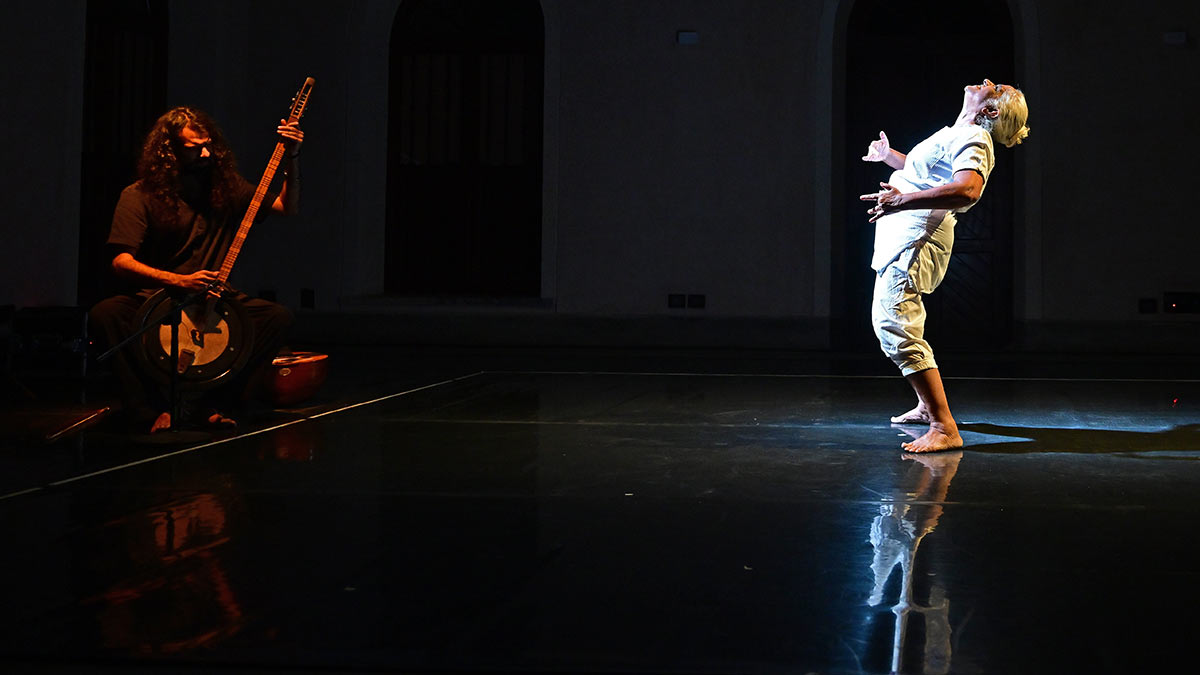
This stripping of a death row prisoner’s humanity was precisely what theatre artiste Maya Krishna Rao wanted to explore in her mono-act, ‘You Really Want to Know My Story?’—a 30-minute performance previously staged in Delhi, Goa and the US before coming to Bengaluru on October 30. It was based on research and personal accounts of death row inmates documented by the Square Circle Clinic, a criminal justice initiative of Hyderabad’s NALSAR University of Law.
The play probed the problem without offering pat answers. Rao’s performance was restrained, almost abstract, but it forced you to ask an unsettling question: who really are the people in death row cells? What was earlier just a newspaper headline or a statistic in a prison survey now became a living, breathing reality. Rao’s stories did not establish innocence or guilt, but only aimed to humanise the people caught in the system, who were living through prolonged incarceration, uncertainty and the psychological burden of awaiting execution.
Rather than recreating individual cases or presenting a conventional courtroom drama, Rao brought together fragments of real-life experiences. There were no identifiable prisoners or elaborate backstories. The performance moved through different perspectives and circumstances in a non-linear structure, leaving the audience to connect the dots.
Everything about the mono-act was minimalistic, from the stage to the costume to the props. The lack of show only heightened the sensations. A solitary chair introduced towards the end became a powerful visual metaphor for custodial violence and vulnerability of the inmates. The lighting and music, particularly through Vishesh Kalimero’s Yayli Tambur instrument, enhanced the narrative.
Sometimes, art can bring home a truth that no study or survey can, and no one knows this better than the Square Circle Clinic. Chords, it has realised, can communicate better than citations. That’s why it has collaborated with artists, musicians and writers through short story collections, art installations, graphic novels, theatre and music performances by the likes of Rao and T.M. Krishna, to take its findings beyond academic publications.

The findings, themselves, are stark. According to the clinic’s Death Penalty in India: Annual Statistics Report, 574 prisoners were on death row at the end of December 2025, the highest year-end figure since it began documenting the numbers in 2016. Sessions courts gave death sentences to 128 people in 2025 alone.
Formerly known as Project 39A, the clinic provides pro bono legal aid for people caught in India’s criminal justice system. Its research has examined the socio-economic background, mental health and experiences of death row prisoners. One of its significant studies, Deathworthy: A Mental Health Perspective of the Death Penalty, involved interviews with 88 death-row prisoners across five states and 110 family members across seven states. “At least one mental health condition was noticed in the death row prisoners we interviewed,” says Maitreyi Misra, director of research at the clinic. “Our commitment is to work towards securing fairness for those entangled in the criminal justice system.”
From 2016 to 2025, sessions courts delivered 1,310 death sentences. However, of the 842 death sentences disposed of by High Courts during the period, only 70 were confirmed. The remaining cases resulted in acquittals or commutation. The figure raises an uncomfortable question: why do trial courts continue to award death sentences when a substantial number of them do not survive judicial scrutiny at higher levels?
The question is not merely about the punishment, but also about the quality of investigation, legal representation, validity of the evidence and consideration of mitigating circumstances. A person sentenced to death is entitled to a fair trial, irrespective of the nature of the crime or the public perception surrounding it. The responsibility, therefore, cannot rest with the judiciary alone. Society often creates the conditions in which crime takes root through inequality, exclusion, poverty and institutional failures. This does not absolve individuals of responsibility, but it raises a larger question about whether society is equally committed to ensuring that every accused person receives a fair opportunity to defend themselves.
That is where the performance by Rao became pertinent. It did not offer easy answers, but created curiosity about the death penalty. It asked the audience to look beyond the crime and the conviction, and consider the human lives caught in between. We know their sentence, but do we know their story?
