



In Japan, mending broken pottery is an art. Craftsmen use a special lacquer dusted with precious metals such as gold or silver to join shattered ceramic pieces. The technique is called kintsukuroi—“golden repair”. Rather than concealing the cracks, it highlights them, turning the marks of damage into a part of the pottery’s character and lived history. A kintsukuroi tea cup can be more beautiful having had the misfortune of being broken.
Sometimes films, too, can undergo a kind of kintsukuroi.
When Ridley Scott’s dystopian science-fiction noir Blade Runner was released in 1982, it was labelled as confusing, dull and, as one critic put it, “narratively broken”. “Pauline Kael in The New Yorker killed me stone dead with her review,” Scott recalled years later. “It was four pages of destruction.” He returned to the editing room, recovered unused footage and reassembled the film into a fresh, extended cut. It was this repaired version—a cinematic kintsukuroi—that helped resuscitate Blade Runner as the formidable work it is now regarded to be.
Perhaps an even more revealing example of a film acquiring an afterlife is another extended cut by Scott, less well known but arguably more worthy of our attention now: his director’s cut of Kingdom of Heaven, a historical epic set against the backdrop of the 12th-century Crusades.
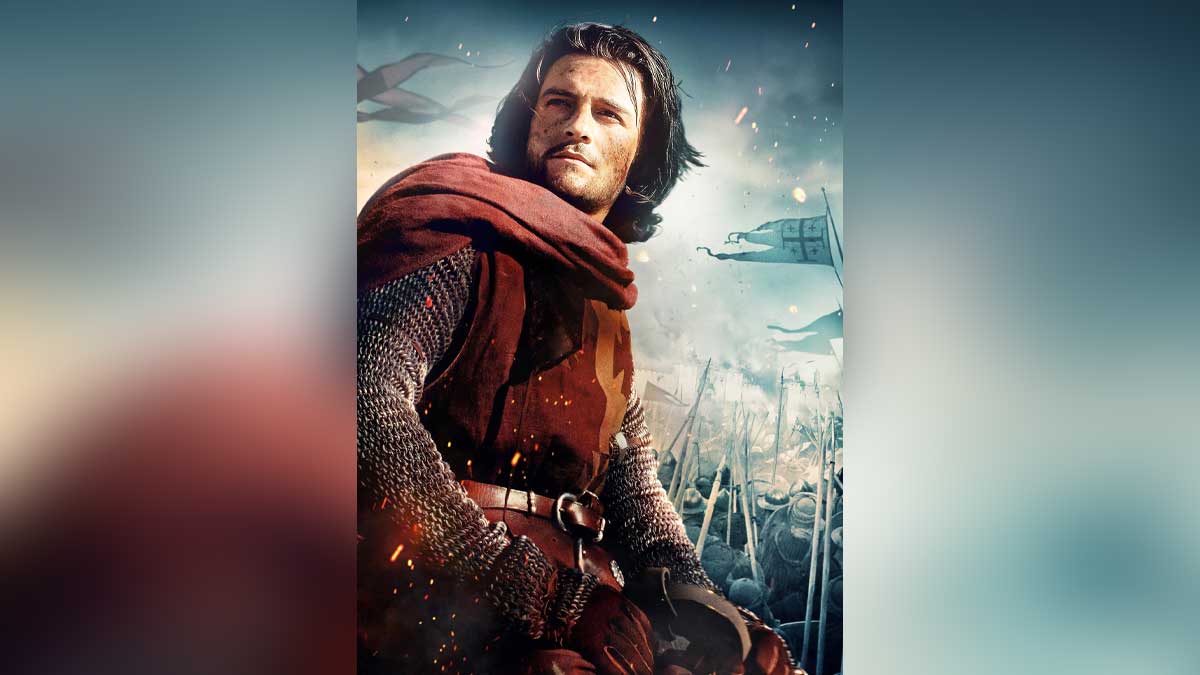
Kingdom of Heaven arrived with great fanfare in 2005. “From the director of Gladiator,” the posters proclaimed, while prominently featuring Orlando Bloom, then a bankable actor. But it was not a crowd-pleaser like Gladiator, as the marketing sold it to be; this was a thematically more abstract and ambitious film.
So the cold reception was not surprising. I remember leaving the film with the strange feeling of having had an underwhelming meal at a hyped-up restaurant. A sensory experience that was pleasurable but fleeting.

Months after the failure, Scott was able to reassemble the film into the sprawling epic he had initially set out to make.
The restoration added around 45 minutes, substantially expanding the narrative and giving greater depth to its characters. The result, complete with an operatic overture and a traditional intermission in the manner of classic Hollywood epics, was an altogether different film. It was like, as one critic put it, finding the pieces missing from a beautiful but incomplete puzzle.
The director’s cut of Kingdom of Heaven is longer as well as denser—richly mounted and fascinating in its historical detail. It is not artistically in the same league as Blade Runner—the pacing is uneven, with occasional stretches of triteness—but, much like kintsukuroi pottery, it looks beautiful for its mended brokenness.
Kingdom of Heaven shows the turbulent years leading up to the Third Crusade that began in 1189, when France and England, along with the Holy Roman Empire, started a war to recapture Jerusalem after Sultan Saladin’s conquest of the city.
Lacquered on to this obscure history are anxieties of the present: religious fundamentalism, cultural conflict, xenophobia, bigotry and political chicanery. Just as kintsukuroi introduces gold or silver into the cracks of broken pottery, these present-day anxieties are embedded in the story of Kingdom of Heaven.
“People forget that the crusaders were the bad guys,” Scott said when the film released during the US-led invasion of Iraq and the wider “war on terror”. He had just finished Black Hawk Down—about American soldiers battling Somali militia in Mogadishu—when the September 11 attacks happened. When he met writer William Monahan for breakfast one day and mentioned his long-pending dream of making a film about medieval knights, Monahan suggested the Crusades. They were his passion, he said, because “you have got every conceivable plot imaginable there, which is far more exotic than fiction”.
There was much historical irony in the timing. Just days after the September 11 attacks, President George W. Bush had stood outside the White House and told reporters: “This crusade, this war on terrorism, is going to take a while.”
The protagonist of Kingdom of Heaven is a French blacksmith named Balian of Ibelin. After losing his family and faith, Balian travels to the Holy Land seeking redemption. He discovers that his estranged father was a crusader and enlists in the Christian cause.
In a scene that resembles a modern job interview, Balian is asked about his experience of war: against whom, and for whom, did he fight? “For one lord against another,” he replies, “on a point which cannot be remembered.”
Pleased, his interviewer dangles the carrot: “There’s better game now: one God against another. The pay is proportionate.”
The director’s cut, with its fuller narrative, gives its characters enough room to richly populate a world consumed by faith, power and political expediency. Its villains are not Muslims or Christians; they are people who weaponise religion, crying “God wills it!” as they murder and plunder. The cast—which includes a leper king, a religious zealot, a power-hungry nobleman and a conflicted queen, among others—become not simply pieces moving the plot forward, but reflections of the present.
“I once fought two days,” says one character, “with an arrow through my testicle.”
It is the kind of line one can imagine coming from Pete Hegseth. The US secretary of war, with his Deus vult (“God wills it”) tattoo on his arm and the polemical tract American Crusade in his bibliography, is a contemporary manifestation of the politics that Kingdom of Heaven interrogates. Parallels like this make the extended cut read as political allegory—remarkably attuned to the present, and even though it is a historical film set nearly 1,000 years in the past, deserving the label of being “ahead of its time”.
Kingdom of Heaven is no longer just an old film; it is a film that has become more legible now. And like the ancient city at its heart, it may be something worth returning to.
“What,” Balian asks, “is Jerusalem worth?” Saladin replies: “Nothing. Everything.”
