



If nothing else, the Gen Z protest has achieved one thing—Instagram has become a magnet for India’s politicians, with everyone from the prime minister to small netas shooting vertical videos to woo gens Z and Alpha. AI and Reels and meme culture are reshaping political messaging, with influencers and regular users making content on topics such as education, employment, social ills, and, of course, themselves. Content is moving from word-based X and WhatsApp to the more visual-heavy Instagram and YouTube. Watch one such Reel or Short, and the algorithm floods your feed with more.
Echoes of this new world were found in the BJP’s recent rejig of its national team. The party brought in 51 new faces to its 65-member team, with a focus on reaching out to the youth. One of the high-profile returns was that of Ram Madhav, a strategist known for crisis management, as a national vice president. Former education minister Smriti Irani has also been called off the bench to be a national general secretary, one of the party’s key operational positions. An articulate leader with a keen sense of the visual medium, coupled with the energy to work on ground, Irani is part of the special team set up for Gen Z outreach. Joining her are party president Nitin Nabin; veteran Vinod Tawde; Gujarat Deputy Chief Minister Harsh Sanghavi, a young leader being groomed for bigger roles; and O.P. Choudhary, a 2005 batch IAS officer who is now Chhattisgarh finance minister.
The BJP plans to have dialogues aimed at bridging the gap between itself and the youth, and Union ministers would visit campuses to talk with students. These will be structured events where both sides, the BJP hopes, can understand each other better.
“The generational shift has been visible since Nabin came in,” said party spokesperson Gopal Krishna Agrawal. “It has not much to do with the CJP protest. The BJP undertakes generational shifts from time to time. It was there even during Atal Bihari Vajpayee’s time.... Important elections are coming up, and even in 2029. The BJP takes elections as a challenge.”
The biggest change has come in the party’s social media operations. Amit Malviya, who headed the BJP’s IT cell for more than a decade, has been replaced by former chemistry professor-turned-politician Deepak Mhaskey. Interestingly, his deputies—Priti Gandhi, Shivanand Dwivedi, Alok Bhatt and Arun Yadav—have wiped controversial posts from their accounts to start with a clean slate.
The IT cell under Malviya was hyper-aggressive and some voices within the party had urged for moderation, given that communication, especially on Instagram, was more about humour than frontal attacks.
“The new team is a mixture of experience and youthful energy,” said a senior party leader, adding that the intention was to bring in specialists as well as people with experience of managing elections on the ground.

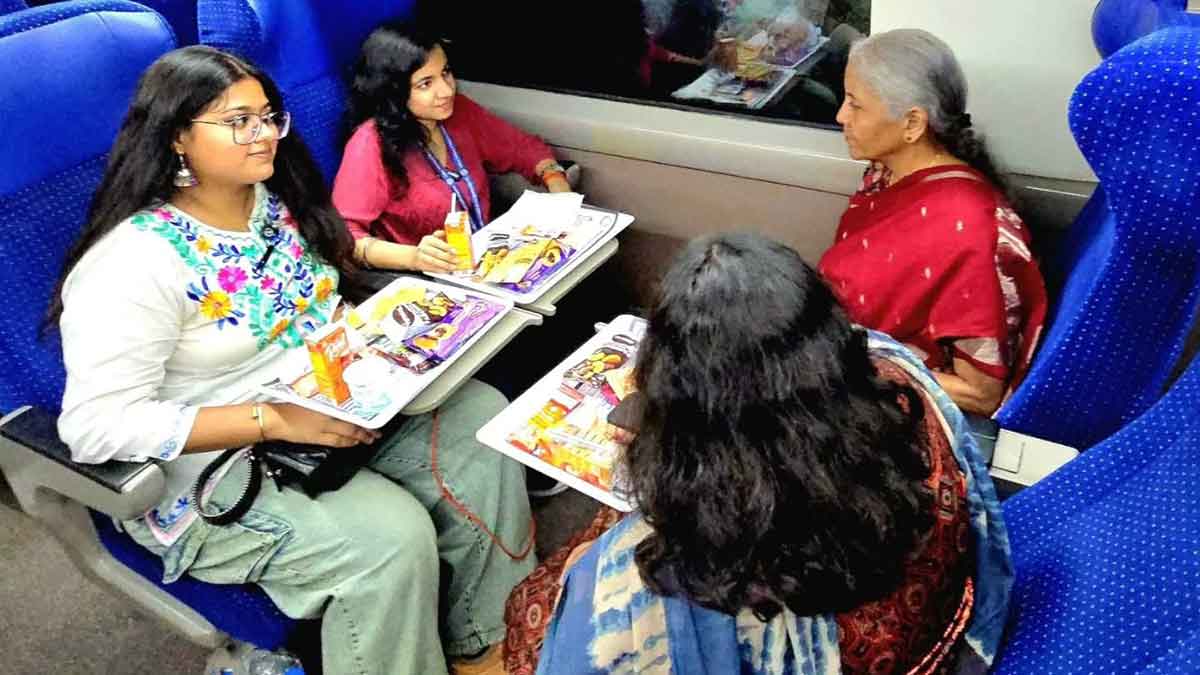
The focus is also on Gen Alpha, many of whom will be first-time voters in the 2029 Lok Sabha elections. Finance Minister Nirmala Sitharaman recently travelled to Jaipur by Vande Bharat and used the journey to interact with media students. She has also asked public sector banks to engage more with the youth.
In poll-bound Uttarakhand, Chief Minister Pushkar Singh Dhami has invited students of classes 11 and 12 to submit ideas on tourism, employment and health care. Selected students will get to interact with Dhami and senior officials. Maharashtra Chief Minister Devendra Fadnavis recently took part in an open panel with young achievers in Nagpur, where the format was less formal than usual, and the participants were allowed to ask questions freely.
Uttar Pradesh has taken a more institutional approach. The state government has directed young IAS and IPS officers to visit at least one intermediate-level school a month. They are expected to discuss careers and competitive examinations, and share their experiences.
The focus on schools is relevant because the Cockroach Janta Party has begun its ‘School Thik Karo’ (fix schools) campaign—it sends volunteers into villages to raise issues such as broken toilets, missing teachers and poor classroom infrastructure. Videos of protesting students are already getting traction and public sympathy on social media.
And governments are noticing. Rajasthan has restricted school entry and photography ahead of CJP visits. In Uttar Pradesh, Adityanath has challenged the group to film schools while highlighting his government’s initiatives.
The Congress, meanwhile, has taken a different approach. Rahul Gandhi’s ‘Chhatron Ki Goonj’ (students’ echo) programme, part of a 40-day, 28-city outreach to students, job aspirants and youth groups, has adopted the visual style of youth events. The Congress’s social media feed, where songs of slain Punjabi singer Sidhu Moosewala provide boisterous energy, is putting it ahead of rivals. At a programme in Prayagraj, confetti and pyrotechnics were used during Gandhi’s entry. Such moments are more suited to Reels than traditional news reports. The spectacle is part of the political message.
The Pune edition went further. It was held exclusively for girl students, with the theme ‘Pinjra Toda’ (break the cage). Gandhi spoke about women, their aspirations and the Manusmriti’s treatment of women to around 10,000 students. The evening also used cultural performances, which is the party’s way of presenting political events in a format familiar to the youth.
“Gen Z had lost hope in governance. It is the moral responsibility of the Congress to restore it,” said party secretary Abhishek Dutt. “Our country survives on them as they are the largest youth population group in the world. Rahul Gandhi has been consistent in his approach and style, but the BJP sidelines his message using money, toolkit and influencers. I am thankful to the youth who can relate to the issues raised by him.”
Party sources say the Congress is looking to promote younger leaders who are committed to its ideological position. The induction of Gurmehar Kaur and Gandhi’s engagement with students at Jantar Mantar are part of this effort.
Arvind Kejriwal has taken another route: joining the joke. The former Delhi chief minister and AAP convener recently appeared in a meme review, watching and reacting to jokes and edited videos featuring himself. It is a departure from the traditional image of the politician as a serious and distant figure.
Being relatable is becoming part of political communication. Even the left parties, often seen as the last to adapt to social media, have found the medium conducive. The parties’ students wings like SFI and AISA thrive on its use, as seen during the Delhi protest, with AISA president Neha Bora emerging as a show-stealer with her articulation.
Then there is C. Joseph Vijay, who recently became Tamil Nadu chief minister on the back of youth support, which suggests that younger voters are more open to new political figures and parties.
Leaders are also changing how they look. Gandhi, who spent years making the white T-shirt and cargo pants part of his image, appeared in pink in Prayagraj and yellow in Pune. CJP founder Abhijeet Dipke has appeared at protests in sports jerseys.
Such informal clothing might once have looked out of place in traditional politics, but as communication becomes more visual and social media-driven, appearance is becoming part of the message.
For now, though, all these changes remain largely campaign-season experiments. Their effectiveness will be tested in elections, beginning with Uttar Pradesh in 2027 and eventually the 2029 Lok Sabha elections.
