



A fortnight after the results of the assembly elections came out, the Congress has begun the process of fixing accountability for the losses. The decisions reflect a desire to put in place a generational change.
In Madhya Pradesh, especially, the high command pushed out the old to usher in the new. It is learnt that former party president Rahul Gandhi rang up state leader Jitu Patwari on the morning of December 16 to tell him that he was made the new state Congress president. The decision was made public later in the day. Party veteran Kamal Nath's continuation as the state unit's chief had become untenable as the poll results were a clear rejection of his leadership. The party won just 66 seats of 230. Apparently, Nath was reluctant to give way despite the clear message from the high command.
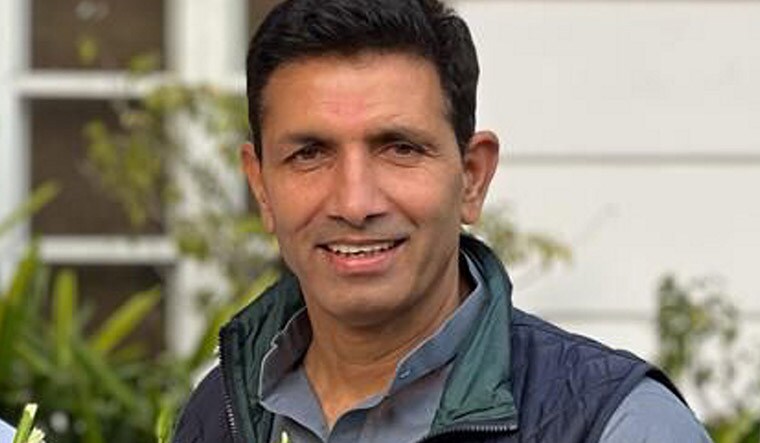
Patwari, 50, is an OBC leader and close to Rahul. He is known for his aggressive style of politics. The party has also appointed young leader Umang Singhar, a tribal face, as the leader of the opposition.
The imprint of the central leadership was clear in the changes made in Madhya Pradesh―both Patwari and Singhar do not belong to any faction in the state. It is also learnt that the views of Nath and senior leader Digvijaya Singh were not taken into account while choosing the new leadership.
“The challenge before us is to perform well in the Lok Sabha elections,” said Patwari. “We will go into the election together as a team. The growing participation of youth is a natural process and a demand of time.”
In Chhattisgarh, where the Congress was expected to retain power, but was reduced to 35 seats in the 90-member assembly, the changes were not so drastic. What has pulled the high command back from bringing about a new deal is the limited bench strength that the party had in the state after the electoral defeat of many of its senior leaders. It has had to fall back on senior leader Charan Das Mahant to lead the party in the assembly, while retaining its tribal face, Deepak Baij, 42, as the chief of the state unit.
Mahant, 68, a well-known OBC leader, is a study in contrast to former chief minister Bhupesh Baghel. If Baghel was known for his aggressive style, Mahant, who was speaker in the last assembly, is mild-mannered. “We will fight the people's fight from the house to the streets,” he said. “We will take up the issues of the common man, farmers, youth, the people of Chhattisgarh. The opposition in the state will not be weak.”
An immediate reading of Mahant's appointment is the sidelining of Baghel. However, Congress leaders say the party still considers him an asset. Baghel and former Rajasthan chief minister Ashok Gehlot have been made members of the Congress's national alliance committee that will help shape the party's strategy for the Lok Sabha elections.
While the party has been able to take its decisions in Madhya Pradesh and Chhattisgarh with relative swiftness, in Rajasthan, it has not been that easy. Apparently, the central leadership wants to use the occasion to bring about change and appoint a leader who does not owe allegiance to Gehlot as the leader of the opposition. However, the general view within the party is that the election result in the state was quite respectable as it managed to retain the vote share and won 69 of 200 seats. Also, it is said that many leaders are not keen on the post of the PCC chief because the responsibility of the results in the Lok Sabha elections would be on that person.
“The performance of the Congress in Rajasthan was better than in the other states,” said Sukhjinder Singh Randhawa, AICC in-charge for the state. “We will now begin working for the Lok Sabha elections. Where is the need for a change when our performance is good and our vote percentage has actually gone up?”
Three-time chief minister Gehlot, 72, has never been the leader of the opposition. He continues to have a hold over the state unit despite the strong challenge from Sachin Pilot. The party high command was miffed with Gehlot because he created the perception that he was on his own in the state. His inclusion in the Congress's alliance committee for the Lok Sabha elections is an indication that the central leadership wants to distance him from Rajasthan politics. And, changes in the state, when announced in coming weeks, will make the high command's intent clear.
JITU PATWARI
Madhya Pradesh PCC chief
Known for his aggressive style of politics, the OBC leader has risen through the ranks. His challenge would be to get the dispirited state unit together for the Lok Sabha elections.
UMANG SINGHAR
Madhya Pradesh CLP leader
The tribal leader with a family legacy of politics has worked at various levels in the party, from Youth Congress to national-level responsibilities.
CHARAN DAS MAHANT
Chhattisgarh CLP leader
The senior OBC leader has held leadership positions in the state. He was speaker in the last assembly and was a minister in the Manmohan Singh government.
DEEPAK BAIJ
Chhattisgarh PCC chief
Retained his post on account of the sentiment that he did not have much time to prepare for the elections. His tribal credentials also worked for him.
