



This quote by the 19th-century American naval officer and historian Alfred Thayer Mahan is almost hackneyed, but prophetic:
“Whoever controls the Indian Ocean dominates Asia. This ocean is the key to the seven seas. In the 21st century, the destiny of the world will be decided on its waters.”
While it would have been difficult for Mahan to forecast the geopolitical future of the world, his assessment was, perhaps, based on his appreciation of sea power in all its dimensions, both military and non-military. The importance of trade, the relevance of maritime forces, the effects of geography upon strategy, the need for overseas bases and several other principles that he propounded may have been extrapolated to make such a prediction. He has been proven right so far.

The combined US-Israel war against Iran has permanently altered the status quo in West Asia and, by extension, in the Arabian Sea and in the Indian Ocean Region (IOR) as a whole. India, sitting right in the middle of this region, is deeply affected by this geopolitical tsunami. It needs to quickly recalculate its strategic and operational priorities in the aftermath of this conflict and the lessons that seem to be emerging from it.
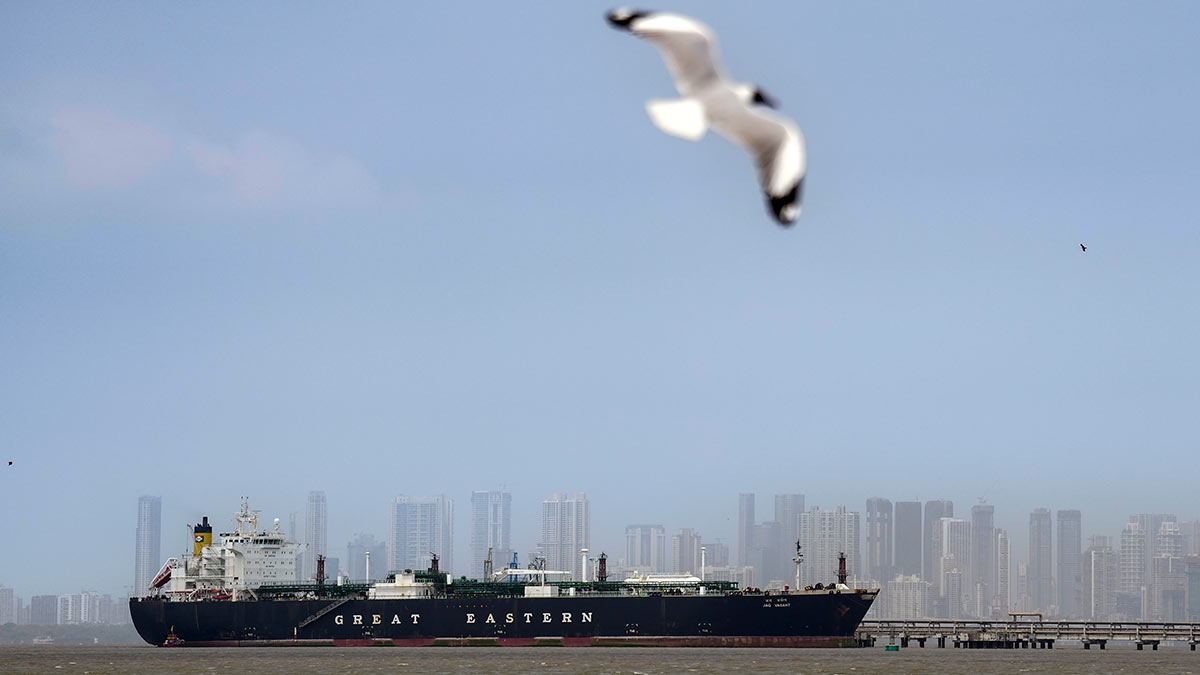
First, the need to ensure energy security and the security of other critical commodities that move over the sea. Fortunately, India was positioned neutrally in a diplomatic sense, and hence the domestic oil and gas situation did not get out of hand. Deft handling of the situation at the diplomatic level and good coordination between government agencies ensured that a serious crunch was avoided as tankers kept arriving at Indian ports. Diversification of energy sources, alternate routes and development of new and renewable energy automatically received a domestic boost.
Second, the need to maintain cordial relations with our fossil fuel supplier nations in West Asia. India is not about to get fossil fuel-independent any time in the medium or even in the near-distant future. The shortest sea route and hence the cheapest for Indian oil and gas imports is from West Asia. India must continue to buy oil from Russia and other sources to meet its national needs and not be blackmailed by coercive diplomacy or sanctions. India has withstood sanctions in the past and has the resilience to do so in the future.
Third, there is a need to revisit the entire canvas of maritime warfare. Whether it is intelligence gathering, use of conventionally armed ballistic missiles, use of drone and counter-drone technology, exploitation of aircraft carriers, executing a blockade, targeting warships of the adversary in distant waters, misinformation campaigns or disregard for international humanitarian law, nothing remains the same any more. Much more nimbleness is necessary to stay ahead of the curve in all disciplines of maritime warfare. What is essential is quiet, rapid progress towards fighting the next war. Iran has demonstrated this emphatically.
Fourth, protection of trade and its insulation from global monopolies. Conflicts create ‘high-risk’ maritime zones, shipping through these areas drops substantially, marine insurance premiums skyrocket and these combined effects hurt world economies through shortages, rising prices and, of course, serious risk to seafarers and their ships. The urgent need to have Indian-built ships flying the Indian flag with mostly Indian crew and an Indian system for insurance risk cover cannot be overemphasised. Such a system can only be created with a vastly improved and competitive shipbuilding ecosystem, which is now a priority for the government.
While there are many other lessons from the conflict, big and small, it will be wise to ‘Look East’ as well, as that is, geographically, half the IOR. Being a relatively peaceful region compared to the west, it has a safer growth potential. While most of India’s conflicts with its neighbours have been north and west-oriented, the future could witness challenges in the maritime theatre from the east. What then, should be the main strategic drivers on our eastern seaboard?
First, energy security once again. Offshore finds in the Krishna-Godavari Basin and more recently in the Andaman & Nicobar EEZ (exclusive economic zone) have the potential to reduce India’s fossil-fuel dependence to a certain degree. Further, the wind and wave energy potential of certain areas of the eastern seaboard holds promise. These must not only be developed but also robustly safeguarded. The Navy and the Coast Guard have to grow in tandem with our increasing maritime interests.
Second, the eastern seaboard needs to be developed as a global shipbuilding hub. India has the land, much of the technology, cheap labour, steel and other raw materials, strengths in several ancillary industries, a growing number of medium, small and micro enterprises and the willingness of large business houses to invest in this critical sector. All stops need to be pulled out to obtain certain deficient technologies through collaboration or indigenisation, procedures need to be eased for Indian shipbuilders and tax regimes have to be made conducive for indigenous material in order to emerge as one of the top shipbuilding nations over the next 20 years. The Indian government is working towards this goal, but more needs to be done.
Third, the maritime threat from the east. China’s rise as a maritime power has been phenomenal. This is not just in the number and type of naval platforms but also in technology sophistication, including AI. They are world leaders in the majority of new and emerging technologies and have acquired a global stature. There are predictions that it is just a matter of time before Chinese naval forces venture out in strength into the IOR. Should that happen, India must be able to protect its sovereignty and make the cost of external intervention unacceptable to the adversary. This will necessitate a multi-pronged strategy ranging from diplomacy to development of hard power.
Finally, across the IOR, India must endeavour to shape a friendly and peaceful neighbourhood that shuns violence, respects international law and strongly rejects any form of coercion or interventionism by extra-regional powers. The proactive use of regional forums and bilateral constructs to prioritise peace over conflict will pay rich dividends. Complex as the IOR may be, it is still one of the more peaceful regions globally in the 21st century.
The writer is former commander-in-chief of the Eastern Naval Command. Views are personal.
