



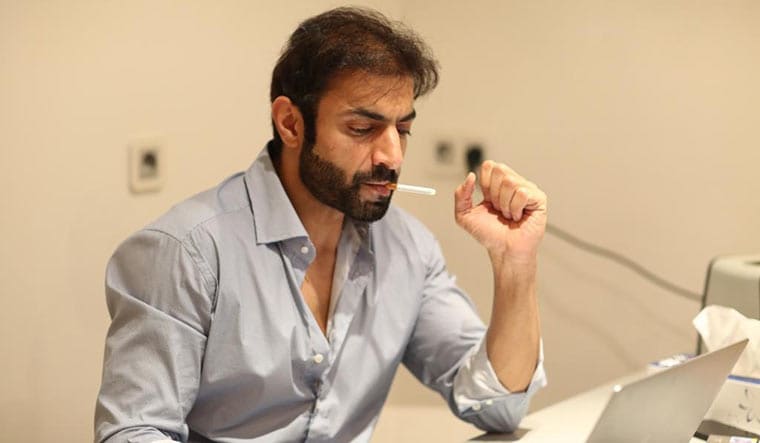
Nawab Brahumdagh Bugti, president of the Baloch Republican Party, has accused Pakistan of grave human rights violations. He is the grandson of former Balochistan governor Nawab Akbar Bugti, who was killed in a military operation in Dera Bugti in 2006.
Speaking exclusively to THE WEEK from Switzerland, where he has been in exile since 2010, Brahumdagh sought India’s intervention to solve the Balochistan crisis. Excerpts from an interview:
Can you describe the current situation in Balochistan?
The situation in Balochistan is critical, especially concerning human rights violations. Military operations, enforced disappearances, torture and killing of Baloch political activists and civilians have become the norm.
How many people are missing or have been killed in Balochistan?
The number is rising daily. As a result of complete media blackout and [with] no access to independent human rights organisations, information about the actual number of victims is hard to get. Pakistani human rights groups put the number of abducted at around 5,000 and those killed at 2,000. According to our research, more than 20,000 have gone missing after being abducted by Pakistani forces in the past 15 years. At least 8,000 have been killed.
Is the China-Pakistan Economic Corridor a concern?
It is an illegal project because it aims to exploit the resources of Balochistan. It does not include the wishes and consent of the Baloch people. The increasing Chinese influence is also dangerous for the region and neighbouring countries.
The influx of Chinese and people from other parts of Pakistan without any regulation is aimed at reducing the Baloch people to a minority and looting their resources. The Baloch will not allow such a project to happen.
Is the Gwadar Port another concern?
The Chinese and Pakistanis are snatching the land of the local Baloch and building hotels and plazas. The locals do not have drinking water and are not even allowed to fish, which is the main source of income for many households. The locals require special permission to enter Gwadar.
Prime Minister Narendra Modi raised the Balochistan issue during his Independence Day speech in 2016. Has there been any progress?
The Balochistan issue was internationalised after the speech. [But] there is still much more to be done and India should seriously consider including Balochistan in its foreign relations and use its international diplomatic approach to help resolve the issue.
Have you applied for Indian citizenship?
No.
What is the civilian government doing to address your concerns?
There has never been any civilian rule in Pakistan since the country’s inception. The real ruler has always been the military establishment.
What support are you getting from western countries such as the US?
We are not getting any support from the US, but we have been trying to reach out [to it]. The US can play the most effective role in resolving the Balochistan issue as it is the sole superpower and has the most influence in the region.
Is it correct to compare the Balochistan problem with what has been happening in Kashmir?
Without going into the debate of it being right or wrong, [abrogation of Article 370] is still legal and constitutional. In Balochistan, Pakistan does not even apply its own so-called laws and constitution. I am not saying there is no issue in Kashmir. It cannot simply be compared with Balochistan, where a human tragedy is taking place. Fighter jets and gunship helicopters bombarding villages cannot be compared with curfew and the use of pellet guns.
