



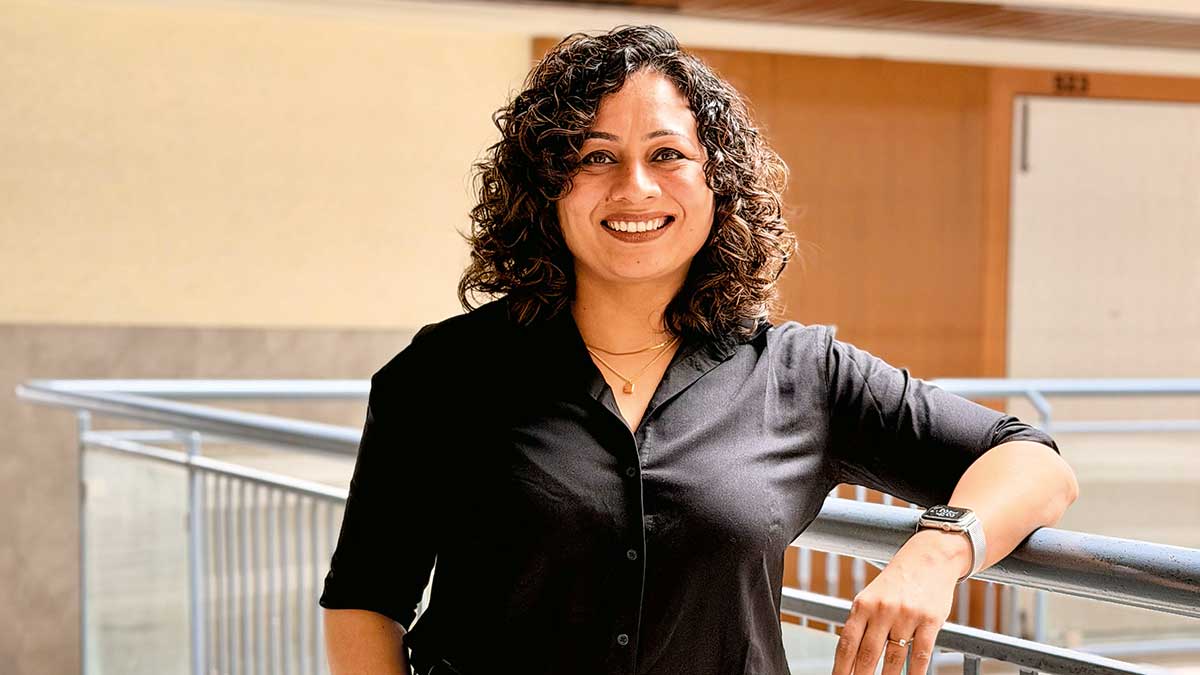
Interview/ Amita Gadre, clinical nutritionist and author
They say you are what you eat. But that is no cakewalk. Everyone with a cellphone and a social media account has an opinion on what you should eat, and it can be anything from an avocado to ashwagandha. More than anything edible, we are consuming information, in abundance and not always credible. So more often than not, we are none the wiser.
Nutritionist Amita Gadre wants to change that with her debut book, What, How Much and How to Eat: Simple & Sustainable. The title—quite a mouthful—sums up what the book is all about, but Gadre also answers the ‘why’ behind her recommendations. That makes it a handy guide to healthy eating. Excerpts from an interview:
Q/ You start the book with what has become a pet project or a pet peeve of people: protein. You write that it is the god of our body, the building blocks of our biological existence. But there is a perception that protein has been missing from the Indian diet, that Indians are protein-deficient. Do you think we lost the plot with protein?
No, I am very happy about the general awareness about protein because 20 years ago, no one was even speaking about protein. Ten years ago, everyone still thought that protein was important only for ‘gym bros’. As a nutritionist, I am mighty pleased that everyone at least knows about protein now.
Despite all the awareness, we continue to be a nation that is not truly eating a lot of protein. We have plenty of options in the Indian diet, but we are not doing a really great job about eating that. On top of it, we continue to believe that just because my grandparents were eating five rotis or a ton of rice I should also follow it, that it is the best diet. However, we don’t live the life of our grandparents now, which is why it is imperative that our plate now changes to reflect that. So the protein deficiency is not something which is imagined.
What I am not happy about is that everyone has started using protein as a buzzword. Because of which, now people have started looking for protein in places they should not be, for example, peanut butter and almond butter. People think that they are sources of protein, but they are not.

Q/ How does one know how much protein to have?
All it needs is a little bit of tracking. But for a general guideline, 1g to 1.5g per kg body weight is a cap that you can go by. So if your weight is around 60-65kg, then you are going to need anywhere between 60g to 70g of protein in a day. Now, how to track that? Maybe use a diet tracking or meal tracking app.
Q/ Is there something called too much protein?
There is. Because of the current protein awareness, a lot of people think, ‘all I need to do is start eating 2g to 2.5g protein per kg body weight and all my life sorrows are going to be resolved’. But what happens is if you are simply eating more and more protein without having, say, a proper exercise routine in place and if your protein intake is exceeding what you actually need, then the extra protein is simply going to be converted to fat or is going to be used as energy in your body. And, it is not unfortunately going to make you muscular. You have to eat protein and with that you also have to exercise, which is lift weights and do strength training, to be able to build muscle.
The other problem with too much protein intake is that you will start seeing gut or digestive issues. The most common are flatulence and constipation. Some people, if they are lactose intolerant or are starting a whey concentrate, might have breakouts on their face. So where healthy eating is concerned, it is always prudent to start slow and then build on it.
Q/ Before the current protein obsession, fibre was getting a lot of attention. But you have written that when you were studying, fibre was more like an afterthought.
I think fibre is one of the most underrated macronutrients. I have called it a macronutrient in my book as well, though nutrition societies do not call it that as yet. But, in my opinion, it deserves the importance of being a macronutrient. And if you see in my book, I start with protein and then I move on to fibre. It is that important.
The reason why I did not study a whole lot about fibre when I was in college was because the Indian diet then still had a fair bit of fibre. So you had a good amount of fibre sources like podis or chutneys that you make from seeds or people would also be eating nuts in a day or they would be having a whole lot of millets on a weekly rotation. But in the past 25 years, what has happened is we have just started eating such incomplete meals. People think that just because they are eating one spoonful of sabzi or vegetable, that is giving them a lot of fibre. But vegetables are not such a great source of fibre. You get more fibre from legumes than vegetables. And that is one of the biggest reasons why we are seeing the kind of illness that we are seeing in our country today. Any problem that you can think of as a lifestyle disorder—be it obesity, diabetes, cholesterol, hypertension—everything can be linked to there not being adequate fibre in your diet. And now, we are also seeing a massive incidence of colon cancer. [And it] is surprising, shocking and problematic. Because if we, as a primarily agrarian, vegetarian society, start getting colon cancer just because we are not eating enough fibre, I don’t think there can be anything more shameful than that.
Q/ While everyone is raving about protein and fibre, fats are getting all the flak. But fats are essential for our body, be it as a source of energy or for producing hormones. Why the ‘fat-shaming’ though?
We have forever glorified fats and ghee in our culture. And while one of the problems in our diets is that of deficiency of certain things like protein and fibre, there is also the other problem of having too much carbs and fat. So most of the clinical or health issues that we are seeing in the Indian population are simply because of there being way too many free fatty acids. I am not saying that fat is bad. I am definitely not saying that you need to completely cut out all fat. While that is not needed, you do need to be very careful about the quantity of fat that you are eating in a day because fat and carbs, whether you realise it or not, are always going to be there. A lot of times people say, ‘I eat steamed chicken.’ That also contains fat. There is visible and invisible fat. So being mindful and limiting your fat intake to around five to six teaspoons is what is recommended. And if you start doing that, you will find that a lot of your issues—like everyday issues like flatulence and acidity and reflux—are also going to go away. So fat is not bad but fat does need to be monitored because it is the richest calorie source in our diet.
Q/ You mentioned carbs—they also get a bad rap. In your book, you write that it should be the last to be added to a meal.
Unfortunately, the way we have been planning our meals has been very carb-oriented. We always think whether to have rice today or a roti or a paratha. Now what that does is you are not leaving mental space nor space on your plate for the protein and the fibre. Which is why I say that think of the protein and the fibre first and then think of the carbs. So that way you are not excluding the carb, but you are not building your plate or your meal around it. Like I said, fat and carbs are pretty much omnipresent in our diets. You need to be watching how much of it is coming on your plate because the more carbs and fat you have in your diet, it is always going to be at the cost of protein and fibre. And the biggest support that you have in terms of nutrients when you are speaking of anti-ageing and longevity are protein and fibre.
If you start eating in a way where you focus on finishing the protein and the fibre first, you will find that you will not be able to eat a whole lot of carbs automatically.
Q/ The Indian Council of Medical Research and the National Institute of Nutrition recommended an ideal plate for the day, where they specified the quantity for each food group. You also mention it in your book. They say vegetables should be 50 per cent of your plate. Now that is ideal, but not everyone can afford it and not everyone has the time or resources to cook that kind of a plate.
When we say that half your plate needs to be vegetables, [we are] not saying you need to buy avocados and asparagus. It can be your spinach and methi and mint and trust me, vegetables are the cheapest in India if you compare to the rest of the world.... I am always of the belief that you don’t have to do anything fancy to eat right. You just have to look at your local sources. For example, you don’t need to be eating blueberries; you can eat jamun. You don’t need to be spending money on avocado; you can eat a guava.
Second, if today I don’t invest in my wellness and health, tomorrow I will have to spend for my illness. So the choice is ours. Whether I want to allocate money for my old age, where I might unfortunately have to spend a lot of money in the hospital, or eat better today and look at, say, being able to lift my suitcase on my own even when I am 90. That is up to us.
What, How Much & How to Eat: Simple & Sustainable
Author: Amita Gadre
Publisher: Bloomsbury India
Pages: 256; price: Rs399
