



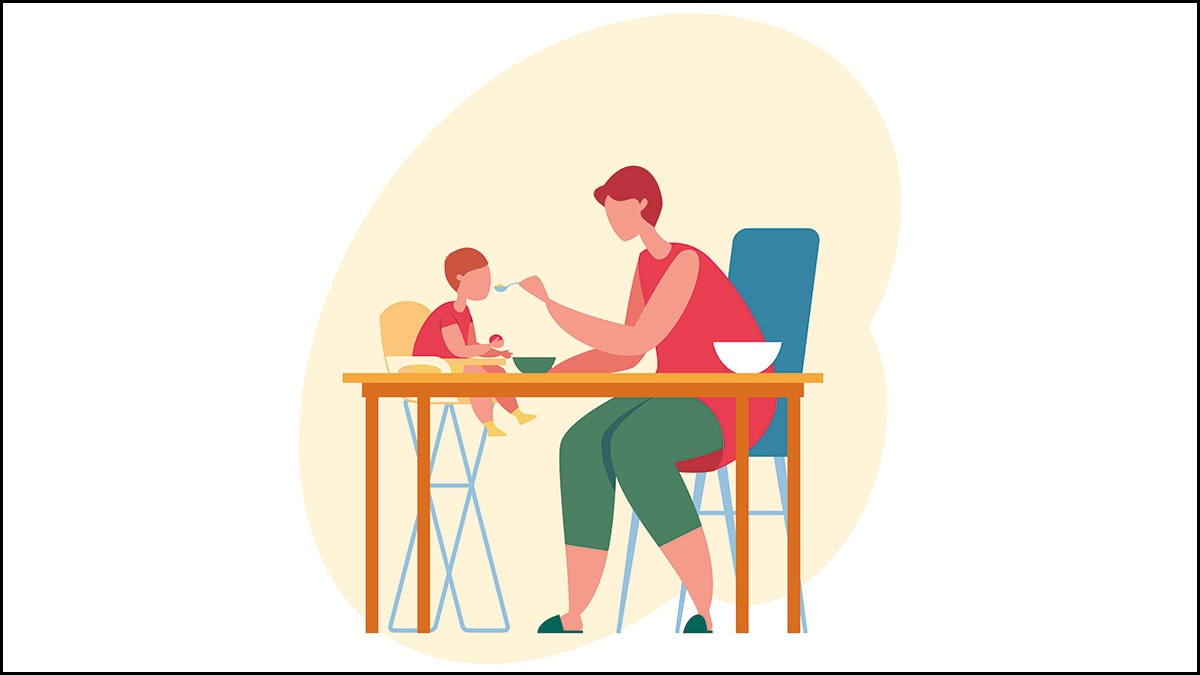
It's puree time! The first six months of exclusive breastfeeding are over, and every mother is now wondering: what kind of purees should I give my baby? Rice or ragi? Banana or avocado? Should I wait on eggs, or dive right in? Between paediatricians, grandparents, Instagram Reels and WhatsApp groups, every meal can start to feel like a test you are terrified of failing. And beneath the confusion lies the fear: what if I am missing out on a nutrient my baby needs?
Relax! Purees are yet to take over—breast milk is still very much running the show. At this stage, it remains your baby's primary source of nutrition, while those little spoonfuls are simply an experiment on the side, introducing new tastes and textures rather than replacing anything. Think of it less as a handover and more as an overlap, one that will slowly shift over the coming months.
However, around six months, babies do need complementary food to meet their nutritional requirements. And while that first tiny bite seems simple enough, figuring out when to start, what to feed and how to feed can quickly get complicated.
The word “weaning” has given way to “complementary feeding”, a term that captures a critical window of opportunity in the first two years of a child's growth and development.
The Indian Academy of Paediatrics (IAP) says that food containing appropriate proportions of proteins, carbohydrates, minerals, fats, vitamins, fibres and so on are labelled as “balanced food”.
The introduction of complementary food is a key milestone in infancy. Dr Samiksha Kalra, dietitian and lactation consultant, Madhukar Rainbow Children's Hospital, recommends starting complementary solids at around six months when developmental readiness is shown, while continuing breastfeeding.
“Begin with small amounts of thick, soft, home-prepared food and gradually increase quantity, frequency and texture. Suitable first food include cereals or millets, pulses, vegetables, fruits, curd and protein-rich options, with emphasis on iron-rich foods and healthy fats,” said Kalra.
Introduce new food one at a time with a 3-4 day observation period. Allergenic food can be introduced in safe forms without unnecessary delay, she said.
In this experimental phase, your little one is only getting used to different tastes and textures. Follow your baby's hunger and satiety cues, and avoid force-feeding. “Progress textures from purées to lumpy food and soft finger food. Modify choking hazards and supervise feeding,” said Kalra.
Doctors emphasise avoiding added sugar, excess salt, sugary drinks, ultra-processed food, and honey before 12 months.
“The texture, frequency and quantity of each meal changes as they grow. Most kids can eat finger food around eight months. The idea is they should be able to eat the family food by the end of one year. Kids can be messy, and that is how they learn, and moms should be prepared for it. Kids should learn to eat by themselves, and parents should encourage them to explore food. Messy way is always the start, but it will get better later on,” said Dr Shalini Arora, a paediatrician based in Noida.
At 6-8 months, IAP recommends beginning with mashed food and thick porridge, daily 2-3 meals along with frequent breastfeeding. The average amount of each meal is 2-3 tablespoons. At 9-11 months, mashed, finely chopped food, and food that can be picked up by the baby, with three daily meals plus 1-2 additional snacks. The amount of each meal is half a cup or bowl (125ml).
Meanwhile, in the case of 1-2 years, staple family food, mashed or chopped, can be given, with daily 3-4 meals plus 1-2 additional snacks. Each meal can be up to one cup or bowl (250ml). For those not being breastfed, an additional 1-2 cups of milk plus 1-2 extra meals can be given daily.
The fruits and vegetables provide minerals and vitamins, and thus increase the nutritive value of foods. Green leafy vegetables, carrots, pumpkin and seasonal fruits including mango, banana and chikoo are important sources of vitamins A and B, and iron. Well-cooked eggs, fish, chicken and meat are also recommended.
“Many food preparations may be refused by the child; hence, try different food combinations, with different tastes, textures and methods of encouragement. The feeding times are periods of love and learning; hence, talk to children while feeding and maintain eye contact. Avoid using TV or mobile phones to distract kids while feeding,” said Arora.
The goal is adequate nutrition, skill development and healthy eating habits.
WHICH FOOD SHOULD BE USED FOR COMPLEMENTARY FEEDING?
Appropriate:
• Combination of cereals and pulses (khichdi, dal rice, etc), locally available staple food such as idli, dosa, dhokla, ragi, chapati, roti, and paratha with oil/ ghee
• Mashed banana, other pulpy fruits (mango, papaya), sweet potato and potato
• Milk-based cereal preparations
• Sprouts, pulses, legumes, groundnuts, almonds, cashewnuts, raisins. (Nut should be finely-ground to avoid the possibility of choking on food)
Avoidable:
• Biscuits, breads, pastry, chocolates, cheese, ice cream, doughnuts and cakes
• Tinned, packaged or stored food; artificially cooked food with preservatives or chemicals
• Fruit juices and fruit drinks
• Commercial breakfast cereals
• Food that is repeatedly fried, containing trans fatty acids
