



Persistent fever, a cough that would not stop, and pain in the joints—what first appeared to be a passing illness soon turned into a diagnosis that would upend the life of 17-year-old Eashwar Krishna (name changed) and his family: B-ALL, an aggressive form of blood cancer. His family was devastated. Krishna’s father slipped into severe depression and killed himself, leaving the burden of navigating the teenager’s treatment entirely on his mother.
For decades, families from every corner of Kerala have travelled to the Regional Cancer Centre, Thiruvananthapuram, long regarded the state’s only fully equipped government cancer hospital. Like countless others before her, Krishna’s mother made the journey from Palakkad—more than 350km away—with fear and hope. Carrying medical files, scan reports and whatever money they could collect, they joined the stream of families that slept in lodges, party offices and hospital corridors while pursuing treatment in Thiruvananthapuram.
At RCC, Krishna underwent repeated biopsies, weeks of uncertainty and eventually eight cycles of chemotherapy. As the cancer proved resistant to conventional treatment, doctors suggested CAR-T cell therapy—a cutting-edge treatment that genetically re-programmes a patient’s own T-cells to identify and destroy cancer cells, particularly in cases where leukaemia has relapsed or failed to respond to standard therapies. CAR-T cell therapy had recently become available at Malabar Cancer Centre in Thalassery, around 460km from Thiruvananthapuram. Crowdfunding eventually helped Krishna access the treatment, and the advanced care ultimately ensured a cure.
Today, Krishna has returned to his studies, joined a computer course, and is slowly reclaiming the years cancer had taken from him. In many ways, Krishna’s story is also the story of MCC—which turns 25 years this year. MCC has survived the cancer of bureaucratic neglect and public distrust to become one of the few public institutions in India capable of delivering advanced treatments such as CAR-T cell therapy and robotic-assisted cancer surgeries.
The idea for MCC emerged in the late 1990s, when Kerala had only RCC as a major public cancer institution. Politicians and officials from north Kerala repeatedly encountered cancer patients undertaking exhausting journeys to Thiruvananthapuram for treatment. According to MCC director Dr B. Satheesan, the Malabar Express train carrying patients southwards had informally acquired the grim nickname “the cancer train”.
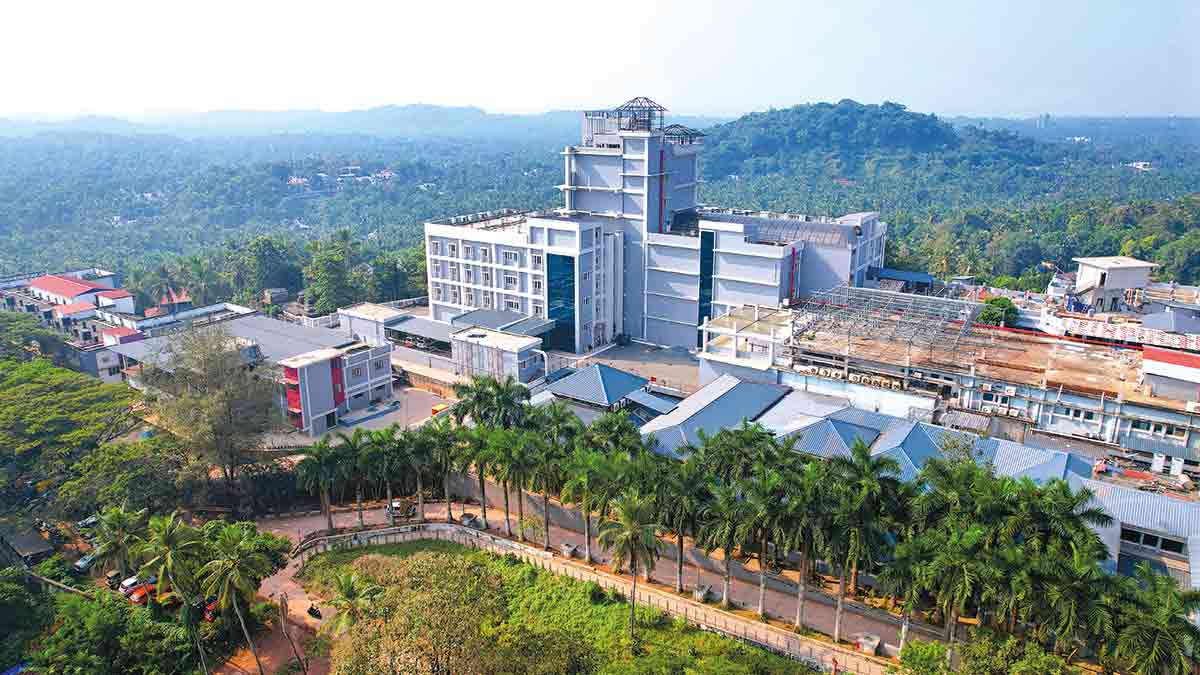
The demand for a cancer centre in Malabar grew out of this health care imbalance. MCC was conceptualised in 1998, with clinical work beginning in 2001 on a hilltop site outside Thalassery. It was envisioned as an autonomous institution that would eventually provide comprehensive cancer care to northern Kerala.
Yet the institution quickly became trapped in political controversies, administrative instability and chronic underdevelopment. Initially functioning under the power department before later being shifted to the health department, MCC struggled to recruit oncologists and specialists. Thalassery’s reputation at the time as a politically volatile town further discouraged professionals.
“When I joined in 2009, the hospital had only around 40 beds,” recalled Dr Satheesan. “There was one telecobalt machine, one operation theatre and very few doctors. Most patients who came here had already taken treatment elsewhere and were near the end of their lives.”

For nearly a decade, MCC functioned less like a comprehensive cancer centre and more like a palliative institution. Public trust remained weak. Many patients bypassed the hospital entirely despite living nearby, choosing instead to travel to Thiruvananthapuram. By the time some returned, their disease had already advanced.
Dr Satheesan recalls one patient with a massive ulcerated tumour on his cheek who delayed treatment because newspaper reports about controversies surrounding MCC had convinced him the institution was unreliable. By the time he arrived, the tumour had eaten through his cheek. “Health care institutions cannot afford to be surrounded by controversies,” Satheesan said. “Ultimately it affects patients.”
The turning point came after 2006, when the Left Democratic Front government in Kerala transferred MCC to the health department and began increasing funding support. The institution slowly expanded infrastructure and recruited specialists. Young doctors began joining; training programmes expanded; and MCC gradually began positioning itself not merely as a treatment centre, but as an academic and research institution.
The shift accelerated after 2016, when MCC proposed transforming itself into a postgraduate institute of oncology sciences and research. Over the following years, it added new departments, research laboratories, training programmes and advanced technologies. Today, the institution has more than 300 beds, postgraduate oncology programmes, specialised genetics and molecular oncology divisions, multiple fellowship courses and a nursing college within the campus. It introduced high-end linear accelerators, upgraded operation theatres, laparoscopic and robotic surgery programmes, precision medicine laboratories and clinical genetics services. According to Satheesan, advanced technology also helped solve one of the institution’s oldest problems: attracting doctors to work in Thalassery.
The transformation also reflects a larger shift in Kerala’s health care geography. As doctors note, cancer care is not a one-time intervention, but a prolonged process involving diagnosis, biopsies, surgeries, chemotherapy cycles and follow-up visits spread over months or years. For many families, the logistics themselves became a form of suffering. With MCC introducing advanced protocols such as CAR-T cell therapy and robotic-assisted surgery, patients from northern Kerala are increasingly less dependent on RCC. The institution now treats patients from not just Kerala, but also parts of Karnataka, Tamil Nadu, Mahe and even abroad.
Dr Adarsh Dharmajan, additional professor of surgical oncology at MCC, said the introduction of robotic-assisted surgery had, in fact, transformed the entire treatment pathway. “With the da Vinci [surgical] system available here at subsidised rates, patients can now undergo advanced procedures without leaving the region. We are seeing faster recovery, shorter hospital stays and far greater acceptance of surgery among patients. The technology has also become a training platform, with our residents learning on simulators and at the console, building skills within a government institution,” he said.
Dr Sandeep Vijay, associate professor of surgical oncology at MCC, said the institution’s postgraduate programmes have created a steady pipeline of trained oncologists, nurses and allied professionals who now serve the Malabar region. “The population-based cancer registry we created has given us high-quality evidence to plan screening and allocate resources where the burden is highest,” he said. “Our research—from biomarker studies to work on triple-negative breast cancer—helps us design treatment strategies that reflect the epidemiology of our own communities. Even in survivorship and rehabilitation, the insights generated here have shaped better models for long-term recovery.”
MCC has also evolved a broader patient support system that often extends far beyond medicine itself. “When I joined here, I used to see some of my patients staying on railway station platforms because they had nowhere else to go,” recalled Satheesan. MCC now works with charitable organisations and local donors to create accommodation, transport and welfare support for patients travelling from distant districts. According to Satheesan, nearly 60 per cent of MCC’s patients come from economically vulnerable families, making such support crucial to sustaining treatment.
Through the Patient Welfare Fund—supported partly by monthly payroll contributions from staff—MCC provides emergency assistance for patients not fully covered under government insurance schemes. Another initiative, the Akshaya Fund, was created primarily to support bone marrow transplant patients, with contributions coming from schools, community groups and individual donors through recurring monthly payments.
“We took a very clear decision,” Satheesan said. “No patient should be denied treatment because of lack of money.”
