



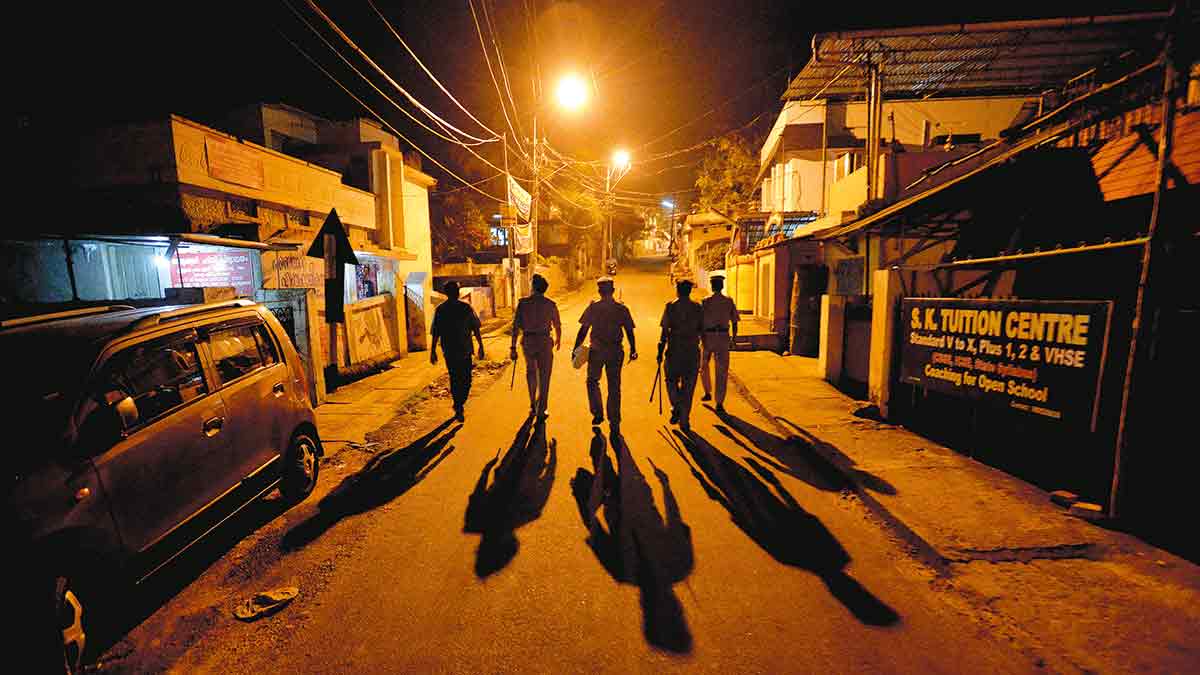
In late 2022, a young IPS officer in the Maharashtra cadre found herself on the wrong side of the establishment. In the preceding years, she had unearthed an alleged Rs1,200-crore scam linked to powerful politicians in the state. Soon, she became an outcast within the very police force she had sworn to serve.
“I started hearing murmurs about what I was going to face. I also noticed people distancing themselves from me,” she told THE WEEK. A state-ordered CID inquiry into her handling of the case flagged “procedural lapses”. “I faced harassment. They did not even allow me to refer to my files,” she recalled.
An FIR followed. “The attack was personal. Since I am unmarried, they targeted my father, trying to implicate him in a case related to his property,” she said. By November 2022, she had been shunted to a “side posting” in a traditionally Naxal-affected region, away from operational duties and into a role with diminished authority and career prospects.

“I was alone. I was lost. There weren’t even basic facilities, not even a vehicle. I had been sent there to rot,” she said. “Meanwhile, I continued facing legal harassment and repeated inquiries. My honesty came at a financial cost, leaving me without the means to fight back. A compromised system, a spineless bureaucracy and relentless witch-hunting left me feeling trapped and helpless, with nowhere to turn for justice. I could not even confide in colleagues because I no longer knew whom to trust. The prolonged ordeal took a severe toll on my mental health and my body.”
As the stress mounted, her body began to show the strain. She experienced episodes of heaviness and numbness on her left side, resembling signs of paralysis but without a stroke. “My aunt has had paralysis on one side of her body, so I feared the same was happening to me,” she recalled. Sleeplessness followed and she also started experiencing sudden palpitations. A doctor prescribed sleeping pills alongside medication for the palpitations, but she was reluctant to rely on them. “I didn’t want to be on sleep medication. I wanted to handle the situation without it,” she said.
She had undergone surgery for nasal polyps in early 2022, but the condition recurred in 2023. Earlier, she used to play tennis and go to the gym regularly, but all that came to a sudden halt and she gained weight.
Things took a turn for the better only in 2024 when she went on a Himalayan trek. Her low-responsibility posting gave her time to explore meditation and other practices to manage stress. More treks followed, and a three-month spell of sick leave allowed her to visit a meditation centre and a sacred ghat—experiences that reshaped her outlook on life.
As her palpitations and nasal polyp symptoms subsided, her sleep improved and the episodes of numbness and heaviness disappeared. Meanwhile, the case against her moved to the CBI, which has made little progress over the past two years. As the investigation languished, she continued charting her own path to recovery. “In a way, those who wanted to destroy me inadvertently gave me time to recover. I have reached a point where none of these experiences of being witch-hunted can hold me back anymore,” she said.
Decades of research have shown that psychological stress can take a cumulative toll on the body. “When people are unable to process their emotions, their distress can manifest through physical symptoms,” said Shilpi Saraswat, a clinical psychologist at Sakra World Hospital, Bellandur, Bengaluru. “Stress can contribute to cardiovascular problems and persistent headaches, including tension headaches. Some people may experience feverish sensations or symptoms resembling a heart attack during a panic attack. They may feel as though they are having a heart attack when the symptoms are actually associated with anxiety or panic, and they may subsequently ignore them.”
While stress is common across professions, the pressures faced by those in policing are often layered and systemic. Yet, seeking help remains difficult. Saraswat notes that police personnel are unlikely to speak about their distress or seek professional help unless their problems become severe. “There is already a strong perception that police officers cannot afford to appear weak,” said Saraswat. “They struggle with whether they should speak about their experiences and how others might judge them.”
Notably, those functioning in police forces experience both operational trauma—witnessing hangings, deformed corpses, sexual violence or accidents, for instance—and organisational stress arising from hierarchy. “Operational trauma appears to be more prevalent. Organisational stress is also present, but people discuss it less openly. People are afraid to speak about it,” said Saraswat.
And, unlike the Maharashtra IPS officer, not everyone has the time and relative freedom from operational responsibilities to focus on recovery. Long hours, demanding workloads and limited institutional support can leave little room to pause, seek help or address the physical and psychological toll of chronic stress.
Incidentally, police forces across the country have also been grappling with a spate of suicides. An internal Kerala Police study last year found that 44 police personnel had died by suicide over the previous decade in police districts under the northern division. All the deaths involved personnel in the lower ranks. Kasaragod, Kerala’s northernmost district and a destination for many ‘punishment transfers’, recorded the highest number of suicides.
The report attributed 59 per cent of the deaths to “family and personal issues” (15 cases) and alcohol addiction (11 cases). Mental distress and depression accounted for 18.2 per cent, while financial stress was cited in 9 per cent of cases. Work-related anxiety and harassment by colleagues together accounted for two deaths (4.4 per cent).
However, Shayana T.K., a criminologist and guest lecturer at the Sardar Patel University of Police, Security and Criminal Justice in Jodhpur, Rajasthan, cautions against viewing these in isolated boxes. Police suicides, she notes, are multifactorial, with strong interconnections between the factors identified.
“Over the past decade, data on suicides among police personnel no longer appears to have been included in the National Crime Records Bureau reports in the same way as before,” said Shayana. “While data on the Central Armed Police Forces was included, it is difficult to establish the broader picture of suicides among police personnel. The reality is that the authorities themselves do not seem keen to bring the suicide rate among police personnel into the public domain.”
Shayana identifies difficulties in balancing work and family life as a key factor contributing to suicides among police personnel. In-house psychologists who screen and counsel police personnel often report that most complaints concern family problems rather than workplace issues. Researchers caution, however, that the psychologists’ position within the police force may influence this pattern.
Dilip (name changed), a Kerala Police sub-inspector, puts it more bluntly. “The system is largely apathetic to the fact that police personnel, too, deserve a family life,” he said. He recalls a proposal to post officers at their home stations for at least three years, with the aim of improving their family lives and curbing corruption and criminal behaviour. Officers, it was assumed, would be less likely to engage in wrongdoing in places where people knew them and their families. The proposal, however, was never implemented.
“Now, when the system asks us to fill out transfer forms, it even asks for our preferred home station. You know why? So they can ensure we are never posted there,” he said sarcastically.
Studies on police stress across Indian states have produced varied findings on how stress differs by age, gender and rank. Most distinguish between two types: organisational stress and operational stress. A 2025 study of the Delhi Police found higher organisational stress among those with longer service (more than 10 years) compared with newer personnel.
Meanwhile, a 2020 study of Himachal Pradesh Police constables found that less experienced personnel reported higher stress than those with longer service. Another 2017 study of the Kerala Police similarly found higher operational stress among younger personnel (aged 21–35) and lower-ranking officers, with women reporting more stress than men.
Shayana, who interviewed around 600 police personnel across 20 districts in Rajasthan for her PhD research, said many carry traumatic experiences from their early careers for decades. She recalls the case of a 43-year-old assistant sub-inspector who had joined the force as a constable in 1997. Early in her career, she was assigned to guard the site of a railway accident and had to remain there to protect a body. “It was her first such experience,” said Shayana. “She returned home frightened and subsequently found it difficult to go outside. She was afraid, could not sleep properly, and would lie in bed covered in a blanket. Although her sleep problems gradually subsided, she still sometimes wakes up frightened when she remembers the accident. She says she can still picture the body in front of her.”
Dilip recalls a traumatic incident early in his career when part of a decomposed body, which had been hanging for more than a week, fell on him. The stench and shock left him struggling to eat for some time. “But over time, we all find ways to cope with these experiences,” he said.
Yet, the effects of such trauma can extend beyond the workplace. Saraswat notes that officers’ emotional distress often spills over into their family lives, affecting those closest to them.
Both Shayana and Saraswat observe that women tend to have better coping mechanisms than men. “Among men, common coping mechanisms include smoking and alcohol,” said Shayana. “These are negative coping mechanisms because their effects are temporary. Once the immediate effects wear off, the person returns to the same stressful situation.”
Women, said Shayana, resort to negative coping mechanisms less frequently and have a wider range of coping strategies, from prayer and spiritual activities to spending more time with their children. “However, under severe stress, I have also observed women having emotional outbursts towards their children,” she said. Experts note that cumulative trauma can also trigger anger and behavioural changes, while moral injury and burnout further compound stress.
Despite these pressures, police wellness programmes remain largely overlooked across India and are absent in some states, leaving personnel—particularly those in the lower ranks—vulnerable to a range of health problems. G.K. Mini, a professor at the Global Institute of Public Health, Ananthapuri Hospitals and Research Institute, says the consequences extend to physical health, too. Global research shows that police personnel face a higher risk of cardiovascular disease (CVD) than the general population. A research, of which Mini was a part, found a high prevalence of hypertension and other CVD risk factors among police personnel from Kerala, despite the state’s relatively strong health indicators.
While operational and organisational stress contribute to this risk, Mini, a Bernard Lown Scholar in cardiovascular health at Harvard T.H. Chan School of Public Health, emphasises that it is multifactorial. Sleep deprivation, poor diet, irregular routines, physical inactivity and obesity also play a role.
“Shift workers, including hospital workers, doctors and nurses, often experience sleep problems. But police personnel lack an adequate system to address this very issue,” said Mini. “Most receive some guidance on stress from different sources, but they told us that sleep was the area in which they received the least support.”
Unlike health care workers, who generally have more predictable shifts, police personnel often work irregular hours dictated by the demands of the job. “A woman civil police officer we interviewed for our study said she could be called back to the station at any hour, even after returning home, because certain cases require the presence of a woman police officer and no replacement may be available,” said Mini.
Diet presents a similar challenge. Mini says unhealthy eating among police personnel is not necessarily a matter of poor awareness. Dilip offers a glimpse of the practical reality: “Imagine we are on VIP escort duty. Can we tell the VIP that we need to eat on time? There have been numerous occasions when we have waited outside star hotels, starving, while the VIP and their family enjoy sumptuous meals.”
Meal timings are frequently disrupted and often the only food available is oily or calorie-dense. “It means by the time we are in our 40s, most of us are unlikely to escape health problems such as high cholesterol, high blood pressure and elevated blood sugar,” said Dilip.
Experts point to another irony in police life: while physical fitness is a prerequisite for joining police forces across the country, maintaining it becomes a daily struggle as officers advance in their careers. Occupational demands and personal responsibilities often leave little room for structured exercise.
“On duty, unpredictable rotating shifts disrupt natural sleep cycles, while long working hours, emergency responses and high operational stress cause persistent physical and mental fatigue,” said Mini. “Off duty, officers understandably prioritise restorative sleep and family responsibilities over exercise after exhausting shifts. Over time, many begin to feel that the physical demands of policing already serve as a workout, making structured exercise seem redundant. Duty-related joint and spinal injuries also make them hesitant to undertake strenuous workouts for fear of aggravating their pain. Erratic schedules further make it difficult to maintain a fitness routine or set concrete goals.”
Speaking to multiple professionals, THE WEEK found that police personnel seeking treatment for conditions such as hypertension and diabetes are not routinely referred to mental health professionals or physical therapists, despite stress, sleep deprivation and physical inactivity being important contributing factors.
“This is uncommon even in the general population,” said Mini. “During our interviews, police personnel told us they had gone several days without proper sleep or were experiencing stress for various reasons. Yet there is a tendency for health professionals to treat these problems as normal. There is a tendency to normalise issues like stress in demanding professions. Doctors may tell police personnel that they have been in the job for years and should be accustomed to its pressures. We have observed a similar tendency in studies involving nurses and doctors. When people remain in a profession for years, their difficulties are often seen as an inevitable part of the job rather than as concerns that need attention. As a result, even the needy are less likely to pursue their complaints or seek further help.”
Interventions, however, can begin at the workplace. Mini and other researchers have conducted a CVD prevention programme among police personnel, combining regular health monitoring with lifestyle counselling and education. The programme used digital tools, group sessions and personalised counselling by health professionals, including a neurophysiologist who addressed sleep and stress management.
Educational materials reinforced advice on diet, exercise, smoking cessation, alcohol moderation and managing cardiovascular risk factors. The researchers are still analysing the results, which could inform new standard operating procedures for workplace-based health interventions for police personnel.
Even as awareness of occupational stress, post-traumatic stress disorder (PTSD) and the high prevalence of CVD risk factors among police personnel grows, a quieter but equally damaging form of trauma remains largely in the shadows: secondary traumatic stress (STS).
“PTSD can develop when we are directly affected by a traumatic event, whereas STS occurs when we are affected by the trauma experienced by others, without being direct victims ourselves,” explained Shayana, who conducted one of the few Indian studies examining the impact of STS on the mental health of police personnel.
One of her respondents was a woman officer who had investigated the death by suicide of a mother following a dispute with her husband. The couple had three young children.
“The officer was deeply affected by the children’s plight,” said Shayana. “They were crying and did not understand what had happened to their mother. What troubled her most was not simply seeing the body or the husband, but wondering what would happen to the children. Who would look after them? How would they manage without their mother?” The officer had a child of a similar age and began imagining what might happen if something similar occurred in her own family. “She started overthinking and worrying: ‘Could this happen to my child, too?’ She began having nightmares about the incident. Her sleep was disturbed, and the case continued to trouble her,” said Shayana.
Published in 2025, Shayana’s exploratory study involved 45 station-level civil police officers in Jodhpur who had investigated serious violent crimes, including murder, grievous hurt, aggravated sexual offences, serious accidents and suicide. The study found that 71 per cent reported some form of emotional impact after investigating violent crimes. About a third (33.33 per cent) reported high levels of STS, while roughly 36 per cent experienced moderate levels and 31 per cent reported low or negligible levels.
Shayana explains that there is another element that also contributes as a stressor: “ethical injury”. Moral injury occurs when a person’s actions or experiences conflict with their moral values, often because workplace circumstances prevent them from acting in accordance with those values. Ethical injury, explains Shayana, involves a conflict between personal moral values and professional ethics. “Police personnel, like professionals in other fields, have ethical obligations. At times, these duties may conflict with their personal moral values,” she said.
Shayana cites the example of an officer investigating a criminal case involving a romantic relationship between two minors, which may fall under the Protection of Children from Sexual Offences (POCSO) Act. “The officer may feel that the circumstances are more complicated than the law can accommodate,” she said. “Nevertheless, professional legal obligations require the officer to follow prescribed procedures. The officer may have to set aside personal moral judgments and follow professional duties, creating a conflict between personal morality and professional obligations. Now consider a situation in which the boy’s family has political influence. The officer may face pressure to alter the course of the investigation or deviate from prescribed procedures, making it difficult to uphold both personal moral values and professional ethics. That conflict is what we describe as ethical injury.”
Ethical injury, adds Shayana, can compound occupational stress. A sense of helplessness, she notes, is closely associated with both STS and ethical injury among police personnel and can contribute to mental health problems, including depression.
New Zealand-based social innovator Peter Pilley, who spent 15 years investigating online child sexual abuse material (CSAM) for the country’s Department of Internal Affairs, spoke to THE WEEK about the helplessness he experienced after leaving law enforcement. His work involved digital forensics and covert operations, exposing him to disturbing material daily. Flashbacks triggered by reminders of cases were common, he said. While in service, he had regular access to psychologists and learned grounding and breathing techniques to manage them. Grounding exercises help people reconnect with the present when overwhelmed by distressing memories or anxiety.
In 2019, Pilley voluntarily left government service. Within six months, he found himself angry, exhausted and depressed. The loss, he said, went beyond his job to his sense of identity and belonging. “For 15 years, I had carried my badge in my pocket,” he said. “Then, suddenly, I no longer had it. I was so used to its familiar weight that every time I got up, I would check which pocket it was in. And then it was gone. It felt as though an old friend had disappeared. But it wasn’t just about the badge. It reminded me that I was no longer part of a fraternity. When you leave, you lose that association and, in a way, your identity. For me, that triggered depression. I struggled with it for the next six months, and I still don’t think I have fully recovered. It was only when I sat down to understand what was happening that I realised I wasn’t alone. Many others experience the same thing when they leave law enforcement.”
Trying to understand what was feeding into his distress, Pilley began viewing it through the lens of the fight-or-flight response. While in law enforcement, he could act against threats by investigating cases, identifying perpetrators and making arrests. After leaving, he no longer had the same ability to intervene. Reports of abuse left him feeling helpless, wondering whether he could have prevented the harm had he stayed. He described this as losing the ability to ‘fight’, leaving ‘flight’—which he associated with anxiety—as the only response.
Pilley later recognised that other former law enforcement personnel faced similar struggles but rarely discussed them because of the stigma surrounding mental health. He began speaking with former colleagues and developed a talk on managing anxiety after leaving the force. He also observed that some turned to alcohol, cigarettes, drugs or social withdrawal to escape their distress.
Around two years ago, Pilley began an initiative using a specially designed garment featuring a bearded skull for a pocket as a conversation starter about mental health. “That was just to start signalling to people that we can have a chat. You know, because that would start with, ‘Oh, what’s that?’ And I would respond, and I would start talking about mental health,” he said.
This year, Pilley, who is part of various initiatives including those with Indian police forces to counter CSAM, formally launched the Beard Company website that aims to make free practical tools, including grounding exercises, accessible to investigators and others in demanding roles. The tools are intended to help people manage anxiety without feeling judged for seeking support or using mental health resources.
Experts like Shayana, however, argue that addressing the multifactorial toll of policing requires more than individual coping strategies. Regular mental and physical health screenings, stigma-free access to professional care, stronger peer-support networks and improvements in working conditions are all essential, she says. In Indian police forces where stress is often normalised and seeking help is seen as a sign of weakness, police personnel’s wellbeing must become an institutional responsibility—not a burden they are left to manage alone, either during their service or after leaving the force.
