


Sheets of rain have washed the ageless boulders of the Deccan Plateau. During the rains, the historically rich Telangana reveals many unexplored gems in its vast tablelands even as the quintessential Indian monsoon displays many of its charms—the swaying of emerald-green paddy fields nourished by the rain; the aroma of corn being roasted on charcoal, people with steaming cups of chai huddled around a wayside shop and more. Amid all the charm, I set out to Warangal, a weekend getaway, 150km from Hyderabad.
Kolanupaka
My first stop was the 2000-year-old Kulpakji Jain Temple at Kolanupaka. Jainism was prevalent in the Telugu land even before the 4th century and Kolanupaka flourished as a prominent Jain centre during the Rashtrakuta era. It is said that around 20 Jain inscriptions were found in this region. The temple was in ruins for a very long time. It was renovated in the 90s with pink Dholpur stone and white marble pillars; the statue of Lord Mahavira, carved out of a single jade, is said to be worshipped by Mandodari—Ravana's queen. The serenity of the temple was overwhelming with mildly glowing lamps, the lovely fragrance of sandalwood, occasional ringing of the temple bells, the sing-song chanting in Ardhamagadhi, a middle Indian language used in Jain prayers and rituals. In the distance were heard bird calls, making my experience surreal. Amidst chants, the small silver idol of Mahavira was washed with water, milk and a mixture of sandalwood and saffron. It was a simple and spiritually appealing ritual.
The nearby Someswara Temple built by the Chalukyas almost 800 years ago, transported me to times bygone. The ruins around are as enchanting as the pillars of the main temple, which are ornate with the rich, trademark sculpture of the Kakatiyas. The Archeological Museum is located along the corridors of the temple courtyard with several wonderful sculptures dating back to the 10th and 14th century.
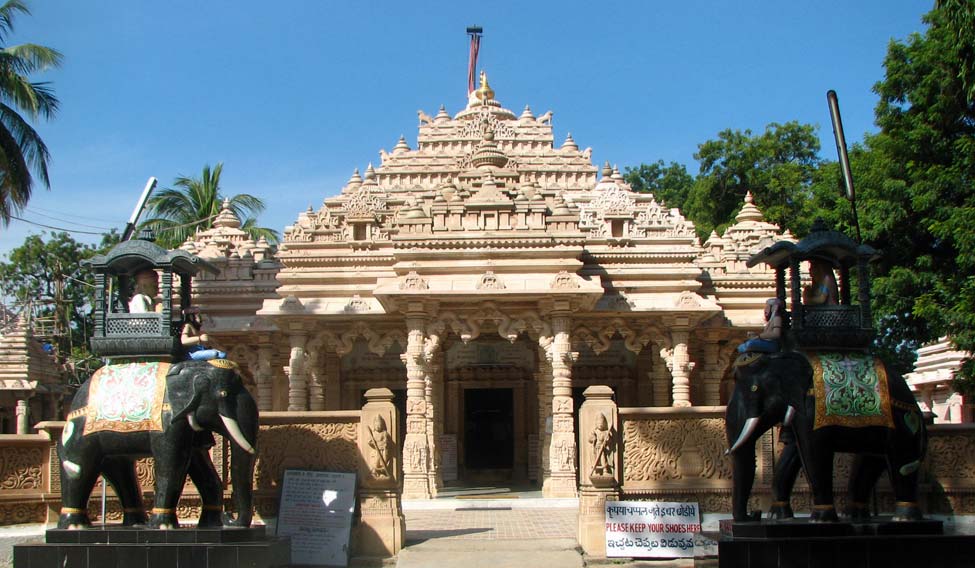 Kulpakji Jain Temple: Kolanupaka flourished as a prominent Jain centre during the Rashtrakuta era | Creative Commons
Warangal
Orugallu (present-day Warangal) was the capital of the Kakatiya Dynasty, established in 1163, whose rich culture and administrative excellence was hailed by the famous Italian traveller, Marco Polo. The beautiful monuments left by the Kakatiyas include majestic fortresses, temples and stone gateways.
Fort
The Kakatiya King Ganapati Deva built it during the 13th century. Later, his famous daughter Rudrama Devi completed the structure. The last ruler, Prataparudra II, added significant features to the fort during whose time Malik Kafur attacked it, destroying large parts of the fort. The vandalised sculptures after subsequent attacks by various Delhi sultans display unusual craftsmanship and artistry.
The fort was built in three layers of fortification for absolute safety—an earthen wall surrounded by a moat, a granite wall using interlocking system, and a mud wall encircling the present Warangal city. Today, the people living in the fort area go about their daily chores, oblivious to the historical importance of their neighbourhood. The majestic gateways are massive pillars carved out of a single rock representing South Indian architectural style, while the richly-sculptured pillars of some ruined temples lay scattered around. The “sound and light show” at the fort transported me to the Kakatiya epoch with drama, dialogues, music, video clips, light effects all telling the story effectively.
Thousand pillar temple
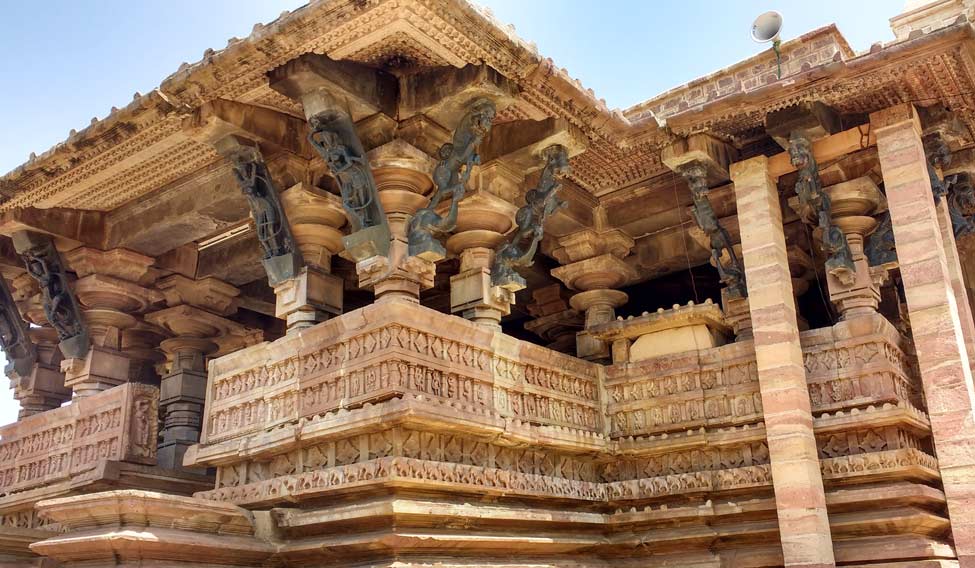
This awe-inspiring creation by the Kakatiya Vishwakarma Sthapathis (temple architects) is one of the many Hindu temples that were developed under the patronage of the Kakatiya dynasty. Supposed to be constructed between 1175–1324, this masterpiece, like many other temples in South India, was vandalised by the Tughlaq dynasty during their invasion of the Deccan.
The temple is a star-shaped structure with three shrines dedicated to Shiva, Vishnu, and Surya, thus earning the name 'Trikutalayam'. Constructed on a raised platform, the rock-cut elephants and perforated screens in the temple reflect the Kakatiya architectural style. The highly-polished black basalt monolith Nandi, that has witnessed the good and bad times for the last ten centuries, patiently bears all the damage that is caused by the adulterated haldi and kumkum sprinkled by visitors on its glistening body. That is, after they finish taking selfies with the 'black beauty'.
Ramappa Temple
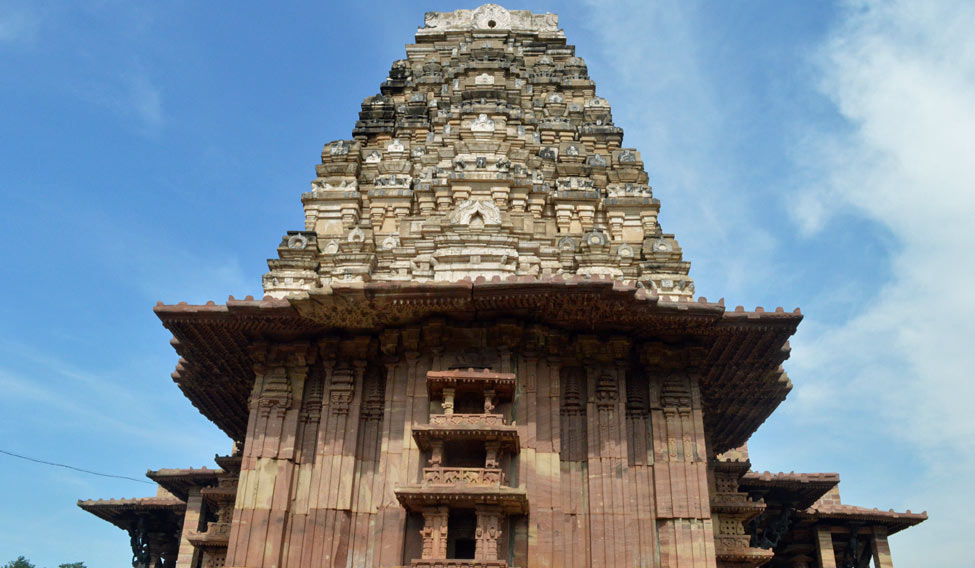 Ramappa Temple: Having inspired many poems, songs, dramas and films, Ramappa Temple still stands proudly in its fading glory
It is the only temple in India, perhaps in the whole world, where the structure is known by the name of its sculptor—Ramappa, and not the presiding deity. The 12th-century sculptor’s outstanding work had been alive for centuries and will do so for many more years to come. One of the finest examples of South Indian temple architecture—the Ramappa Temple near Warangal—attracts historians, art lovers, researchers, and the common man. The exquisitely-sculpted slender, graceful and sensuous dancing girls steal a romantic’s heart. Carved in black basalt stone, their lithe bodies burst into dance as they come alive in one’s imagination. Having inspired many poems, songs, dramas and films, Ramappa Temple still stands proudly in its fading glory.
An inscription in the temple states that it was built by Recherla Rudra, a general in the army of Ganapati Deva of the Kakatiya Dynasty. The construction took 40 years and was completed in 1213 AD. The temple remained intact even after repeated plundering and destruction during wars and natural disasters. There was a major earthquake during the 17th century, which caused considerable damage to the structure.
This Shiva temple stands on a raised platform. The ceiling of the central hall displays sculptures depicting scenes from Siva Puranam, Bhagavathapuranam, and other mythological narratives. The striking peculiarity of the building lies in the arrangement of bracket figures where stand the slender, graceful 'madanikas' and 'salabhanjikas'. The highly embellished 'Nandi' is very imposing and sits in a separate enclosure.
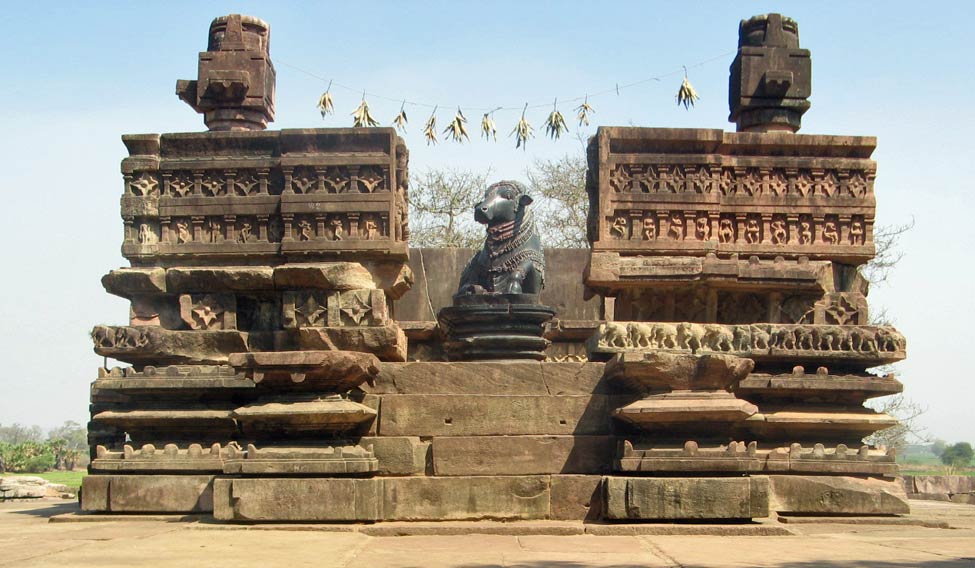 Nandi Mandap at Ramappa Temple: The highly-embellished 'Nandi' in a separate enclosure | Creative Commons
In a significant architectural feat, the daylight, reflected by the four pillars is diverted towards the inner sanctum, keeping it illuminated the whole day. The figurines carved in sandstone all around the temple feature Persian men, Egyptian Pharaohs and more, pointing to the trade relations the Kakatiyas had with these countries. The lightweight bricks used in the upper part of the temple are specially made with porous, laterite material, enabling them to float on water. Another interesting architectural aspect is the “sandbox” technology used for the foundation.
Invaders have ravaged the beauty of the Ramappa Temple, earthquakes have uprooted its pillars, and human neglect has had its toll on its structure. But its soul is intact—now and forever.