



It began in 2020. A Naga anthropologist, Professor Dr Dolly Kikon, read an article in the British daily, The Guardian, about the Pitt Rivers Museum at the University of Oxford reviewing its treatment of human remains. The museum had removed them from public display and opened discussions with communities of origin about their return.
For the Naga people, whose ancestors had been taken from the Naga Hills during British colonial rule, the development raised an unsettling question: how many forebears remained in museums, far from the land to which they belonged?
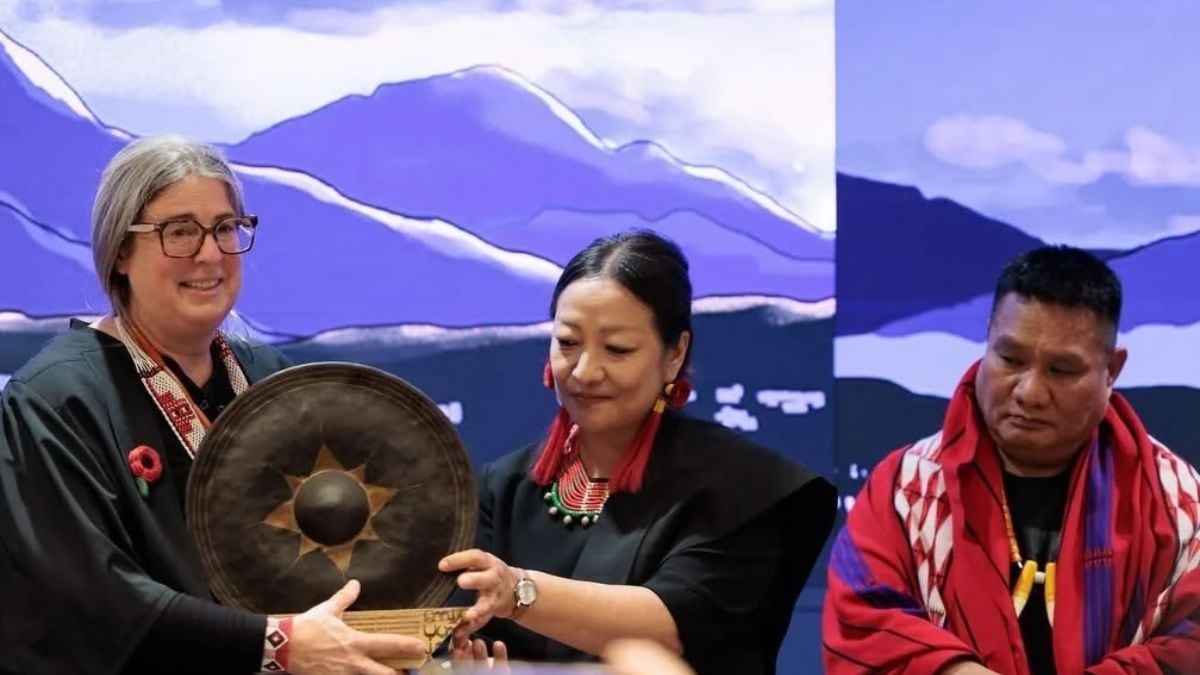
Six years later, that question led to a handover. On November 9, 2026, the University of Oxford transferred custodianship of 39 Naga ancestral human remains to Naga representatives at the Pitt Rivers Museum. The handover followed archival research, community consultations and negotiations led by the Forum for Naga Reconciliation (FNR), its research team, Recover, Restore and Decolonise (RRaD), and Naga Tribe Hoho leaders.
The campaign gained urgency in March 2025, when an auction house in Oxfordshire attempted to sell a Naga skull. The sale was halted following intervention by the Naga representatives, bringing renewed attention to the fate of ancestral remains held outside their communities. “For the Naga people, at one time these were our forefathers and foremothers. They were human beings,” said Dr Ellen Konyak, coordinator of RRaD. Their display as museum specimens or collectables, she said, was deeply dehumanising.
For the Naga people, the return is about reclaiming their ancestors and the right to decide how they should be remembered and laid to rest.
The Colonial Record
The Pitt Rivers Museum holds 6,500 Naga objects, the world's largest collection of Naga material culture. Its holdings include ancestral human remains collected during the colonial period. Administrators and anthropologists John Henry Hutton and James Philip Mills were among those who assembled the collection. Some remains and objects were taken during punitive military expeditions, not freely given.

The museum's 2020 decision to remove human remains from public display opened a channel for dialogue. The FNR and RRaD began tracing the remains, examining records and consulting elders, scholars, village representatives and tribal apex bodies, known as Naga Tribe Hohos. They had to establish the ancestors' origins and community affiliations.
The research exposed errors in the museum's catalogue. Fifteen remains recorded as Konyak were found to belong to the Phom, a distinct Naga tribe traditionally based in and around Longleng district in eastern Nagaland. Researchers cross-checked village names and historical records to establish their correct affiliation. The correction was essential to restoring identities obscured by colonial-era documentation.
The 39 ancestors have been traced to seven Naga tribes: Konyak, Phom, Yimkhiung, Khiamniungan, Chang, Sumi, and Tangkhul.
A Claim Shared Across Tribes
The initiative extended beyond the seven communities represented in this group. According to Konyak, representatives of all Naga tribes, whose ancestors are not included in this return, joined in solidarity. In a region marked by internal divisions, the campaign created a shared undertaking.
A breakthrough came in June 2025, when Naga elders travelled to Oxford and presented the Naga-Oxford Declaration on Repatriation. It called for the ancestors' return, a dignified resting place and a memorial symbolising Naga unity, while expressing solidarity with Indigenous communities seeking the return of ancestral remains.
On July 13, 2026, the University of Oxford Council approved the return of 39 remains. One additional set was excluded because its Naga provenance could not be established conclusively. Konyak said the museum had cooperated throughout, allowing the claim to proceed through dialogue and examination of historical records.
For Naga communities, the issue carries spiritual as well as historical significance. Traditional beliefs hold that ancestors must be brought home and given proper rites. Their prolonged absence has caused hurt across generations. The right to determine their final resting place, community representatives maintain, belongs to those from whom they were taken.
The remains are now on their way to Nagaland and are expected to be received at Naga Solidarity Park in Kohima, envisaged as a common place of remembrance. The date of the homecoming and burial ceremony has yet to be confirmed.
The campaign has also drawn attention to Naga remains held elsewhere in Britain. Konyak said the delegation learnt that other museums also hold Naga human remains. The team intends to complete the present repatriation before pursuing further claims.
The return matters not only for the 39 ancestors, but for the community-led research, corrected records and inter-tribal solidarity behind it. It offers a precedent for Indigenous communities confronting colonial collecting.
A 2020 newspaper report opened the possibility of bringing the ancestors home. The November handover has brought that effort closer to its purpose. For communities waiting in Nagaland, the homecoming will be complete only when their ancestors are laid to rest on the land from which they were taken decades ago.
