



Whenever the word Ayurveda enters the conversation, it often triggers a predictable chain of associations - ancient, traditional, outdated, slow, and lacking scientific validation. For many, it has unfortunately been reduced to little more than a “massage-based wellness system” with claims that are often dismissed as placebo.
I chose not to accept that narrative.
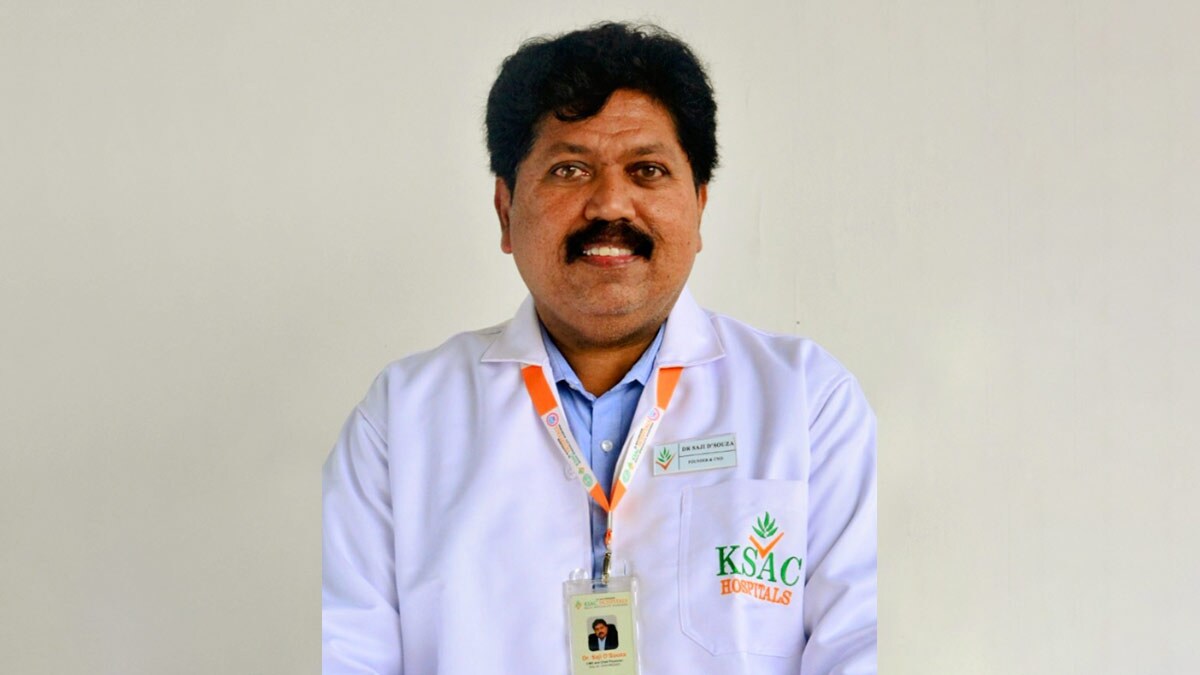
In 1998, I set out on a mission to challenge this perception by pioneering what I call Evidence-Based Ayurveda. It was not an easy path. Resistance came not only from outside the system but also from within the medical fraternity. Yet, the conviction remained unwavering; Ayurveda is not merely a wellness practice; it is a deeply rooted, logically structured, and clinically relevant medical science.
Over the years, through relentless effort and a commitment to scientific validation, our team at KSAC Hospitals has worked to bridge the gap between ancient wisdom and modern evidence. Every treatment protocol we follow is supported by measurable outcomes, before-and-after diagnostic reports, clinical observations, and continuous documentation. The goal has always been clear: to establish Ayurveda not just as a legacy system, but as a scientifically viable healthcare solution in the 21st century.
Debunking the Myths
“Ayurveda is not scientific.”
This is perhaps the most common misconception. Ayurveda is a formally recognized medical system in India. Admission into Ayurvedic medical programs requires qualification through the National Eligibility cum Entrance Test (NEET), followed by a rigorous 5.5-year academic curriculum including a mandatory internship designed by the National Commission for Indian System of Medicine (NCISM) under the Ministry of AYUSH, Government of India. Like any other medical discipline, it demands structured clinical training, strong theoretical grounding, and hands-on practical expertise.
“Ayurvedic treatments are slow.” This belief is increasingly outdated. While Ayurveda traditionally emphasizes gradual healing, advancements in protocol standardization and clinical application have significantly accelerated outcomes.
In our experience, conditions such as cervical and lumbar spondylosis, sciatica, spondylolisthesis, neuropathy, osteoarthritis (OA), rheumatoid arthritis (RA), psoriasis, and
anorectal disorders like piles, fissures, and fistulas have shown marked improvement within 7, 14, 21, or 28 days - without surgical intervention. Recovery is not only faster but also more sustainable, with reduced recurrence.
“Ayurvedic medicines harm the liver and kidneys.” Ayurvedic formulations include herbal, mineral, and metallic components, but the assumption of toxicity stems from misuse or lack of standardization.
Modern Ayurvedic medicine manufacturing follows stringent protocols - raw material testing, toxicology studies, pharmacological validation, and stability testing. Certified laboratories ensure the absence of heavy metals and microbial contamination. Additionally, WHO Good Manufacturing Practices (GMP), AYUSH certification, and international standards like the Certificate of Pharmaceutical Products (COPP) ensure safety, quality, and global compliance.
“Ayurvedic medicines generate excess heat.” This is a misunderstanding of how the body responds to healing. Infections and certain diseases cause naturally elevated body temperature as part of the immune response. Most Ayurvedic medications are herbal and do not significantly alter metabolic heat.
In cases where mineral-based formulations are used, a mild increase in digestive fire (Jataragni) may occur to facilitate metabolism, but this is controlled, therapeutic, and rarely harmful.
“Ayurveda comes with too many restrictions.” What is often perceived as restriction is actually pathya,a scientifically guided lifestyle and dietary alignment.
These guidelines are not imposed for the medication but tailored to the disease. For example, a diabetic patient avoiding excess sugars or a renal calculi (Kidney stones) patient limiting oxalate-rich foods is not a limitation of Ayurveda, it is a logical extension of disease management, applicable across medical systems.
The Advantages of Ayurveda
From my experience, the strengths of Ayurveda are both practical and profound:
● Minimal to negligible side effects when practiced correctly
● Non-invasive, avoiding surgical trauma and anesthesia risks
● Focus on addressing the root cause rather than masking symptoms
● Evidence-based protocols (as practiced at KSAC) with measurable outcomes
● Recognition by insurance providers in NABH-accredited and government-empanelled hospitals
● Potential reversal of chronic conditions like diabetes and thyroid disorders
● A truly holistic approach, treating the - body, mind, and soul as one integrated system
Ayurveda uniquely aligns with the true definition of health - not merely the absence of disease, but a state of complete physical, mental, and emotional well-being.
A System Ready for Revival
Today, there is renewed momentum at the national level. The Government of India, through the Ministry of AYUSH, is actively working to restore Ayurveda to its rightful place in global healthcare.
This is not about replacing modern medicine, it is about integrating the strengths of both systems. Evidence-based Ayurveda is no longer a concept; it is a necessity in a world that is increasingly seeking sustainable, holistic, and scientifically validated healing solutions.
The journey from perception to proof is ongoing. But one thing is certain - Ayurveda is not a relic of the past. It is a science of the future, waiting to be understood, validated, and embraced.
I chose not to accept that narrative.
In 1998, I set out on a mission to challenge this perception by pioneering what I call Evidence-Based Ayurveda. It was not an easy path. Resistance came not only from outside the system but also from within the medical fraternity. Yet, the conviction remained unwavering; Ayurveda is not merely a wellness practice; it is a deeply rooted, logically structured, and clinically relevant medical science.
Over the years, through relentless effort and a commitment to scientific validation, our team at KSAC Hospitals has worked to bridge the gap between ancient wisdom and modern evidence. Every treatment protocol we follow is supported by measurable outcomes, before-and-after diagnostic reports, clinical observations, and continuous documentation. The goal has always been clear: to establish Ayurveda not just as a legacy system, but as a scientifically viable healthcare solution in the 21st century.
Debunking the Myths
“Ayurveda is not scientific.”
This is perhaps the most common misconception. Ayurveda is a formally recognized medical system in India. Admission into Ayurvedic medical programs requires qualification through the National Eligibility cum Entrance Test (NEET), followed by a rigorous 5.5-year academic curriculum including a mandatory internship designed by the National Commission for Indian System of Medicine (NCISM) under the Ministry of AYUSH, Government of India. Like any other medical discipline, it demands structured clinical training, strong theoretical grounding, and hands-on practical expertise.
“Ayurvedic treatments are slow.” This belief is increasingly outdated. While Ayurveda traditionally emphasizes gradual healing, advancements in protocol standardization and clinical application have significantly accelerated outcomes.
In our experience, conditions such as cervical and lumbar spondylosis, sciatica, spondylolisthesis, neuropathy, osteoarthritis (OA), rheumatoid arthritis (RA), psoriasis, and
anorectal disorders like piles, fissures, and fistulas have shown marked improvement within 7, 14, 21, or 28 days - without surgical intervention. Recovery is not only faster but also more sustainable, with reduced recurrence.
“Ayurvedic medicines harm the liver and kidneys.” Ayurvedic formulations include herbal, mineral, and metallic components, but the assumption of toxicity stems from misuse or lack of standardization.
Modern Ayurvedic medicine manufacturing follows stringent protocols - raw material testing, toxicology studies, pharmacological validation, and stability testing. Certified laboratories ensure the absence of heavy metals and microbial contamination. Additionally, WHO Good Manufacturing Practices (GMP), AYUSH certification, and international standards like the Certificate of Pharmaceutical Products (COPP) ensure safety, quality, and global compliance.
“Ayurvedic medicines generate excess heat.” This is a misunderstanding of how the body responds to healing. Infections and certain diseases cause naturally elevated body temperature as part of the immune response. Most Ayurvedic medications are herbal and do not significantly alter metabolic heat.
In cases where mineral-based formulations are used, a mild increase in digestive fire (Jataragni) may occur to facilitate metabolism, but this is controlled, therapeutic, and rarely harmful.
“Ayurveda comes with too many restrictions.” What is often perceived as restriction is actually pathya,a scientifically guided lifestyle and dietary alignment.
These guidelines are not imposed for the medication but tailored to the disease. For example, a diabetic patient avoiding excess sugars or a renal calculi (Kidney stones) patient limiting oxalate-rich foods is not a limitation of Ayurveda, it is a logical extension of disease management, applicable across medical systems.
The Advantages of Ayurveda
From my experience, the strengths of Ayurveda are both practical and profound:
● Minimal to negligible side effects when practiced correctly
● Non-invasive, avoiding surgical trauma and anesthesia risks
● Focus on addressing the root cause rather than masking symptoms
● Evidence-based protocols (as practiced at KSAC) with measurable outcomes
● Recognition by insurance providers in NABH-accredited and government-empanelled hospitals
● Potential reversal of chronic conditions like diabetes and thyroid disorders
● A truly holistic approach, treating the - body, mind, and soul as one integrated system
Ayurveda uniquely aligns with the true definition of health - not merely the absence of disease, but a state of complete physical, mental, and emotional well-being.
A System Ready for Revival
Today, there is renewed momentum at the national level. The Government of India, through the Ministry of AYUSH, is actively working to restore Ayurveda to its rightful place in global healthcare.
This is not about replacing modern medicine, it is about integrating the strengths of both systems. Evidence-based Ayurveda is no longer a concept; it is a necessity in a world that is increasingly seeking sustainable, holistic, and scientifically validated healing solutions.
The journey from perception to proof is ongoing. But one thing is certain - Ayurveda is not a relic of the past. It is a science of the future, waiting to be understood, validated, and embraced.
Disclaimer: Comments posted here are the sole responsibility of the user and do not reflect the views of THE WEEK. Obscene or offensive remarks against any person, religion, community or nation are punishable under IT rules and may invite legal action.
