



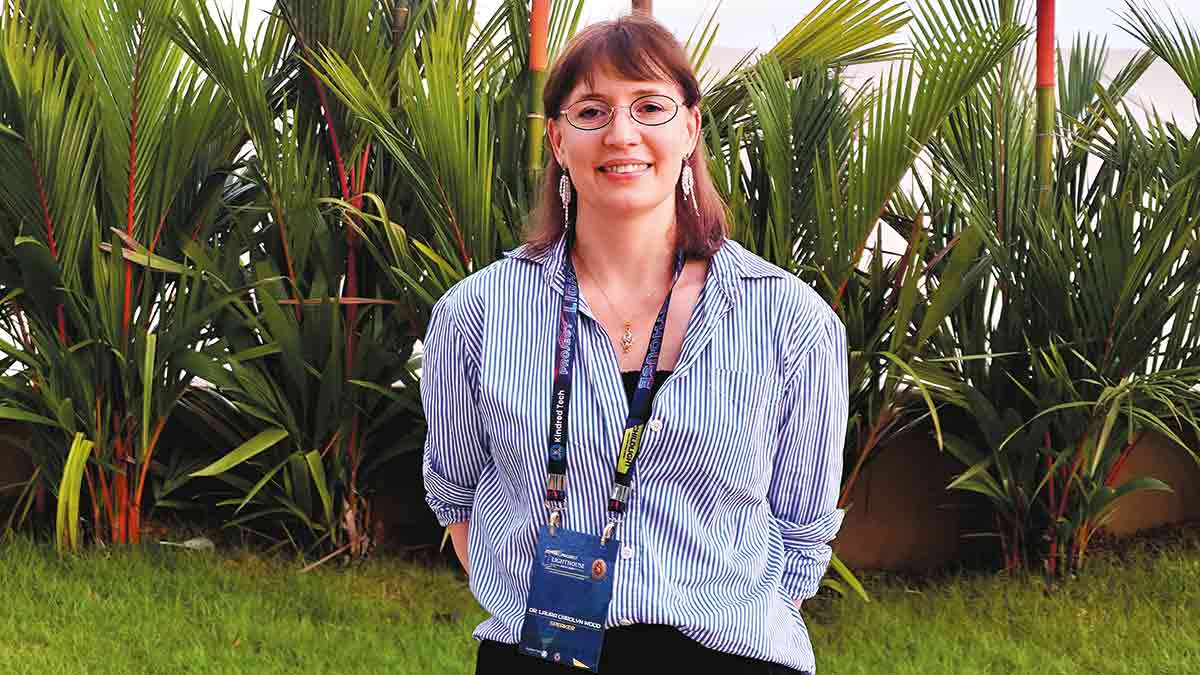
Interview/ Dr Laura Carolyn Wood, forensic paediatrician and director, VITA Foundation
As a forensic paediatrician and director of the VITA Foundation, a charity that addresses human trafficking as a health and public health issue, Dr Laura Carolyn Wood has encountered distressing situations that can have lasting psychological effects. From working with children who have survived sexual abuse, neglect and trafficking to experiencing grief and loss in her personal life, she has learned that trauma is not confined to the mind; it can manifest in the body through a racing heart, sleeplessness, physical tension and memories triggered by seemingly ordinary sensory experiences.
In an exclusive interview with THE WEEK, Wood discusses the challenges of supporting traumatised children, understanding the body’s responses to distress and coping with flashbacks and dissociation. She also offers practical strategies to help professionals and others exposed to traumatic experiences manage stress and prevent it from becoming overwhelming. Excerpts:
Q/ You have worked with children who have experienced abuse and other forms of trauma. Tell us about the challenges you face.
A/ I worked in forensic paediatrics at a sexual assault referral centre for children and young people. Earlier, I worked with children in foster care and adoption, many of whom had experienced harm or neglect. Encounters with child victims of human trafficking also showed me how little my training had prepared me to support complex trauma, grief and loss.
Forensic work is emotionally demanding, and life experience helps. You may be among the first people a child meets after an allegation or disclosure of abuse. A child must be welcomed as a person, not treated simply as a crime survivor. A warm and compassionate response can ease shame imposed by a perpetrator or reinforced by family and culture. Understanding how we, as humans, respond to situations of fear, feeling powerless and overwhelmed helps guide a wise response—recognising that children may understandably not trust other adults or feel safe.
We must reduce distress while working with the child, not simply doing things to them, but partnering with them, gathering evidence while respecting what they can manage. But securing a conviction and helping a child recover are separate tracks. Whatever happens in court, the child must get up the next morning and continue living. We must address their health and psychological needs, keep them safe and help them trust services. It matters that they remember a professional who listened and did not blame or shame them.

Q/ How did you learn to cope with distressing experiences at work?
A/ Medical students encounter suffering and death early on. We learn that life is not always fair and that we cannot control everything; the body’s responses become clearer through experience.
Learning about trauma has been especially useful. It is often missing from medical training or taught narrowly. PTSD is only one part of the human response to trauma. I use the Trauma Recovery-Focused Model developed by UK psychotherapist Betsy de Thierry, who leads Trauma Recovery Global. Trauma results from a combination of terror, powerlessness and overwhelm. For children, abuse or neglect can make them deeply fearful and feel powerless to help themselves. This can lead to deep and instinctive protective and survival behaviours, especially for children who lead terrifying lives with very little nurture and support. These children may struggle to develop the skills and abilities that a child living in safety would have the opportunity to explore and develop. And it is not their fault. Life has been unjust.
An understanding of human stress and trauma also helps me understand my physical reactions to difficult things. If my chest tightens, my heart races, or my stomach churns after I hear or read something distressing, I recognise that my body may be responding to a perceived threat. The brain detects danger: the heart beats faster, breathing changes and the body prepares to fight, flee or freeze. Recognising these reactions as signals, rather than something strange to fear, helps me manage them.
I ask myself, “Is there a real threat here, or is my brain reacting to something I have read or heard, even though I am not in immediate danger?” In forensic work, I have skills and a role that allow me to help a child. That ability to act can protect against powerlessness. Researchers or legal teams may read distressing material without feeling able to improve a child’s situation. Better systems can reduce that powerlessness.
We should also recognise when we are more vulnerable to being overwhelmed. Exhaustion, hunger, illness, bereavement or difficulties at home can reduce what we can manage. Sometimes we need a break. When I meet a child, I use my own calm to help settle their anxiety. Children and parents pick up on our body language and tone. I watch for signs of overwhelm and consider whether they need a break, food or a drink.
Q/ Have you experienced flashbacks or memories of difficult events returning unexpectedly?
A/ Absolutely, and not only because of work. I was with a dear relative when they died, and there was a strong smell at the time. Later, a similar bodily smell would take me straight back to that experience. My brain had linked the smell with pain and was warning me it might happen again.
Smell is a powerful trigger because its brain pathways are closely connected to fear. For someone who has survived a fire or war, smoke can bring back intense fear.
Sleeplessness is another common response. When the brain senses danger, sleep can be difficult. I have learned not to fight the response or become more distressed because I cannot sleep. I acknowledge that my brain has had a difficult day, write down my worries and separate what I know from fears unsupported by evidence.
If I still cannot sleep, I might get out of bed, change rooms, have a drink, move around or look at something beautiful outside. I turn my attention to positive things or happy memories. Writing down something I fear forgetting can also help me stop rehearsing it.
Another response is dissociation, which is still poorly understood. When an experience is too overwhelming to process while remaining fully present, the mind may create distance from it. Different parts of the experience may feel disconnected, because holding them together feels like too much. A person may feel that life is unreal or that they are detached from their body. It is a complex response, but it can serve a protective function.
Q/ Do you think this protective mechanism is poorly understood?
A/ Very much so. We are often frightened of it, and dissociation in particular is not well understood.
Our protective systems are meant to activate, warn us and prompt action. Once we act, the stress response can settle. Modern life can trigger the same response, whether through an overflowing inbox or a physical threat. If we remain sitting at a laptop while anxious about a deadline, the body may not get the movement that helps the response settle.
Prolonged stress can affect health, contributing to problems such as high blood pressure and inflammatory conditions. This cumulative burden is called allostatic load. For children whose difficult life has triggered chronic stress, their increased relative risk of serious disease is much higher than children who had not experienced such difficulties. This is called the science of Adverse Childhood Experiences or ACEs.
Movement helps me manage stress. I do kickboxing, walk a lot, and get up regularly. We are not designed to sit still all day. Dancing and drumming can help communities regulate emotions, and bilateral movement may help some people process difficult memories.
We are often told to exercise for our wellbeing without being told why it matters. Psychological and physical wellbeing are closely connected.
Diet matters, too. The gut microbiome—the community of bacteria in our gut—communicates with the brain and is linked to mental health. Modern diets can contain too much ultra-processed food, sugar and salt and too little variety. Healthy choices can be difficult on tight budgets, but paying attention to diet, alongside movement and community, can support mental wellbeing.
And finally, when you care for children and adults in distress, it is important to take rest and to deliberately find people, places and experiences that bring you joy. For me, perpetrators of abuse have already caused too much harm, and I don’t want my life and my family to be affected, too. There is something defiant about caring for ourselves and knowing that there is much good in the world, whilst also championing justice for wrongdoing.
