



For decades, the fight against high cholesterol has followed a familiar formula: eat better, exercise and take medication—often every day, sometimes for life. These approaches have saved millions of lives. But they depend on something medicine cannot always guarantee: long-term adherence and an adequate response to treatment. People forget doses, stop treatment because of side effects, or simply fail to reach recommended cholesterol levels despite taking multiple therapies.
What if lowering cholesterol could require just one treatment? That possibility is beginning to move from science fiction towards reality—and could become one of the most intriguing advances in cardiovascular medicine. One of the most promising targets is a gene called PCSK9, which plays a key role in regulating how the liver clears LDL cholesterol—the so-called “bad” cholesterol—from the bloodstream. Drugs that inhibit PCSK9 can produce substantial reductions in LDL cholesterol, but most require repeated dosing.
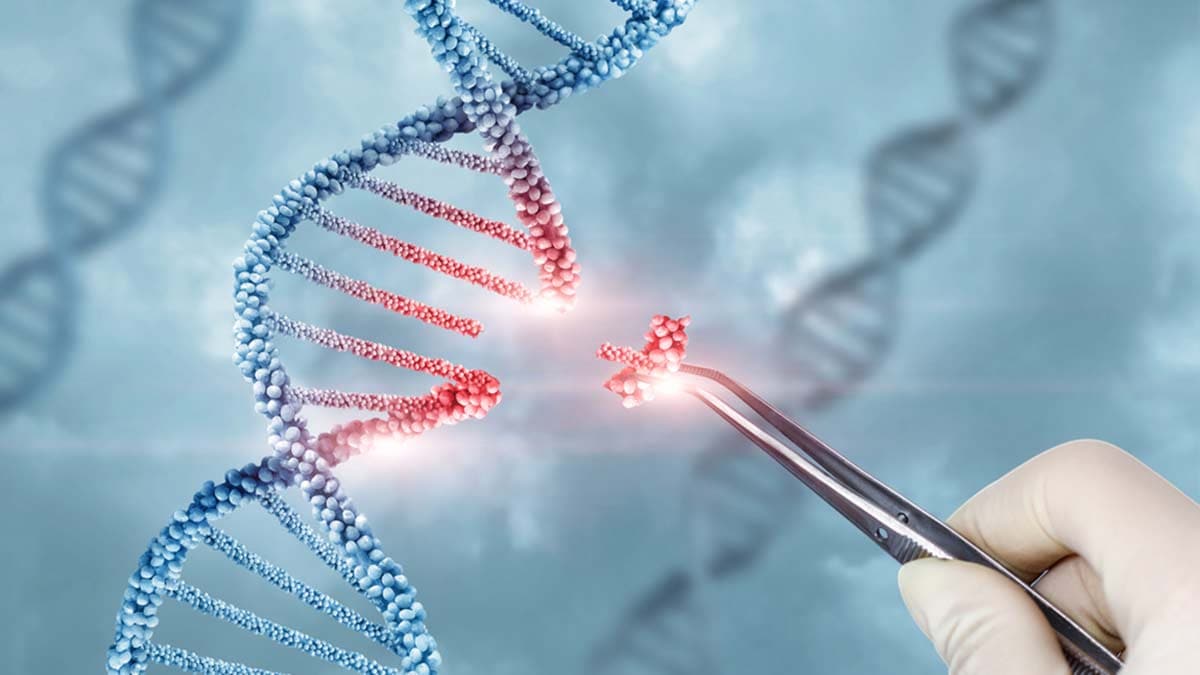
Gene editing takes a fundamentally different approach. Instead of repeatedly blocking PCSK9, it aims to permanently reduce its activity by editing the gene itself. The results emerging from early human trials are striking. In May 2026, The New England Journal of Medicine published results from an experimental gene editing therapy designed to inactivate PCSK9 in liver cells. In 35 participants, a single infusion reduced PCSK9 levels by as much as 88 per cent and LDL cholesterol by as much as 62 per cent. At the highest dose, the LDL reduction was still evident during follow-up extending to at least one year. That is an extraordinary result—but it is also only an early step.
The central promise of gene editing is not simply a lower cholesterol number. It is the possibility of changing the biology of a disease with a single treatment. For cardiovascular medicine, that would represent a profound shift: from managing a risk factor year after year to potentially altering one of its underlying biological pathways.
Elevated LDL cholesterol remains one of the most important and treatable risk factors for atherosclerotic cardiovascular disease. If a one-time treatment could safely produce sustained LDL reduction, the implications could be enormous.
But what The New England Journal of Medicine published was an early-stage trial, with a small number of participants and a primary focus on safety and biological effects rather than whether treatment ultimately prevents heart attacks or strokes. We also do not yet know how durable the effect will be over decades, or whether unforeseen problems could emerge from permanently altering a person’s DNA. Cost and access present another major hurdle. Gene-editing therapies are currently among the most expensive treatments in medicine. At the same time, the history of biomedical technology shows that costs can fall dramatically as technologies mature and become more widely adopted.
For India, the implications could be profound. Cardiovascular disease remains one of the country’s greatest health challenges, with nearly 29 lakh cardiovascular deaths estimated in 2021. India also faces a distinctive burden, with cardiovascular disease often developing at younger ages, while diabetes, hypertension, obesity, tobacco use and other risk factors continue to contribute to the rising risk. Whether gene editing therapies can eventually become safe, durable, affordable and scalable will determine much of their global impact. If they can meet those challenges, the implications could be enormous. By reducing lifelong exposure to elevated LDL cholesterol, such therapies could potentially help prevent heart attacks and strokes before they occur.
But the future of cardiovascular prevention will not be built by gene editing alone. Healthy diet, physical activity, blood-pressure control, smoking cessation and proven cholesterol-lowering medicines will remain essential for the foreseeable future. The age of genomic medicine may indeed be arriving. The challenge now is to ensure that its benefits reach far beyond the laboratory. For a country carrying one of the world’s largest burdens of heart disease, gene editing could be more than a scientific breakthrough. It could potentially shift the paradigm from lifelong treatment to lifelong protection.
Shyla Jovitha Abraham is a health and wellness writer, based in Cleveland, and Dr Jame Abraham is chairman, department of hematology/medical oncology and professor of medicine at Cleveland Clinic. The views expressed are his own and do not represent the views of Cleveland Clinic.
