



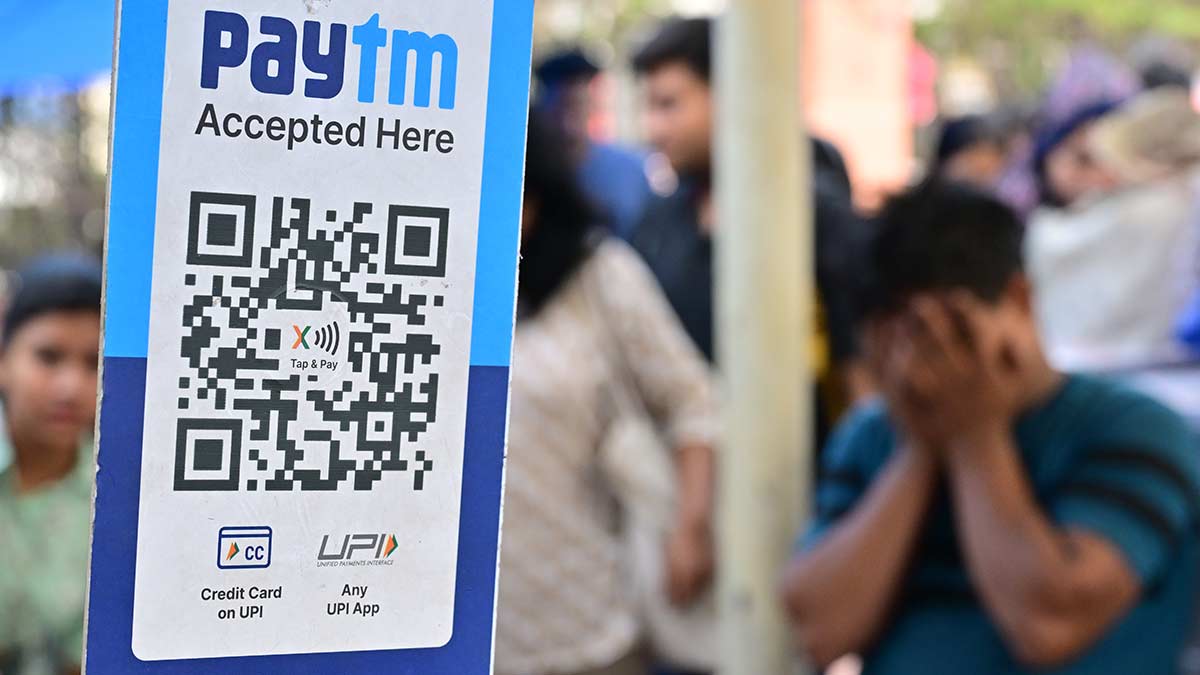
The government’s reintroduction, after six years, of a merchant discount rate (MDR) on UPI digital payments, though backed by a wide array of domain experts and fintech industry leaders, has triggered resistance from some opposition parties and the founders of major fintech companies.
That was only to be expected. Some in the opposition have invariably clutched at every straw as an existential threat to the nation. And one of the main effects of the MDR will be to level the playing field for startups and smaller fintech firms against digital payment behemoths and their now very wealthy founders, whose objections are perhaps not entirely disinterested.
But, beyond such knee-jerk responses, it is worth understanding this milestone in UPI’s 10-year history. It now accounts for half of all real-time digital payment transactions worldwide by volume. Even compared with other forms of electronic payment globally, UPI is a runaway success. It has overtaken Visa in transaction volume—Visa charging far more per transaction—and is well ahead of pioneer PayPal, as well as of China’s AliPay.
So, why introduce a fee now? For a start, because it is simply good economics for a payments ecosystem to be self-sufficient, rather than perennially dependent on subsidies. This is precisely what many experts had consistently recommended, and what the parliamentary standing committee on finance had formally, and unanimously, advised.
Moreover, at just 0.4 per cent, the MDR is significantly lower than that of almost all other payment platforms around the world. Its carefully calibrated exemptions also provide substantial relief: transactions below Rs2,000 are exempt, as are small merchants for transactions up to Rs1 lakh a month. There are sectoral concessions for railways, insurance, fuel, agricultural inputs and capital markets, as well as a cap of Rs300 on transactions above Rs75,000. Taken together, these provisions mean that roughly 96 per cent of merchants’ transactions by volume will not be affected at all.
Most importantly, zero MDR had given an advantage to well-capitalised tech giants who could absorb costs far more easily than smaller competitors. The new regime levels the playing field for startups and smaller players. This will not only encourage competition, but also spur the next generation of innovation, which will be critical if the UPI ecosystem is to sustain its momentum. Such innovation will benefit ever larger numbers of Indians, and help extend UPI’s reach well beyond the 11 countries to which it has already spread.
The most rational way to view this development is as the latest, and largest, example of the “freemium” revenue model pioneered in the early days of the internet and now the gold standard across internet-based enterprises. The freemium model, in essence, initially attracts users and builds scale by offering a free service; then, having reached a tipping point, introduces a tiered pricing structure—from free basic use to moderate pricing for a fuller menu, and premium pricing for large enterprise customers.
That is exactly what is now unfolding here. This is a major milestone for UPI, a genuine breakout moment, with which a self-sustaining revenue stream kicks in, ensuring its robustness and ongoing viability for the future.
Baijayant ‘Jay’ Panda is National Vice President of the BJP and Lok Sabha member.
