



Each year, in the last week of September, television cameras focus on the United Nations General Assembly podium in New York. The secretary-general sitting on the right and the undersecretary-general on the left are familiar figures. What changes is the occupant of the chair in the middle, the incoming president of the General Assembly.
This year that distinction goes to the affable and ever smiling Bangladesh Foreign Minister Khalilur Rahman, who has had a career as diplomat and international civil servant working with the United Nations in many roles and responsibilities. His election as UN General Assembly president marks the second time that Bangladesh has secured that honour, bringing it into the ranks of six other countries that have served twice—Argentina, Chile, Ecuador, Germany, Hungary and Nigeria.
And, briefly, almost India.
In mid-1965, foreign secretary C.S. Jha mentioned to prime minister Lal Bahadur Shastri that it would be the turn of an Asian country to preside over the UN General Assembly at its 21st session in September the following year. Jha felt India should give serious thought to nominating a candidate. We had been denied the political heft of being a permanent member of the UN Security Council but still had the opportunity to be a senior statesman among nations and help transform the General Assembly into an active agent for constructive global change rather than merely a platform for tired oration.
Shastri said he would give the idea a thought. One Indian had held that post 12 years earlier, Vijaya Lakshmi Pandit. Perhaps it was opportune time to have another.
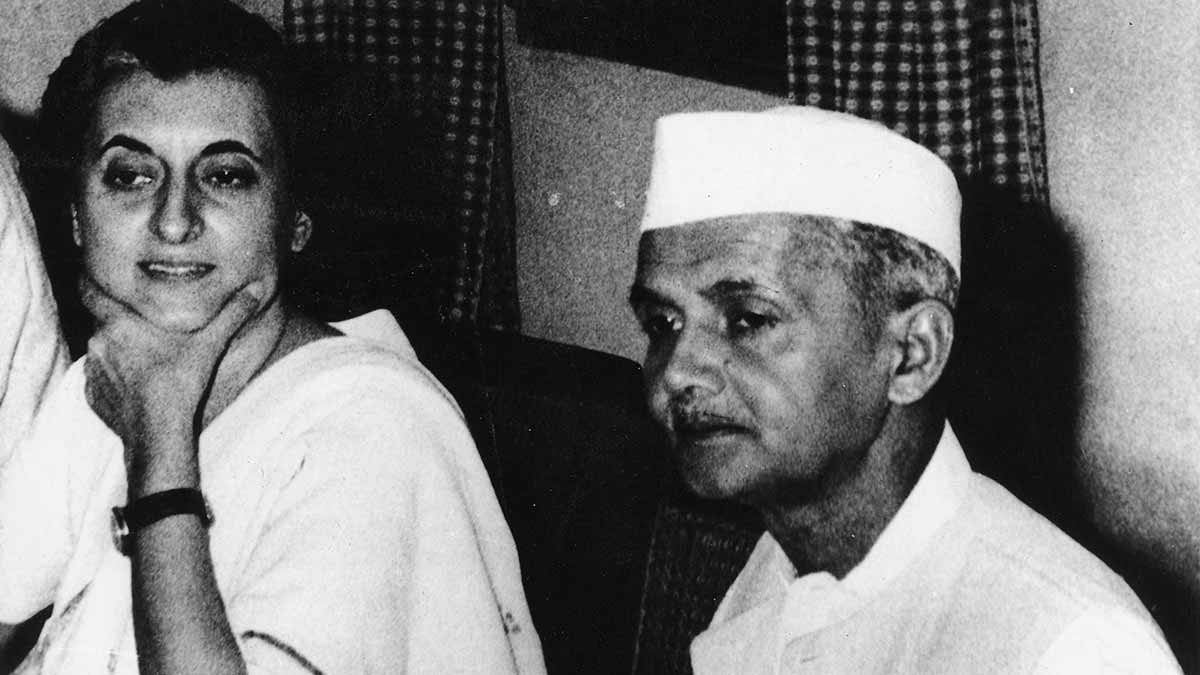
A few days later he reached out to Indira Gandhi, his minister for information and broadcasting, and asked if she might be interested in being the candidate should we decide to put one forward. Indira Gandhi was not quite prepared for this and asked for time to think it over. “There’s absolutely no hurry,” the prime minister responded. “It can even wait till January.”

For Indira Gandhi the idea itself had some appeal. She had had experience in international diplomacy and negotiation, most recently as a member of the executive board of UNESCO where she had championed a declaration on “education for economic development”. It was one of her determined efforts to ensure that the needs of the countries which had attained independence since the organisation began were not subordinated to the supposedly cerebral priorities that “established” nations had set.
There was another area, too; one which brought her in direct contention with the UNESCO director general and a number of “western” states. This was the disproportionate number of civil servants working in the organisation who were from the west to the exclusion of nationals from newly emergent states. The director-general, Vittorino Veronese from Italy, commanded some scepticism anyway, dressed as he invariably was in an enviably comfortable tweed coat while delegates roamed the conference halls in immaculate suits.
Not that his sartorial sense bothered Indira Gandhi. What did was his complete indifference to the concerns about what came to be called “equitable geographical representation”. She found two allies in the effort to set things right, the ambassadors from the Soviet Union and the Malagasy Republic. Together they drafted a resolution which noted that “the geographical representation in the secretariat in general continued to be unsatisfactory”. The final paragraph in such resolutions normally “requests” the head of the organisation concerned to take remedial action which, in this case, was to “take measures to improve the geographical distribution of posts.” As she sat with the other two cosponsors to finalise the text, she stiffened, borrowed the Soviet delegate’s pen, struck out the word “requests”, and replaced it with “instructs”.
For Indira Gandhi, India’s multilateral role stemmed from principles elaborated by Jawaharlal Nehru in a note he recorded even before independence, in January 1947. These principles were that the new India had iron in it, that India was in no mood to be patronised over, that we were not going to be trifled with in the future and that we had to make clear to the world that we were not anyone’s camp followers. Their implicit assertion, particularly from the president’s chair in the General Assembly, would be compelling at a time when most UN members were newly independent states, bringing its membership to 122 from 51 in 1945.
So the idea had its attractions. There was only one element of doubt. General elections were due in India in 1967. She was a member of the Rajya Sabha but felt it would be prudent to seek election to the Lok Sabha and be truly part of mainstream politics. Would her UN commitments adversely affect her campaign or would her international position strengthen it? Questions, questions, questions. She decided to wait till the prime minister returned from his summit with Pakistan president Ayub Khan in Tashkent in January 1966.
Shastri did not return, at least not alive. And in a matter of days Indira Gandhi’s own position changed dramatically. She was no longer a possible president of the General Assembly. She was the prime minister of India.
But the thought of that presidency persisted, even if it were not to be her. There was so far only one declared candidate, the Afghan ambassador to the UN, Abdul Rahman Pazhwak. Indira Gandhi’s reservations about him were strong. In the economical phrase of The New York Times he took “a conservative view on women’s participation in public affairs”, something she was not willing to summon enthusiasm for. Thinking possibilities through, she concluded a Muslim candidate from India would be best to meet Pazhwak on his ground. In 1966, more than a quarter of UN member states had a Muslim majority and could be expected to support Pazhwak against a non-Muslim nominee.
Her first thought ran to India’s vice president, Dr Zakir Husain. The responsibilities of the General Assembly president at the time were sufficiently light to spend a good portion of time addressing responsibilities at home if needed and there was a rich panel of vice presidents to step in as needed. She asked a senior ministerial colleague to sound Dr Husain.
The vice president did not appear overly enthused but appreciated the larger idea of India’s global presence that the prime minister had. He did recall that the idea of his leading the Indian delegation to the General Assembly had come up in 1963 but president S. Radhakrishnan did not encourage it. Radhakrishnan had recalled that, when he was vice president in 1955 and was proposed as leader of the Indian delegation to the UN tenth anniversary commemoration, Nehru had not encouraged the idea, given that he might be required to take a view on controversial issues, thus diminishing the overarching non-involvement inherent in the constitutional persona of the second highest office in the land.
Indira Gandhi turned then to her education minister, Mahommedali Currim Chagla, who agreed to be nominated. All was set for a formal announcement when the British high commissioner in New Delhi, John Freeman, asked to meet the prime minister urgently. He reported to her that the assessment of the British mission to the UN was that Chagla would lose badly. Pazhwak had been ambassador in New York and had led several UN missions. Chagla, for all his personal distinction, was an unknown quantity multilaterally.
Indira Gandhi saw the danger right away. A humiliating loss for India on the eve of the general elections would damage the Congress party irretrievably. And the idea was dropped. Chagla took the decision in good humour, which Indira Gandhi appreciated even as she moved him as external affairs minister a little later.
This narrative, shared with me by a senior civil servant, who worked with Indira Gandhi, some 30 years later resurfaced in mind as I saw Khalil Rahman acknowledge the cheers after his election. A memory also of the first time he and I had met, both young diplomats in our respective UN missions.
Ambassador Humayun Rashid Chowdhury of Bangladesh had taken over as president of the General Assembly in 1986 and had asked to see me. He had been a student at the Fletcher School in Boston along with my father some 33 years earlier.
When I called on him, Khalil was sitting quietly in a side chair. We introduced ourselves to each other. As I got up to leave after the meeting, Ambassador Chowdhury said: “I am proud to be with both of you. One day one of you shall be General Assembly president, too.”
I blushed modestly. He was proved right.
A former IFS officer, the writer served at the UN for three decades.
