



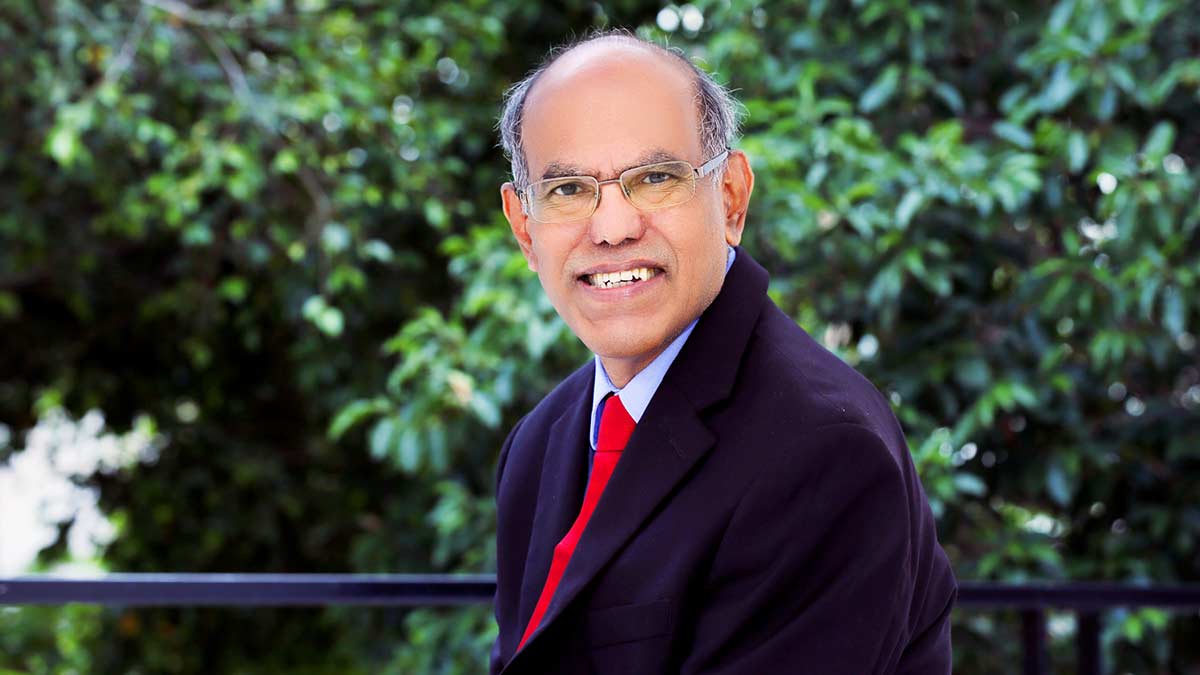
Interview/ Duvvuri Subbarao, former governor, Reserve Bank of India
Q/ Which economic shocks are still working through the system?
The pandemic is over, but its economic consequences are not. It disrupted supply chains, changed work patterns, increased public debt and was followed by an extraordinary monetary and fiscal expansion. Then we have the geopolitical and energy shocks: Russia-Ukraine, the Middle East and the disruption of global shipping routes. For India, this matters because we are a large importer of oil.
But I would add a longer-lasting shock: the reversal of globalisation. Companies are redesigning supply chains, and the old model of producing wherever costs were lowest is giving way to one in which resilience and strategic security matter. And climate change is becoming an economic shock in its own right. Extreme weather affects food production, infrastructure, insurance and migration. For emerging economies, these costs can be particularly large because we have less fiscal capacity to absorb them. So we are dealing with several overlapping transitions.
Q/ Where does India’s growth come from today, and how dependent is it on global demand, services exports and capital flows?
India’s growth is fundamentally domestically anchored. Private consumption, public investment, construction, infrastructure and domestic services are important engines. That is one reason India has been more resilient than many emerging economies to global shocks. But we should not confuse domestic orientation with insulation. India is deeply connected to the global economy through goods trade, services exports, remittances, technology and capital flows.
India does not depend on foreign capital simply to finance its consumption. What we want from it is investment, technology, management expertise and integration into global supply chains. India’s model should be domestically driven growth with globally competitive production.
Q/ Is India creating enough good jobs for its young, especially management graduates?
India has made progress on employment, but the quantity of jobs and the quality of jobs are two different questions.
The unemployment rate tells us whether people have jobs. It tells us much less about whether those jobs are productive, adequately paid, secure or making full use of people’s skills. There is also underemployment, especially in agriculture. To say that India has a “jobs crisis” is an incomplete answer. Rather, India has a challenge of creating enough productive, well-paying jobs at the pace at which its working-age population is growing.
Q/ Where will the next decade’s jobs come from?
I would divide the future job market into three broad areas. The first is labour-intensive manufacturing and related services: textiles, footwear, electronics assembly, food processing, tourism, logistics and construction. These can absorb workers at scale.
The second is services: health care, education, financial services, business services, hospitality and digital services. India’s comparative advantage in services will remain important, although AI will change the nature of many of these jobs.
The third is the new technology economy: AI, semiconductors, renewable energy, electric mobility and biotechnology. These will create high-productivity jobs, but not necessarily in the millions.
India cannot solve its employment problem only by creating high-tech jobs. Nor can it solve it only through low-skilled jobs. The real challenge is to create a job-rich growth model, not merely a high-GDP growth model.
Q/ What does history from earlier technology waves suggest about AI’s impact on jobs?
History gives us a reason for both optimism and caution. Every major technological revolution has destroyed some occupations and created others. The important lesson is that technology tends to replace tasks before it replaces occupations. Arguably, AI could be different because it is entering areas that were previously regarded as relatively safe from automation: writing, coding, analysis, research and even some managerial tasks. But I don’t expect AI simply to produce mass unemployment. The more likely outcome is that jobs will be redesigned.
My bigger concern for India is the entry-level worker. Traditionally, a young graduate learned by doing relatively routine tasks. If AI performs those tasks, companies may need fewer junior people. That could make the transition into professional life harder. For an emerging economy, AI is both an opportunity to leapfrog and a potential source of labour-market disruption.
Q/ What would your advice be to a b-school student?
I am wary of giving advice because the job market is totally different from the one I experienced. Nevertheless, three pieces of advice. First, don’t confuse a degree with a career. Your b-school gets you to the starting line; what you learn afterwards matters much more.
Second, build fundamentals. Understand economics, finance, accounting, statistics and strategy. AI can give you an answer, but you need to know whether the answer is sensible. Third, learn AI. Don’t think of it as something that will take your job. Think of it as something that will change your job.
I would tell a young management graduate: your greatest asset is not what you know today. It is your ability to keep learning as the world changes.
