


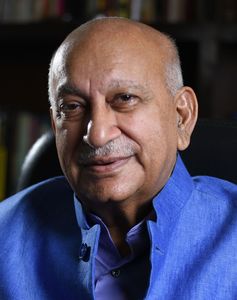
 M.J. Akbar
Ebarey Ram, Aagey Baar Baam. This time, Ram. Next time, left. This slogan fluttered around the edges of yet another earthquake election in Bengal, but escaped notice, not least because the chatterati is so consumed by sequence that there is little mind space for consequence. It is never easy to trace the trajectory of the sun when it is still well below the horizon.
The unknown story of the summer of 2026 is the strategy of Bengal’s Marxists. Out of office and devoid of hope for the last 15 years, they did the unthinkable. They urged their small but resilient group of supporters to vote BJP and complete the thorough demolition of Mamata Banerjee’s Trinamool Congress. They could see the rise of the BJP; they wanted to ensure that these results would wreck the party which had removed them from Bengal’s electoral map in 2011. It was a variation of Lenin’s doctrine of strategic retreat: withdraw now to win tomorrow. The left cannot become the principal alternative to the BJP as long as the Trinamool remains relevant.
This calculus assumes that Banerjee’s dramatic 2011 victory was a personal and perhaps freak triumph unsupported by institutional framework, and hence liable to crumble without the bolster effect of power. The Trinamool retained 80 seats in the 2026 Assembly but if defeat destroys its credibility, 80 can scatter as easily as eight. Voters who resent the BJP will need to regroup. Marxists believe that Bengal’s demography is on their side. Muslims, who are effectively 35 per cent to 45 per cent of the electorate in districts east of the Hooghly river, could lead a return to a revived left. Even during the oblivion of the past 15 years, the left in Bengal has had a circa 10 per cent support base. Do the math, and the left has the potential to take on BJP in 2029 and 2031.
Marxists are confident that while Banerjee’s war cry Aabar jitbey Bangla [Bengal Will Win Again] failed because the electorate was tired of her theatrics, Bengal’s sense of cultural exceptionalism can always become an electoral asset against the “north Indian” BJP in different circumstances. Theoretically, it is a paradox that international doctrinaire communists should turn Bengali regionalism into their weapon, but through their years in power between 1977 and 2011 they made subtle and effective use of their stance as the wall against the physical, political and cultural assault of Delhi and the north. In this election, the BJP understood the dangers of this potential negative, which is why its leaders were seen repeatedly on television screens holding fish to signal that they had not become vegetarian overnight. But culture becomes a force multiplier only if you have honoured the basic compulsions of governance. It cannot be a substitute if you have failed, as Banerjee did, on the primary requisites of good governance: minimal corruption, better civic facilities, security, education and employment—an imperative of the young. A decisive section of the Bengal electorate was born in this century. It wants jobs in Bengal. Today its best chance for economic security lies outside Bengal.
Marxists are also presuming that the incoming BJP government could be overwhelmed by inherited problems. It will stare at an empty treasury, waiting for relief from Delhi. With the best intention, it might be unable to fulfil hopes that its comprehensive victory has aroused. There is no magic wand which will bring Bengal’s dormant industry to sudden life. If its cadre is tempted towards an aggressive social agenda while its government searches for its bearings, a switch in the mood could be perilous to its fortunes.
Comrade Lenin would have been impressed by the planning of his 21st century apostles. The CPI(M) has initiated quiet work on the campus, leaving its traditional bastion—the factory gates—calm. There is a small but perceptible drift of students, including the brightest, towards the left bank of the ideological river, for quasi-Marxist ideas appeal to their idealism.
A week, it has been famously said, is a long time in politics, and the 150-plus weeks before the next general election will require exceptional commitment, patience and dedication from Marxists, and yet may be a bridge too far. But from discordant corners of Bengal, Marxists believe that they have stepped out from invisibility to uncertainty, which is a significant stride on the road to resurrection. Indian democracy is as unique as India. Ironically, in Kerala, the BJP is preparing to fill the space vacated by the left to became an alternative to the Congress-led United Democratic Front.
In the early 1950s, Indian Marxists reinvented themselves as democrats after the failure of their armed uprising, popularly known as the Telangana rebellion. In a minor miracle, Indian Communists won 60 seats in the Kerala house of 126 in the 1957 elections. Five independent MLAs helped them gain a majority, to the chagrin of the hegemonic Congress, which sabotaged their government in 1959 by means that were certainly unethical, if not entirely illegal. That might have reminded Indian comrades about Lenin’s homilies against democracy (he dismissed it as deception), but mainstream Indian ideologues remained faithful to the virtues of a peaceful path to power. Their reward came in 1967 when Bengal’s communists became partners in a United Front state government. By 1977, a Left Front led by the CPI(M) had won Bengal. When it was finally defeated in 2011, the beneficiary was Banerjee, rather than its traditional nemesis Congress.
Also Read
- Blockbuster hit
- Dissent and disillusionment? What led to Pinarayi Vijayan's electoral setback in Kerala
- ‘We don’t want the left to become too weak’: V.D. Satheeshan
- Kerala's political future: Can the LDF reclaim its mandate and ideals?
- Bengal's political shift: From BJP's rise to TMC's electoral struggles
- West Bengal poll results: A new era for India-Bangladesh relations?
Congress, a non-starter under its current leadership, is in no position to occupy Bengal’s opposition space. It has become a ghost party in Bengal: people have heard of its existence but no one can see it.
In the see-saw of India’s electoral fortunes, Marxists have nearly always been in office either in their fortresses of Bengal or Kerala since the 1970s. In 2026, they are in wilderness. Their hope, ironically, lies not in Lenin or Marx, but in the embrace of our unique Indian democracy, which has shrugged off periodic partisan questions about its integrity and prevailed over existential challenges to the Indian state from both ideological revolution and the siren call of secession.
The odds on a red revival in Bengal are too long to be offered yet. But take a call: the next election in Bengal will be between BJP and the Left Front.
Akbar is author and former Union minister.