



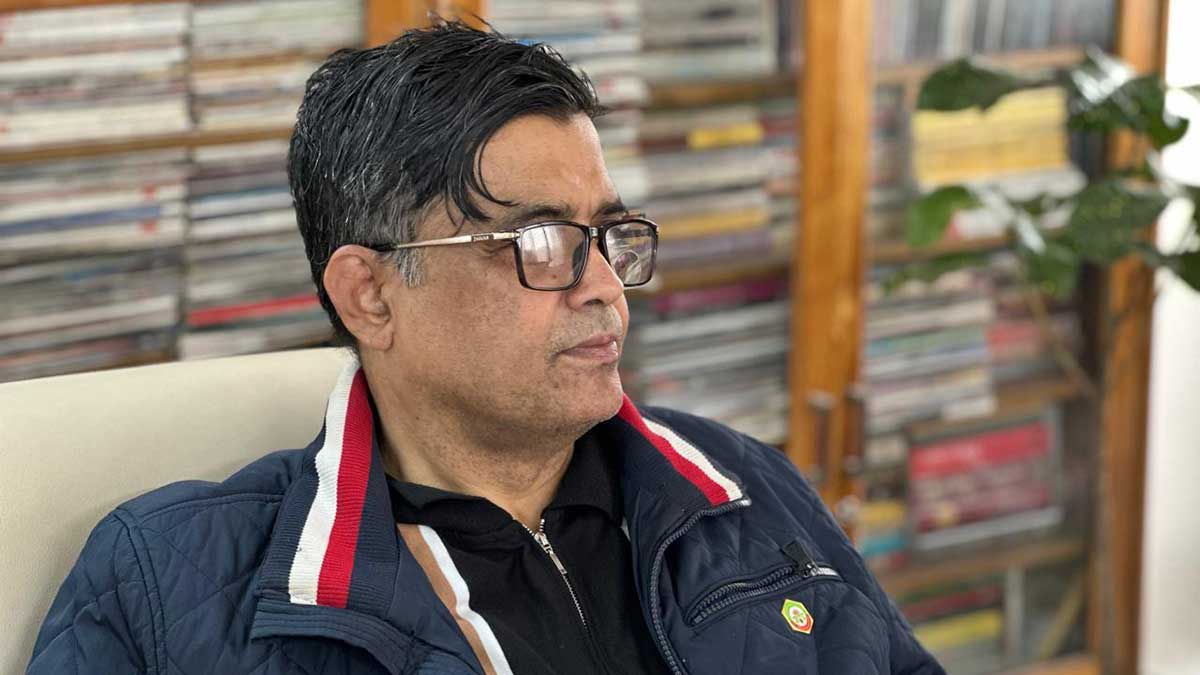
Interview/Shafiqul Alam, press secretary to Muhammad Yunus, chief adviser of Bangladesh’s interim government
With just a few days to go for the crucial elections, Shafiqul Alam, press secretary to chief adviser Muhammad Yunus, finds himself at the centre of an intense political moment. In an interview with THE WEEK, he says the administration has kept its promise of steering the country towards a credible democratic transition. He acknowledges continuing concerns over law and order and insists that neutrality and accountability remain the government’s guiding principles.
How confident are you about free, fair and participatory polls?
There is no chance of manipulation this time. We have put every possible infrastructure in place to ensure free, fair and peaceful elections. Security officials and civil administration officers deployed on election duty have been carefully selected for their neutrality. Historically, elections in Bangladesh were conducted by political governments seeking to extend their hold on power. When popularity declined, state machinery was misused. That is what happened under Sheikh Hasina. In 2018, ballots were stuffed overnight, so when people arrived at polling centres in the morning, their votes had already been cast.
That will not happen now. We have appointed neutral officials and conducted extensive training for nearly 900,000 security personnel and hundreds of thousands of civil administration officials. All polling centres are covered by CCTV. Vulnerable centres will have additional security, with personnel using body-worn cameras. Polling stations are connected through an app, allowing immediate intervention.
There are concerns about political violence.
If you look at the numbers, political violence is historically low compared to previous elections. During the nomination and submission process, there was not a single violent incident. In earlier elections, candidates were physically prevented from submitting nominations. This time, the process was entirely peaceful. There has been a shift in political culture. Old tactics—muscle power, intimidation, gangs—no longer work. Political parties now understand that votes must be won through ideas and engagement. Campaigning is increasingly door to door and through social media platforms.
There are fears about the safety of minorities.
Bangladesh sees around 3,500 to 4,000 murders annually, involving people from all communities. When a minority individual is killed in a land dispute, robbery or extortion case, some groups immediately portray it as a hate crime without establishing facts. That said, we do not deny that hate crimes occur. The killing of Dipu Das was a brutal and deeply disturbing incident. The state responded swiftly—those involved were arrested and the case is being fast-tracked. We are proactive in protecting minority communities. Major festivals such as Durga Puja, Saraswati Puja and Janmashtami were held peacefully across the country.
There is much curiosity about Professor Yunus’s future once the elected government takes over.
He has made it clear that he wants to return to his original work—promoting social businesses, microfinance and his “Three Zeros” vision: zero poverty, zero unemployment and zero carbon emissions. He has no political ambitions beyond this transition.
