



Bangladesh Nationalist Party (BNP) on Friday claimed victory in the pivotal general elections after the fall of the Awami League regime in August 2024.
BNP won over 151 seats in the 300-seat parliament, securing a majority of the seats in the parliament. Jamaat-e-Islami came second, securing over 30 seats. Its key leaders won several constituencies. Jamaat chief
Shafiqur Rahman secured the Dhaka-15 seat in the capital. While Mujibur Rahman, the party’s central nayeb-e-ameer, won from Rajshahi-1 in northwestern Bangladesh. Mir Ahmad Bin Kasem, son of executed Jamaat leader Mir Quasem Ali, was elected from Dhaka-14. Also, Shahjahan Chowdhury and ATM Azharul Islam won the Chattogram-15 seat in the southeast and Rangpur-2 in northern Bangladesh, respectively.
Jamaat-e-Islami dons the role of the opposition
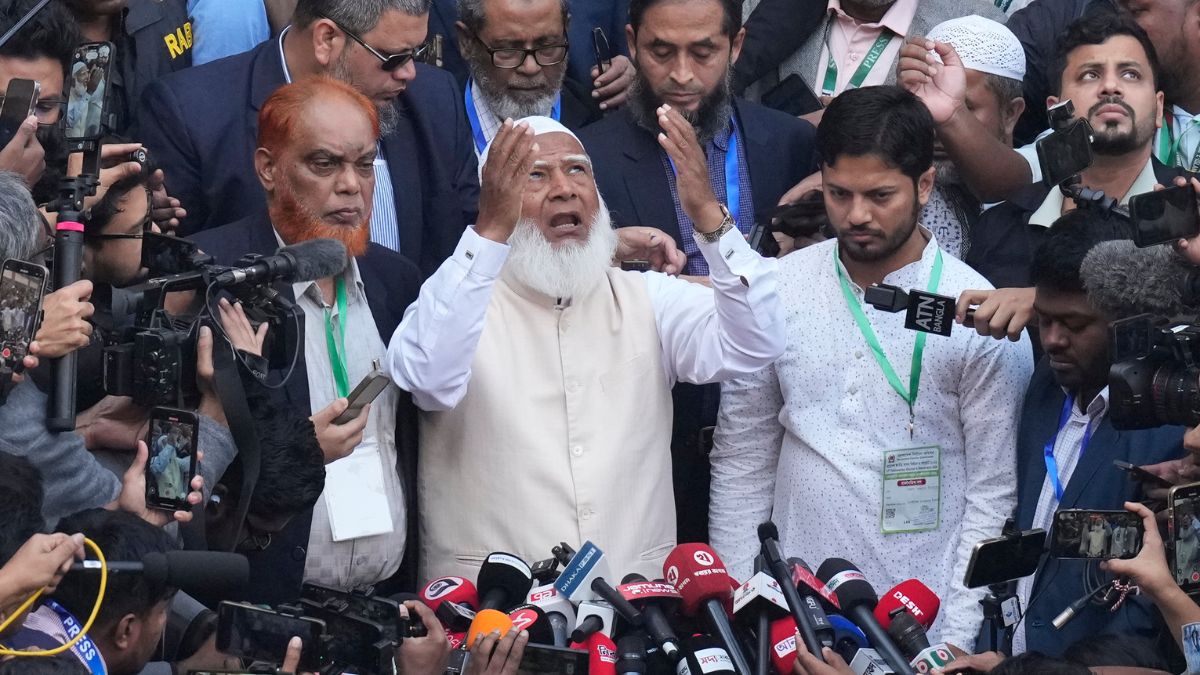
The once-banned Jamaat-e-Islami has made a significant comeback in these general elections. The chief of Bangladesh's Islamist Jamaat-e-Islami party said that his party would not do the"politics of opposition" for the sake of it. "We will do positive politics," Shafiqur Rahman told reporters.
Jamaat was a crucial partner of the BNP when it was in power between 2001 and 2006. Jamaat's two leaders were ministers then.
After the fall of the Awami League government, Jamaat, a cadre-based party, has re-emerged as a major political force. The ban was lifted by the Muhammad Yunus-led interim government after the ouster of former PM Sheikh Hasina, who is now in exile in India. Reportedly, Jamaat and its students' wing, Islami Chhatra Shibir, played a key role in the uprising and the ouster of Hasina.
The party has also rebranded itself with a focus on anti-corruption and governance. Surveys have also indicated that the party had a strong appeal among younger, educated voters as well.
The election results show that Jamaat has emerged from the shadows of the past. Its leaders, including Ameer Shafiqur Rahman, have been in jail. Several of its leaders, including former ministers, have been hanged for crimes during the 1971 Liberation War.
However, despite Jamaat's equation with the minorities, political observers believe that BNP promises stability with its traditional style of politics.
Following the Hasina regime's downfall, a wave of attacks against minorities, particularly Hindus, instilled a deep sense of fear. Jamaat has found favour with minorities, shielding them from attacks. Jamaat members took turns to guard temples and houses of Hindus.
Jamaat's best electoral show was in 1991, when it bagged 18 seats with a 12.13 per cent vote share.
Political observers say that Jamaat-affiliated or inclined people occupy key positions in the current Bangladeshi establishment.
