


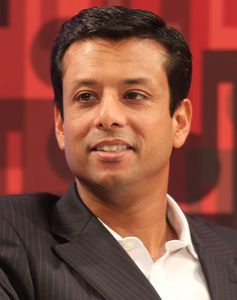
 Sajeeb Wazed Joy
Interview/Sajeeb Wazed Joy, former Bangladesh prime minister Sheikh Hasina’s son
The Awami League is in a forced exile, as former prime minister Sheikh Hasina’s son Sajeeb Wazed Joy describes it. Joy, who is based in Washington, DC, last saw his mother during a visit to India in June. As Bangladesh heads to elections on February 12, Joy calls Hasina’s ouster in 2024 a US-backed manoeuvre. In an exclusive interview with THE WEEK, he warns that any BNP victory would lack legitimacy.
Political upheavals in Bangladesh have had a bloody history, including assassinations of prime ministers. Looking back, how do you view your mother and former Prime Minister Sheikh Hasina’s escape from Dhaka?
Her safety was my primary concern when the riots spiralled out of control in 2024. My mother did not want to leave the country, but the entire family feared for her life if she stayed. I was the last person to speak to her and convince her to leave.
You have credited the Indian government for helping your mother. Have you spoken to Prime Minister Narendra Modi?
I have not had a chance to speak with Prime Minister Modi, but I have spoken to other senior leaders and conveyed how grateful my family and I are to the Indian government for keeping her safe. She is probably in the safest place she could be anywhere in the world today.
Successive Indian governments led by the BJP and the Congress have shared warm relations with the Awami League under Sheikh Hasina. Are there moments from your childhood that reflect this closeness?
There have been many. After the 1975 coup, my family lived in Delhi, and the government under Mrs Indira Gandhi ensured our security. We are neighbours, and with the Awami League in power, relations with India have always been warm.
Elections are due in Bangladesh, but the absence of the Awami League raises doubts about whether they can be participatory or inclusive. What is your view?
These elections will not be participatory or inclusive in any sense. The Awami League represents 30–40 per cent of the vote. You cannot disenfranchise that many voters and call the elections credible. What will happen is that Jamaat-e-Islami will win far more seats than it otherwise would. Together with the BNP, they will secure an absolute majority and may amend the Constitution to their liking, possibly even turning Bangladesh into an Islamic state. Bangladesh could begin to resemble Pakistan or even Iran.
If the Awami League is not in the fray this time, how does the party stay afloat over the next five years?
We are the oldest and largest party in Bangladesh. We led the independence movement. We are the only party with committees and members in every village, as well as across the world. The Awami League has survived far worse, especially after the 1975 coup. It will always remain a major player in Bangladeshi politics.
The ICT verdict leaves no room for Sheikh Hasina’s return to Dhaka for now. Does she plan to stay in India for the next five years?
The ICT verdict was a complete sham, riddled with flagrant violations of due process. Laws were amended without Parliament to enable her trial, the process was rushed, and my mother was not even allowed to appoint her own lawyer. This verdict will eventually be overturned. It is unsustainable. My mother will return to Bangladesh one day.
When governments change, trials can sometimes become infructuous and jail terms withdrawn. Is there hope the Awami League will contest the next election?
You have answered your own question. Yes, the Awami League will return sooner or later. We are a democratic party and have always believed in contesting elections. This is the first time in Bangladesh’s history that a major political party has been banned by force. The people will not accept it, and these elections will not be accepted either.
How do you assess the role of the Army during this crisis?
Much like in Pakistan, the Army chief appears to have abandoned the Constitution and the rule of law. Instead of seizing power, he allowed mobs to dictate events. There has been no semblance of constitutional governance. An unelected interim government should never have been allowed to remain in power for this long. It has no constitutional authority to amend laws, yet it has done so. What we are seeing now is a rigged election, with the largest political party banned.
There have been reports about USAID activities in Bangladesh. What concerns you, and what role do you believe the US has played?
President Donald Trump himself disclosed in a press conference that USAID spent millions on regime change in Bangladesh under the Biden administration. This is no longer a secret. Until recently, the US embassy in Dhaka was pushing for elections without the Awami League. That pressure continues.
Allegations of election rigging have damaged democratic credibility. Why were these allegations made, and how can confidence be restored?
The upcoming elections will be the most blatantly rigged in Bangladesh’s history. The largest political party has been banned outright. There is no democracy to speak of. These elections will be a complete sham. Compared to what is unfolding now, concerns about past election irregularities are irrelevant. What we have today is a non-political class conducting elections that are far worse.
Professor Muhammad Yunus arrived in Dhaka days after Sheikh Hasina’s departure. How unexpected was this?
It was not unexpected at all. He was chosen by the Biden State Department, and this was all pre-planned well before the protests. There was nothing spontaneous about it.
Concerns are growing about the rise of extremism in Bangladesh.
This sudden surge occurred because the Yunus regime gave extremists a free hand and released convicted terrorists from prison. Under the Awami League, we aggressively prosecuted terrorist groups such as HuJI and JMB. They were either jailed or forced underground. Yunus allowed them to hold rallies and meetings openly. He has permitted Al Qaeda and LeT commanders to travel freely and hold public gatherings. Terrorists are effectively free in Bangladesh today.
Dhaka and Islamabad have improved relations over the past year. The interim government says this is about balancing foreign ties. Did the Awami League put all its eggs in one basket with India?
We did not put our eggs in one basket. We chose peace and security over insurgency and terrorism. Pakistan had long supported terrorist and insurgent activities in India through Bangladesh, supplying funds and weapons. We put an end to that. We did not want terrorists or insurgents operating from our soil.
There is speculation that the BNP will gain the most from the polls. Will law and order improve under an elected government?
The BNP is effectively contesting these elections without any major opposition. They are getting a free ride. Frankly, there is little point in holding elections at all. They might as well appoint the BNP to power and be done with this farce. As for law and order, past performance is the best indicator, and the BNP’s record is poor. Law and order was terrible when they were last in power.
What do you make of the Jamaat-e-Islami’s aggressive campaign?
In a genuinely competitive election, Jamaat would win very few seats. They have never secured more than 5–10 per cent of the vote. But with the Awami League banned, they now have a free hand and are exploiting the situation. They have always been allied with the BNP and aim to use a supermajority to amend the Constitution and turn Bangladesh into an Islamic state.
Has there been any response from the US or China since Sheikh Hasina’s exile? How do you see their approach?
I do not believe either leadership is particularly focused on Bangladesh at the moment.
Also Read
- OPINION | Navigating the debris of Muhammad Yunus’s foreign policy
- From ban to Opposition: How Jamaat-e-Islami redefined its role in Bangladesh elections
- A fight for soul and identity: THE WEEK reports from Bangladesh
- ‘India-Bangladesh ties should move forward beyond Sheikh Hasina’: Mirza Fakhrul Islam Alamgir
- ‘We are committed to pluralism, inclusive governance’: Dr Shafiqur Rahman
- My biggest concern is near absence of women in Bangladesh's political process
Can you share memories from your early life? Does politics disillusion you?
There are several. The 1975 coup, when I was only four, deeply affected my mother. Another was during the military dictatorship, when she was arrested and taken away without us knowing where she was or if we would ever see her again. The assassination attempt on her in 2004 outraged me and pushed me to engage more directly in politics. Politics today, unfortunately, is a dirty game, dominated by short-term thinking and the pursuit of power rather than meaningful governance.
How often do you see your mother, and does she feel it is time for you to take her political legacy forward?
I last saw my mother in June. I live in Washington DC, and India is quite far away, but I plan to visit again soon. As for her legacy, she transformed Bangladesh economically and provided unprecedented stability and security. Her legacy is far stronger than many realise. In the future, her tenure will be remembered as a golden period in Bangladesh’s history.
What is your relationship with Tarique Rahman?
I have met him only once, when we were in opposition. He came to our house to invite us to his wedding, I believe. I have lived abroad most of my life, and he has been abroad for 17 years, so our paths have rarely crossed.