



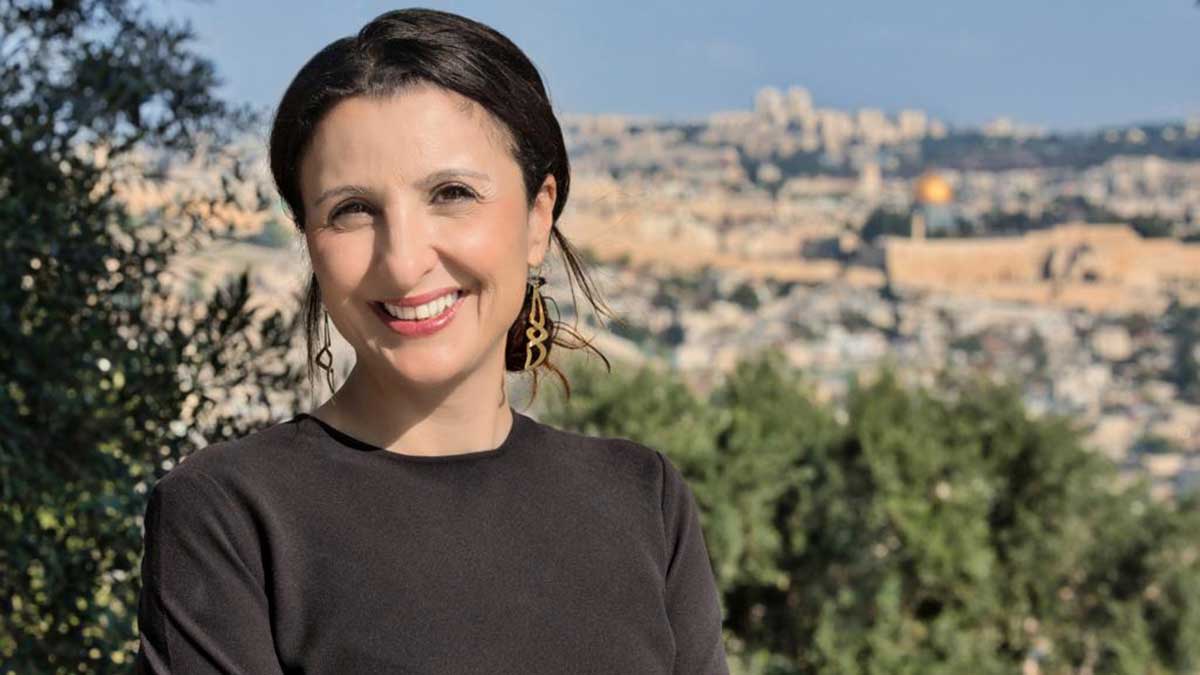
Interview/ Fleur Hassan-Nahoum, special envoy, foreign ministry of Israel
For India, Israel and the Arab world, defusing tensions that threaten to destabilise their shared economic, political and strategic interests has always been a pre-requisite for regional peace and security. The Israel-Hamas war had put a spanner in these efforts in the past two years. The present ceasefire agreement is giving hope to the stakeholders. In an exclusive interview, Fleur Hassan-Nahoum, special envoy for the Israeli foreign ministry, says that with the possibility of an international force being involved, there may finally be a way to prevent jihadist groups from ruling Gaza. Excerpts:
You had warned that Hamas was succeeding in isolating Israel diplomatically. Do you still share that concern?
There was a real danger that Israel could face long-term diplomatic isolation because of a coordinated campaign built on lies and blood libels, painting Israel as the aggressor in a war we did not start. Israel withdrew from Gaza in 2005 to give the Palestinian people a chance at autonomy. The goal was for them to govern themselves, build infrastructure and pursue a future for their children. Instead, Hamas transformed Gaza into a terrorist state. Now, with the possibility of an international force being involved, there may finally be a way to prevent jihadist groups from ruling Gaza.
With Hamas now part of talks with Israel, do you see risks of legitimising the organisation?
Israel had no choice but to engage indirectly to secure the release of hostages. Of the 48 hostages taken, 20 were alive while 28 tragically died. Negotiation wasn’t about giving Hamas legitimacy; it was about saving lives. Indirect talks are a pragmatic step to bring our citizens home, not a political endorsement of their ideology. The world needs to understand the difference between strategic engagement for humanitarian purposes and legitimising terrorism.
Could this engagement pave the way for a two-state solution?
Hamas does not want a two-state solution—they seek the destruction of Israel. Israel has made serious efforts in 1948 and the 2000s to establish peaceful arrangements, but each time, the Palestinian leadership rejected them. Their focus is entirely on undermining Israel, not on building a functioning state for themselves. To even discuss a long-term solution, there must first be a fundamental change in their mindset. They must acknowledge that Israel exists and that coexistence, not annihilation, is the path forward.
How will Israel ensure Hamas adheres to the ceasefire and does not rebuild its military capabilities?
One of the biggest challenges is that Hamas does not want to disarm. The ceasefire is only meaningful if they cannot rebuild weapons, tunnels or military infrastructure that could be used for attacks like October 7. Disarmament is the main sticking point. If Hamas cannot be prevented from rearming, then any ceasefire is fragile. Israel must be able to maintain security while ensuring that Gaza’s governance shifts from terrorist control to a responsible administration that prioritises its people’s welfare.
How is the public reaction in Israel after the ceasefire and release of hostages?
People are relieved that the war is coming to an end and that hostages are returned, but the cost has been painful. Families have lost loved ones, communities have suffered and soldiers have fought valiantly. Israelis understand that there is always a price to pay for security, and while the relief is palpable, it is mixed with grief, resilience and determination to prevent this from happening again.
Gaza has suffered severe destruction, leading to international criticism against Israel. How do you see reconstruction happening under the ceasefire?
Gaza’s devastation is largely the result of Hamas’ own actions-they built over 800km of tunnels to launch assaults against Israelis and hide from military responses. Hamas stole aid, and even the UN has reported that around 80 per cent of supplies were diverted by the organisation. Israel’s responsibility was to allow aid to pass through, which we did. No country that has been attacked has an obligation to provide aid; international law requires only that you do not obstruct humanitarian relief. Condemnation against Israel in this context is unjustified and part of a campaign to misrepresent the conflict.
If an international force can disarm Hamas and govern Gaza responsibly, reconstruction will be possible. The people of Gaza must make a choice of either living under terrorists who prioritise jihad over development, or accept governance that allows schools, hospitals, infrastructure and livelihoods to return. Hamas has created this dilemma themselves; Israel has provided the framework for reconstruction, but only responsible leadership can make it a reality.
What is the current political situation in Israel regarding the ceasefire?
Israel is a democracy, and as such, there are always dissenting voices. Some hardliners opposed the ceasefire, but the overwhelming majority of the cabinet voted in favour. The political debate reflects healthy democratic discourse, but it is clear that the government is united in pursuing the path that ensures the safety of its citizens. The consensus shows that Israel can make tough decisions even amid political disagreements.
How do you see the possibility of a shared political future of Palestinians in Gaza and West Bank or is that a longer-term challenge?
Judea and Samaria (West Bank) presents additional challenges because it’s geographically closer to Israel and home to a significant number of Jewish settlements. What we want to see is leadership among Palestinians that focuses on building prosperity rather than fuelling conflict. If the governance in Gaza can shift away from terrorism and towards constructive development, there’s potential for gradual reintegration. Ultimately, the Palestinian people must decide if they want a future of destruction or a future of coexistence and growth.
What role do you see for the Palestinian Authority in this context?
Frankly, I do not have much hope for the Palestinian Authority. Their leadership is morally bankrupt and corrupt, enriching themselves with castles, jets and wealth, while ordinary Palestinians suffer. They haven’t held elections in 20 years and have consistently failed their people. Hamas and the Palestinian Authority both contribute to a cycle of violence and corruption. The Palestinian population must decide whether they want to continue living under this system or choose a future of stability and peace.
How do you see regional powers like Egypt, Saudi Arabia and Qatar influencing the ceasefire and negotiations?
Egypt has legitimate concerns because of its border with Gaza and has been actively engaged in discussions. Qatar plays a more complicated role—they speak to Hamas because they have funded the organisation. Qatar faces a clear choice: continue funding terrorism and groups like the Muslim Brotherhood, or align with countries working toward peace and prosperity in the region. The United States is closely monitoring these developments due to its own strategic and economic interests in Qatar. Regional cooperation is crucial to ensure Hamas abides by agreements and to prevent further destabilisation.
How significant has been US involvement in facilitating the ceasefire and broader regional stability?
The United States’ involvement is critical. Hamas does not act rationally; they see civilian casualties as part of their strategy. Without US pressure on Qatar, which funds Hamas, there would have been no incentive for Hamas to engage in negotiations or agree to a ceasefire. American diplomatic and strategic intervention played a key role in reaching this stage.
Israel has experience with international forces like United Nations Interim Force in Lebanon. How do you see a new international presence functioning?
UNIFIL failed because Hezbollah was able to rearm despite international oversight. That experience has taught us caution. A new international presence must be regional, closely supervised by the US, and committed to ensuring disarmament. Israel will maintain its security perimeter until Gaza has governance aligned with peace and reconstruction.
You mentioned this conflict as a civilisational war.
I use the term civilisational war because this conflict represents a broader struggle: the free world versus Islamic Jihadism. Israel has been at the frontline, holding back groups like Hezbollah, slowing Iran’s nuclear ambitions and limiting the Houthi threat. Small as we are, Israel has contained forces that could destabilise the entire Middle East. The world has not fully recognised this threat, but it is already evident in Europe and other regions.
How would you describe Israel’s deterrence posture now?
Israel’s deterrence has been restored. No rockets have landed from the north, Syria is seeking security agreements, and Lebanon is trying to regain control internally. Israel has demonstrated that it can hold back extremist forces even as a small nation surrounded by hostile actors. Restored deterrence sends a clear message to the region that attacks on Israel have consequences.
Security is the non-negotiable. Israel must maintain a perimeter and ensure that Gaza has a government committed to peace and disarmament. Israel cannot compromise on its borders or trust unstable leadership. The long-term vision is coexistence under conditions that protect citizens and prevent future attacks.
Do you believe the ceasefire could pave the way for lasting peace?
There is hope, but trust in leadership is limited. Israel has faced cycles of conflict where enemies start wars, claim victimhood and rearm to attack again. The hope is that international guarantees hold and that new governance structures emerge in Gaza. Until then, Israel remains vigilant. Moreover, long term peace will require changing education, media and public rhetoric in Palestinian society. For over 100 years, children have been taught that Israel will disappear and that violence is the path forward. Only when they start teaching coexistence and mutual respect can there be a lasting solution. The path forward is not easy, but it is achievable if leadership and societal mindset change.
