



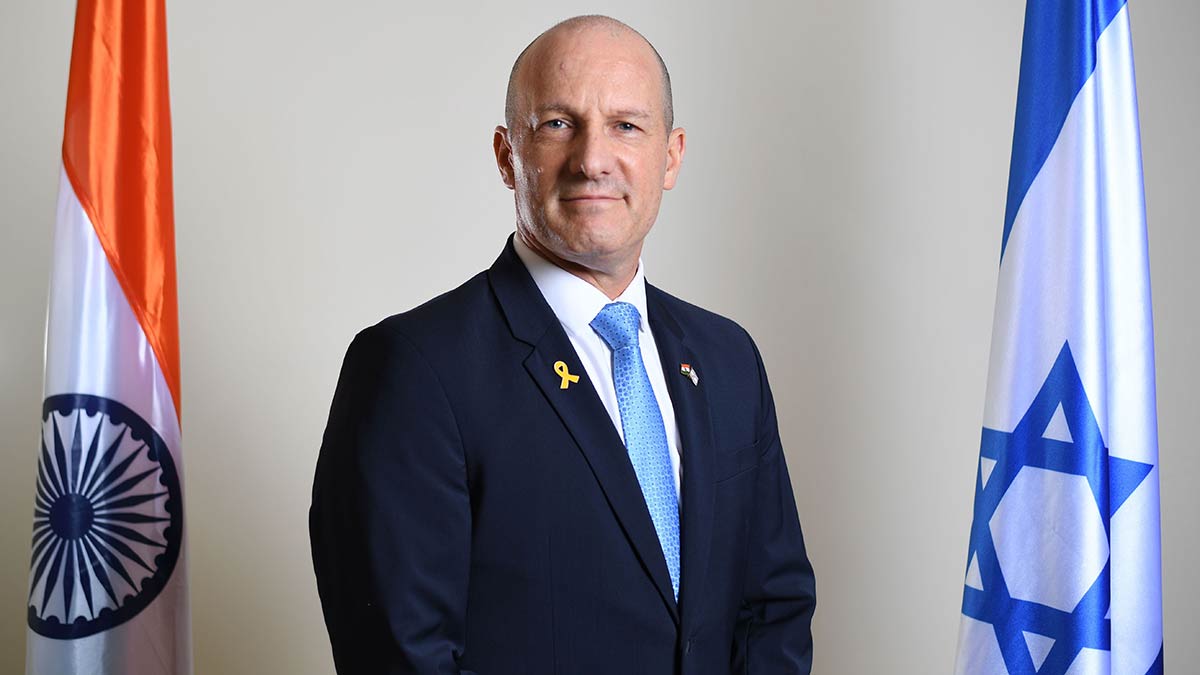
Interview/ Reuven Azar, Israeli ambassador to India
PRESIDENT DONALD TRUMP’S peace plan has resulted in a ceasefire, but key issues remain unresolved. These include the disarmament of Hamas, the return of the remains of deceased Israeli hostages and access to humanitarian aid in Gaza. Israel’s Ambassador to India, Reuven Azar, says the first step towards peace is recognising the need for peaceful co-existence between Palestinians and Israelis, which has now been taken. Speaking exclusively with THE WEEK, Azar says Israel is looking towards the establishment of a non-Hamas government in Gaza, the reform of the Palestinian Authority and the de-radicalisation of the Palestinian territories. Excerpts:
Q/ Given the uncertainty surrounding the ceasefire, critics say it is unlikely to last long.
A/ It is indeed a great opportunity because there is a clear path to peace. The question is whether all sides will remain committed. Israel has fulfilled its obligations so far, but unfortunately, Hamas is not delivering. They were supposed to return all the hostages, including the deceased, but have refrained from doing so. We still have remains of 21 deceased hostages in Gaza. So, we must remain cautious. We need the international community’s support to ensure the Trump Plan’s implementation. There is wide consensus around the plan which covers the reconstruction of Gaza, humanitarian aid, dismantling of Hamas’s military infrastructure, reform of the Palestinian Authority and the creation of an international body to supervise the process. It will require cooperation and real pressure on Hamas and other Palestinian terrorist groups to lay down their weapons.
Q/ Disarming Hamas is one of the prerequisites for the ceasefire to continue. What are Israel’s red lines when it comes to Hamas?
A/ We will not allow another October 7 to happen. That means Hamas cannot rearm, regroup or threaten our borders. We will not agree to any situation in which Hamas rebuilds its military capability, including getting missiles and other weapons. That is a red line for us. The Israeli Defence Forces are still inside the Gaza Strip and will not withdraw until the plan is fully implemented, as stipulated in President Trump’s plan.
Q/ What has been Israel’s diplomatic and security strategy leading up to this ceasefire?
A/ Over the past two years, we used a combination of military pressure and diplomacy. It became increasingly difficult to secure the release of the final group of hostages because Hamas realised that releasing them would deprive them of leverage. We had to reverse that situation by increasing military pressure through the Gaza City operation launched a few months ago and by intensifying diplomatic pressure on Arab countries. This was done in coordination with the United States. You might recall the meeting in Washington where President Trump engaged Arab and Muslim leaders, convincing them that his plan offered the best path to peace. Once that was achieved, Hamas’s approval of the plan became much easier.
Q/ Regional powers like Qatar and Saudi Arabia have also been involved. Did the attack in Doha help trigger the peace process?
A/ Probably, yes. Regardless of the immediate result of the attack, it became clear that Qatar’s mediation efforts were not enough to achieve a deal. Israel was ready from the start to stop the war immediately if hostages were returned and Hamas was dismantled, exactly as written in the plan. So what we needed, apart from military pressure, was additional diplomatic pressure, and that increased substantially after the Doha attack.
Q/ With peace returning, what role can India play? Where do you see opportunities for partnership?
A/ There are areas such as workforce, trade, logistics, energy and technology with significant mutual interest. Once peace takes hold, it will be much easier for investors to engage, as the atmosphere will be more conducive to cooperation. Just a few weeks ago, our finance minister visited India and signed a bilateral investment treaty—a strong signal to the markets. We brought financial sector representatives to explore how to streamline transactions between Israel and India, and to promote investments in both countries’ stock markets. We also want Indian companies to participate in international infrastructure tenders in Israel. We are set to notify tenders worth around $200 billion over the next decade, including the first phase of the Greater Tel Aviv metro system.
Q/ You mention expanding cooperation in sectors ranging from agriculture to technology and trade. Do you face any resistance during such engagements?
A/ We have seen some negative statements from certain leaders in Kerala. However, at the same time, there is productive cooperation in agriculture, high-tech and logistics. Companies from south India are already participating in tenders in Israel. Tourism is also flourishing, with many Israelis visiting south India.
Q/ How have Israelis reacted to the ceasefire, especially in the border regions?
A/ There is an overwhelming sense of relief and joy across Israel, as a huge burden has been lifted. For two years, Israelis have lived under immense stress: leaving families to fight, constantly running to shelters and waiting in fear for loved ones who were kidnapped, murdered or tortured. Now, people finally feel hope. Our Palestinian neighbours, who have also suffered, must pressure the terrorist organisations to step aside and give peace a real chance.
Q/ There are hardliners in the Israeli government who oppose the ceasefire.
A/ Some right-wing factions did vote against the deal because they were concerned about releasing over 250 terrorists serving life sentences for murdering civilians. That poses a security risk, and their opposition was understandable. But, importantly, they did not leave the government. They understand that leaving the government now or going for elections is not in Israel’s interest. So, despite internal debates, there is strong public support for this move.
