



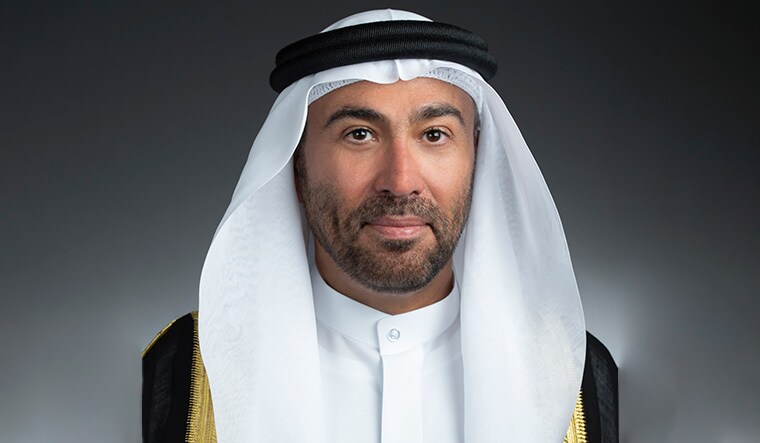
Interview/ Ahmed bin Ali Al Sayegh, minister of state, UAE
Q Brotherly relations between India and the UAE have grown stronger in recent times. What are the key reasons behind this growth?
The United Arab Emirates and the Republic of India share a longstanding and robust strategic partnership, woven from the threads of cultural and economic connections that have flourished over many years. The official visit of Prime Minister Narendra Modi to the UAE last July marked the initiation of a new chapter in our relations, characterised by heightened cooperation and a strategic partnership, promising a future filled with boundless potential for both nations.
Our diplomatic efforts, dating back to the early 1970s, have transformed our relationship into a comprehensive strategic partnership, spanning sectors such as energy, space and information technology―all aligned with our shared vision for the future.
The elevation of the UAE-India relationship to the status of a Comprehensive Strategic Partnership in 2017 during the visit of UAE President His Highness Sheikh Mohamed bin Zayed Al Nahyan as the chief guest at India’s Republic Day ceremony was a significant milestone. Today, this partnership has evolved into a robust collaboration, evident in cross-cultural and economic ties, increased tourist visits, closer people-to-people connections and a substantial presence of Indian and UAE companies operating in each other’s domains. According to FDI Markets, 217 UAE firms have invested in India, and 698 Indian companies have invested in the UAE since 2003.
Our economic partnership, a cornerstone of our collaboration, has led to bilateral trade reaching approximately $60 billion. The UAE stands as one of India’s leading trading partners, and our commitment remains unwavering to expand and diversify our economic cooperation.
High-level visits by leaders from both sides have enhanced diplomatic and economic ties, resulting in the signing of significant agreements, including the historic Comprehensive Economic Partnership Agreement (CEPA) in 2022. The UAE-India CEPA, which was signed between the two nations on February 18, 2022, and officially came into force on May 1, 2022, was historic in two ways; it was the first such agreement signed by our country, and remarkably it was negotiated and concluded in only 88 days. It is set to elevate bilateral goods trade to $100 billion and services trade to $15 billion within five years of its signing. Other structured platforms, such as the High-Level Task Force for Investment, the Strategic Dialogue, and the Joint Commission, have facilitated further discussions and collaborations.
Beyond trade and economics, the UAE-India relationship is deeply rooted in the close bonds between their respective communities. The Indian diaspora, contributing to the vibrant multicultural fabric of the UAE, plays an integral role in the country’s development. With over three million Indians calling the UAE home, this is a testament to the strength of the enduring people-to-people ties between our two nations.
Q/ The Indian community in the UAE is the largest ethnic group in the UAE, comprising 30 per cent of the country’s population.
The Indian diaspora has proven to be a vital catalyst in the nation’s development. Their contributions are very much recognised and well appreciated by the UAE leadership and citizens, incorporating their roles in the workforce and the business sector as well as their cultural and social impact. The Indian community in the UAE has flourished, yielding significant economic and cultural contributions, which have contributed to elevating the prosperity of the UAE.
The Indian diaspora in the UAE has been pivotal in reinforcing the cultural and economic bonds between our nations. The relationship between India and the UAE serves as a testament to the enduring strength of our historical, economic, cultural and diplomatic ties. It mirrors the fraternal and mutually beneficial relationship we have cultivated, and our resolve to deepen our connections across various sectors remains unwavering.
Q/ India and the UAE enjoy age-old cultural ties as well. The BAPS Hindu Mandir is the first traditional Hindu stone temple in the Middle East.
The BAPS Hindu Mandir in Abu Dhabi stands as a powerful testament to the deep-rooted cultural bonds uniting India and the UAE. This achievement is a living embodiment of the UAE’s commitment to peaceful coexistence, echoing the vision of the late Sheikh Zayed bin Sultan Al Nahyan and Sheikh Khalifa bin Zayed Al Nahyan. His Highness Sheikh Mohamed bin Zayed Al Nahyan, UAE president, continues to champion this path, upholding the values of peace and coexistence.
The UAE’s remarkable gesture of gifting land for the temple without cost serves as a shining embodiment of mutual respect and a profound commitment to cultural exchange. The temple’s importance transcends its religious role, as it symbolises the rich tapestry of religious diversity and exemplifies the UAE’s perspective on cultural understanding, coexistence and tolerance. This remarkable achievement serves as a beacon, illuminating the path of harmony and unity between our nations.
This temple holds immense significance for the Indian diaspora in the UAE as it serves as a cultural and spiritual centre, promoting India’s rich heritage within the Emirates. It plays a vital role in strengthening the enduring bond between the two nations and fostering unity in the heart of Abu Dhabi.
The temple stands as a beacon of unity and spirituality, reinforcing the strong bonds between the two countries and their unwavering commitment to religious and cultural diversity.
Protecting the freedom of religious practice stands at the core of the UAE’s values. The nation is home to a diverse community of over 200 nationalities who freely practise different faiths. With its rich history of coexistence and openness, the UAE has become a regional leader in interfaith relations. This harmonious and inclusive approach shines as a beacon, illuminating the path of unity and mutual respect between our nations.
To read the full interview
visit www.theweek.in
