



I often wonder how therapists everywhere deal with the after-effects of listening to people with unresolved issues, deep-seated trauma and the most painful revelations buried in the darkest recesses of the human psyche. It requires a lot of patience and empathy. But how do they handle them without letting their pain affect them? Is there an internal button that brings forth a shield that helps maintain their own sanity? The sensitive ones among us know that sometimes listening to other people's pain is almost like experiencing it ourselves, to the point of overwhelming us.
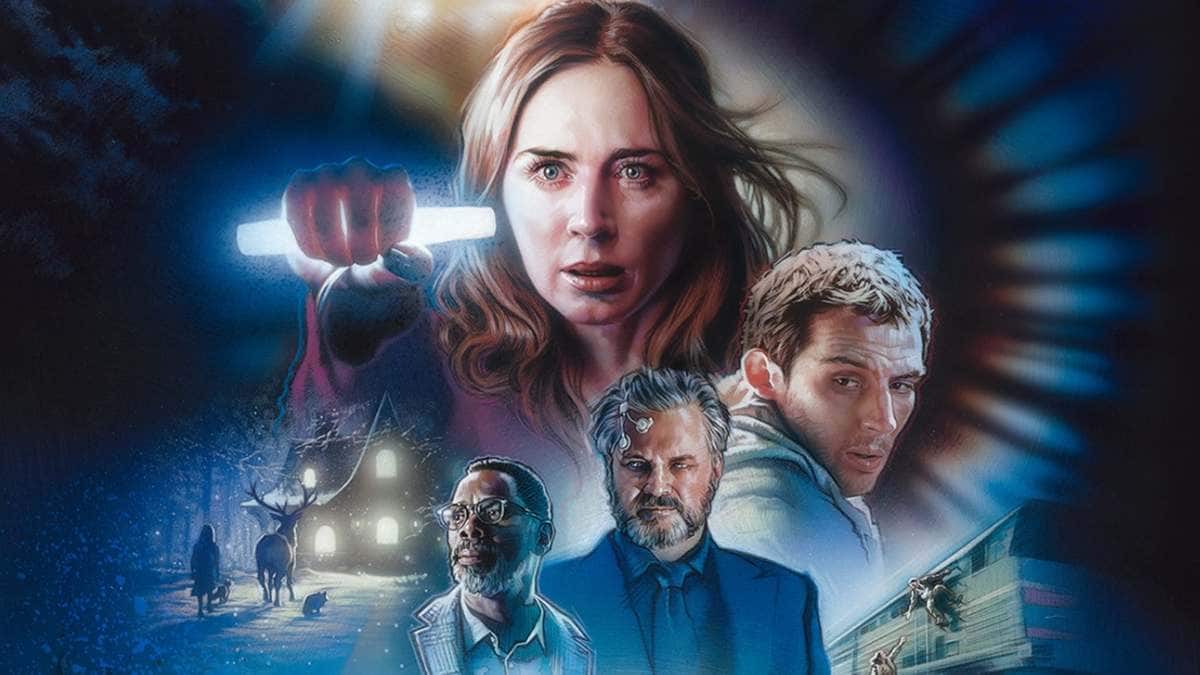
In Steven Spielberg's latest feature, Emily Blunt's character Margaret Fairchild possesses — no spoilers here — the ability to know everyone she comes across. At one point, she also starts speaking a foreign language, much to the surprise of her partner Jackson (Wyatt Russell). But what exactly is happening to her? Why is she suddenly behaving differently? And what is her connection to Josh O'Connor's character Daniel Kellner, a cybersecurity expert? And what is Colin Firth's character, Noah Scanlon, doing with all those wires attached to him — and how is he able to be at two places at once?
Spielberg breaks his own storytelling rules when it comes to revisiting familiar territory. Of all the films he has done, "Disclosure Day" has the longest build-up. He took a while to introduce the shark in "Jaws", he kept the identity of the truck driver in "Duel" ambiguous, and he didn't show us what happened to Richard Dreyfuss's character in "Close Encounters of the Third Kind". With "Disclosure Day", Spielberg doesn't repeat what he did in his previous extraterrestrial-based films, yet we also get familiar callbacks and trademarks. A vehicle being forced by another to ram into an oncoming train ("Duel"). A child experiencing an otherworldly (literally) moment ("Close Encounters", "Poltergeist", "E.T."). The chills caused by the realisation that we are not alone on this planet...
Look, Spielberg has made both kinds of alien movies — the one where the aliens come with good intentions and the other kind (no pun intended). I'm not going to tell you which category "Disclosure Day" falls into. I can tell you, however, what it feels like. Occasionally frustrating, because of the aforementioned build-up and the payoff that doesn’t quite deliver.
Spielberg and his frequent screenwriting collaborator, David Koepp ("Jurassic Park", "War of the Worlds"), make us wait until the film's third act to show us exactly what everything has been leading up to. In this age where filmmakers are tempted to spell everything out for the viewer and tell them exactly what is happening before the intermission card has even appeared, Spielberg does the exact opposite; in fact, it's the opposite of what he did in some of his own films.
But, as admirable as this storytelling choice is, it also puts the film at risk of causing a major emotional disconnect. How are we supposed to feel anything for its lead characters when we don't know much about them? Yes, there is, of course, the hint that they are the "good" guys because we have seen this kind of protagonist in many of the master's previous films — you know, the fast-talking, nervous type who behaves that way because the events around overwhelm them, but in the process ends up overwhelming us too.
Emily Blunt ably rises to the challenge of being one of the two central characters around whom the entire film pivots, but her performance can also be a source of annoyance because we are unable to fully feel the depth of what she is experiencing. Besides, the lack of background details keeps her at a certain distance. The same goes for Connor's character. We don't feel the same about him the way we do with Spielberg's most striking characters, say, Indiana Jones, Roy Neary, Oskar Schindler or even Avner for that matter. The disconnect also comes from the occasionally pedestrian dialogues, especially the ones written for Colman Domingo's whistleblower character, Hugo.
As for the MESSAGE that Spielberg is trying to deliver, it should be quite obvious to anyone who has seen countless alien-based movies or read alien-based fiction. Without giving anything away, Spielberg puts a fresh spin on a couple of themes from at least one classic sci-fi movie (hint: it was released in 1951) and two Arthur C. Clarke novels (one of which was adapted concurrently as a movie).
But, as a hardcore Spielberg fan, here's what really bothered me after I walked out of the theatre: I remember clearly that "Disclosure Day" was announced as a big event movie, but what I just saw on the screen felt like a TV episode. It prompted the question: Did I really watch a Spielberg movie, or something that he would've made for television in his early 20s? You know what bothered me even more, though? The knowledge that his television work (which includes “Duel”) was far more interesting than this.
Film: Disclosure Day
Director: Steven Spielberg
Cast: Emily Blunt, Josh O' Connor, Colin Firth, Colman Domingo, Eve Hewson, Wyatt Russell
Rating: 3/5
