



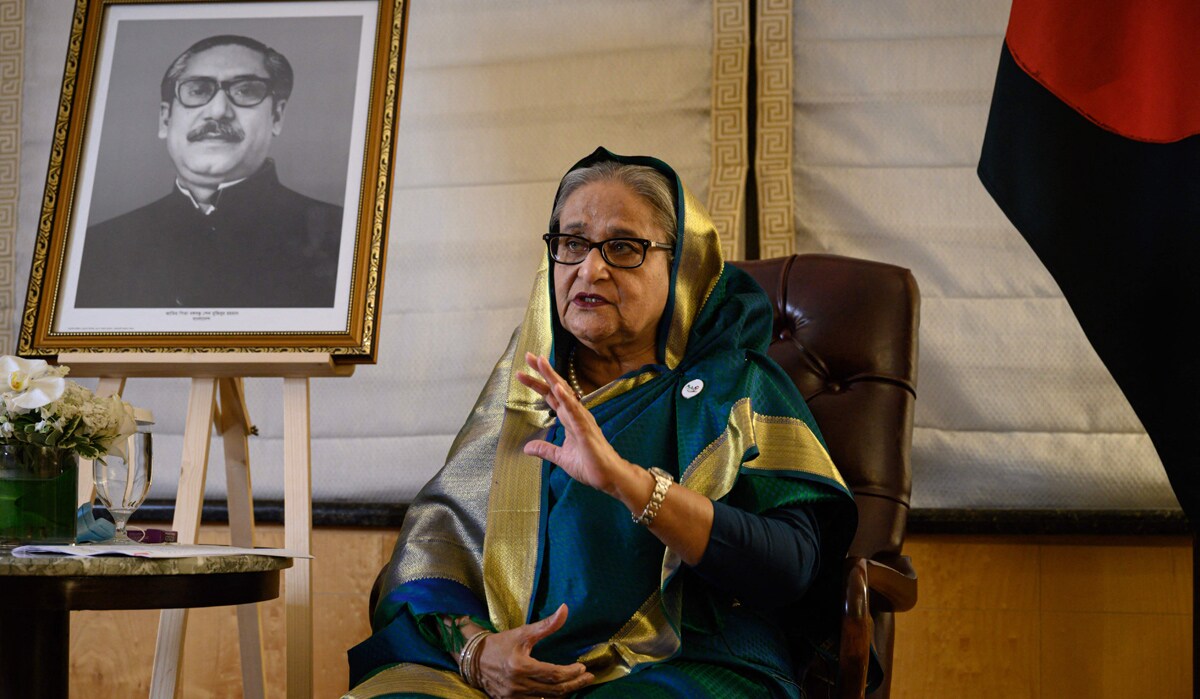
Former Bangladesh Prime Minister Sheikh Hasina’s request for a new passport to facilitate her return from India in December does not come as a surprise to the BNP government in Dhaka. The government had expected the ousted Awami League leader to follow up on her statements during her exile in New Delhi that she planned to return to her country.
Sheikh Hasina reached India after Bangladesh’s military decided to take her out of Dhaka. But the political and security landscape has dramatically changed since, and there is neither a safe military passage nor a safe house for her return.
The fact that Sheikh Hasina and her party, the Awami League, have been absent from their political constituencies where they hold influence means that the first challenge she needs to address is to define the new Awami leadership that will influence the political discourse in Dhaka upon her return. The Awami League leaders are virtually in exile along with Hasina, and little headway has been made in creating a new leadership to take the reins of the party. The party, for now, does not appear ready for a transition that could sustain its political influence in Bangladesh.
Moreover, with Prime Minister Tarique Rahman consolidating his grip in Dhaka, the political discourse is dominated by the ruling BNP’s political messaging and policies. On the other hand, the Jamaat-e-Islami is slowly trying to cement its position as the principal opposition party—a position that used to be held earlier by either the BNP or the Awami League.
However, even though Hasina’s demand for fresh travel and identity documents is on expected lines, there is considerable concern in Dhaka over the diplomatic and security challenges that accompany it.
First, Dhaka’s extradition request is pending with New Delhi, complicating her status as a Bangladeshi citizen who plans to return to her country. The former prime minister, who has been in exile for two years after she was ousted in a mass uprising, has lost not only her official status but also her residence, party office, and officials in Dhaka who could provide her a base whenever she returns.
The big question, therefore, is not simply her travel documents. In the absence of the Awami League leadership, which fled the country with her, and a support system back home, her stay in Dhaka would become untenable, given her status as a "fugitive".
Officials privy to discussions on her plea to return say she runs the risk of exposing the Awami League cadres in Bangladesh, given the politically tense atmosphere surrounding her return.
Second, any move to seek military help will be futile, as the armed forces no longer have the mandate to provide her protection. "Even if she has close links in the military, the armed forces are professional and will not step in to provide her shelter. If she chooses to stay in a safe house anywhere in the country, who will be responsible for her safety and security?" said a security official.
Third, diplomatic circles in Dhaka are abuzz about the lack of choices Hasina has today, unless there is a political call by the BNP to allow her safe passage. But that does not seem to be on the discussion table, since the focus continues to be on bringing justice to the victims of the 2024 student protests. Hasina has been convicted on three counts—incitement, ordering killings, and failing to prevent atrocities during action by law enforcement agencies.
New Delhi, meanwhile, will wait and watch, as its focus is on its own legal processes and diplomatic procedures in handling extradition requests of a political nature. Extradition can be refused, and India is also not bound to detain foreign nationals who are declared fugitives either by their country or by Interpol, if it feels the notices are political in nature or do not meet its diplomatic criteria.
Therefore, in an unlikely scenario where the Bangladeshi authorities indeed issue her a passport and travel documents, she will be free to leave the country. Here again, Dhaka will weigh its options, considering there are chances Hasina may enter a third country, further complicating the process of her extradition. But until then, New Delhi will continue to allow her to take refuge.
The primary decision, finally, rests with Hasina, and whether she chooses to face the law and continue her political and legal battle against her death sentence in Dhaka by returning under the conditions set by the Bangladesh government. If she does, then the ball will be in the court of the BNP government and Prime Minister Tarique Rahman—whether he is willing to offer Hasina safe passage and protection to return to Bangladesh and face the law.