



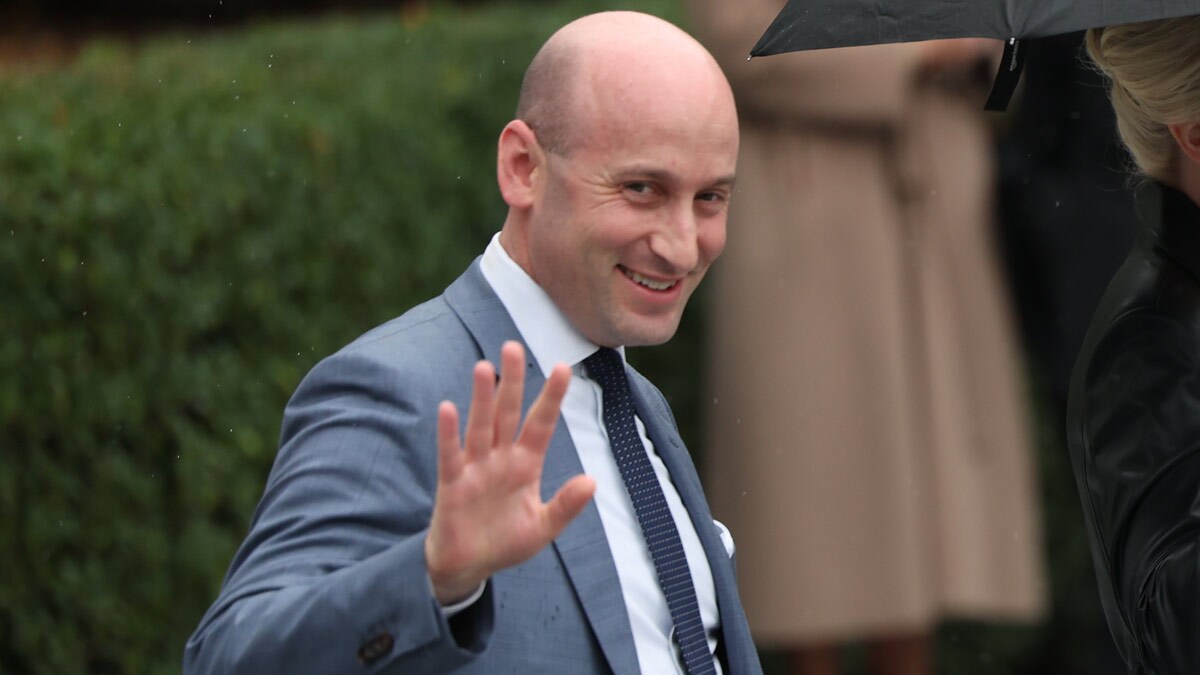
The American midterms were a warning to Donald Trump about the limits of his mandate. Voters punished Republicans over the cost of living, tariffs, immigration enforcement and the war with Iran, and handed Democrats control of both chambers of Congress. The president has responded by putting the man most closely associated with his hardline domestic agenda in charge of the White House.
The appointment of Stephen Miller as chief of staff, effective November 9, signals little appetite for a post-election course correction. Rather than elevate an operator capable of negotiating with the incoming Democratic majority, Trump chose an ideological loyalist who has spent a decade translating nationalist politics into government policy.
Miller, 41, has been among the most influential figures in Trump's orbit since the 2016 campaign. As deputy chief of staff for policy and homeland security adviser, he drove the immigration crackdown, the restructuring of the federal workforce and efforts to expand presidential authority. His influence has often reached beyond that of a conventional policy adviser into the implementation of decisions across government.
Immigration is the clearest illustration. Miller pressed Immigration and Customs Enforcement to raise arrests to 3,000 a day, making mass deportation a defining feature of the second term. The raids in major American cities drew protests and legal challenges, and the fatal shootings of American citizens Renée Good and Alex Pretti by federal agents in Minneapolis intensified scrutiny. Exit polls found that most voters believed enforcement had gone too far. The same surveys identified economic dissatisfaction as central to the Republican defeat, as rising prices and tariffs weakened support among groups that delivered Trump's 2024 victory.
Miller's promotion is therefore politically significant. It places the principal architect of one of the administration's most divisive policies in a position to coordinate the entire White House. His public call for supporters to fight with all their soul for Trump left little doubt about the nature of his allegiance. Steve Bannon welcomed the appointment as the arrival of a true believer.
The departure of Susie Wiles shifts the internal balance. The first woman to serve as chief of staff, she helped manage the successful 2024 campaign and brought organisational discipline to the second presidency. She was the longest-serving of Trump's chiefs of staff, a post that saw four occupants during his first term. Her resignation, submitted on November 5, followed the Republican losses. Trump praised her and said she would move to his political operation, but the circumstances of her exit remain less clear than its significance.
A chief of staff is traditionally expected to manage access to the president, coordinate competing factions and impose discipline on decision-making. Miller's strength lies in turning Trump's instincts into policy, not in building consensus. The change comes amid the exit of other senior women, including former attorney general Pam Bondi and former homeland security secretary Kristi Noem. It is part of a wider consolidation of authority around the president's most dependable allies, mostly men.
The immediate challenge is the loss of Congress. Democrats have won both the House and the Senate, leaving Trump with a hostile legislature for the remaining two years of his term. The new majority can obstruct legislation, scrutinise departments, summon officials to hearings and use its committees to investigate the administration.
The White House has been preparing for this. Miller, Office of Management and Budget director Russell Vought and White House lawyers have examined ways to advance policy through executive action on immigration, tariffs, housing and federal spending. The preparations reportedly include changes to grant administration that would give political appointees greater influence over public money. The strategy rests on the Supreme Court's June ruling in Trump v. Slaughter, which strengthened presidential powers to remove officials heading independent agencies.
Yet executive action is no substitute for legislation. Presidential orders can be blocked by lower courts or reversed by a successor, and Congress retains considerable power over appropriations and oversight. A White House that governs by unilateral decision may spend much of its remaining time defending those decisions in court and before committees. Trump, who describes himself as Mr Veto, has embraced the confrontation. Miller's appointment suggests resistance, not accommodation, is the plan.
The Iran war presents a different problem. It has contributed to economic uncertainty and higher energy costs, and exposed divisions within the MAGA coalition over the extent of American involvement abroad. For a movement built partly on opposition to foreign entanglements, the war sits awkwardly with the promise of an America First presidency. Exit polls say most voters considered military action wrong, with significant opposition even among Republicans. The issue is more than a foreign policy disagreement; it threatens the coalition on which Trump depends. Miller is reported to prefer winding down the conflict so that the White House can return to domestic priorities, but his sway over military decisions remains uncertain.
For Democrats, victory brings opportunity and expectation. Incoming House Speaker Hakeem Jeffries and Senate leader Chuck Schumer have signalled aggressive oversight of immigration enforcement, federal agencies and the treatment of political opponents. Yet affordability was central to the result. Voters will expect the new majority to protect Affordable Care Act tax credits, reverse Medicaid cuts and challenge the economic effects of tariffs. Opposition to Trump cannot be the only programme, and victory does not erase divisions within the party or guarantee that voters will stay with it through the next presidential election.
