



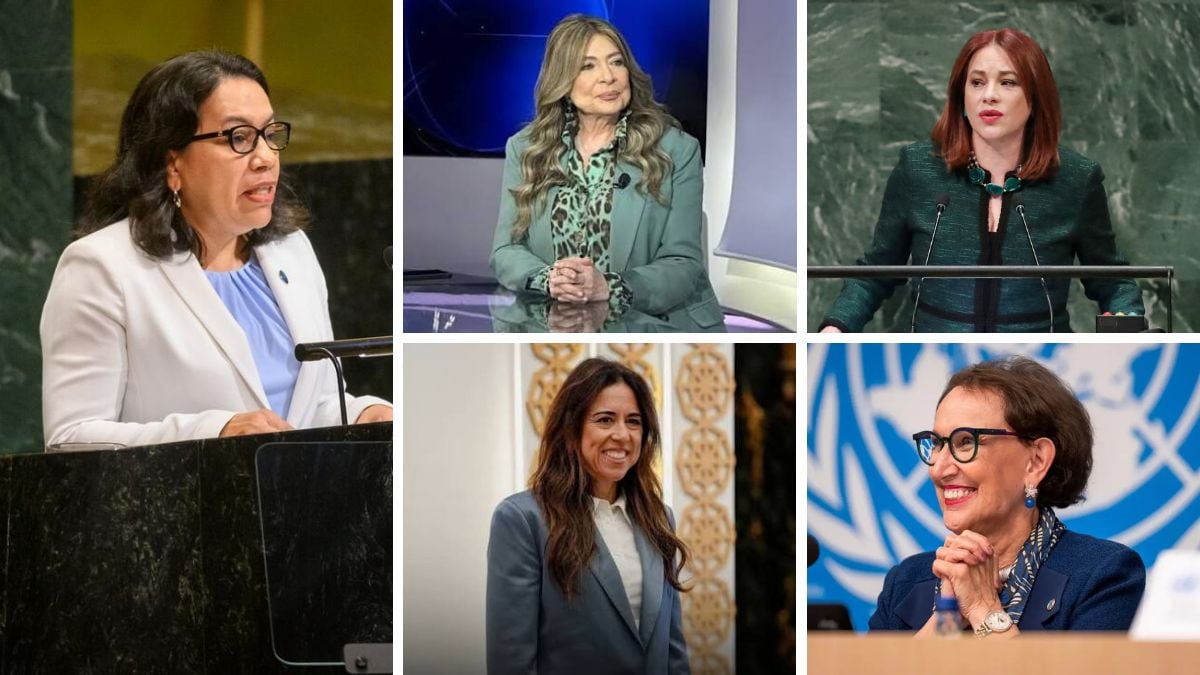
Many young girls dream of changing the world, being part of decisions shaping millions of lives and having their voices heard in places where history is written. Yet, for generations, most of the world’s most powerful seats have remained beyond their reach. At the United Nations, the highest of these seats has, for nearly eight decades, been occupied exclusively by men. Not once has a woman stood at the helm of the institution entrusted with preserving international peace and security. Now, as the world looks towards its next Secretary General, that long standing reality may finally be on the brink of change. The question then is, “Is it finally HER turn?”
The Secretary General is the UN’s de facto head. The role was created after the adoption of the UN Charter in 1945 and is described as having equal parts diplomat, advocate, civil servant and CEO. As the role initially never had any prescribed qualifications, qualities, tenure or selection guidelines, the criteria have been established over the years through resolutions.
The work on the hands of the next Secretary General of the UN is no small task, as they are going to inherit a world increasingly divided by conflict, power struggles, fight over resources, competing power blocs, hybrid warfare, proliferation of arms and AI combined with a decreasing faith in co-operation, diplomacy and multilateralism.
The question of who will occupy the UN’s highest office is more than just a matter of succession as geopolitical rivalries strain the very institution created to manage and control them. It is now a matter of what novel steps global leadership will take to govern a significantly fractured world.
The UN Secretary General race is on, to succeed the incumbent António Guterres. The decision is expected to be taken between October and December this year, following which the winner will take office on January 1, 2027. However, this year the selection process holds greater significance as it may be the first time the UN chooses a woman to lead them in 81 years since its inception. Originally, 10 candidates were nominated, out of which three have withdrawn. Among the remaining candidates, five are women. The UN’s informal regional rotation also strongly suggests the possibility of a candidate from the Latin American and Caribbean region. But who are the candidates?
Five women, one historic possibility
Ivonne A-Baki (Ecuador)
Ivonne A-Baki is an Ecuadorian diplomat and former ambassador who has represented her country in nations including the United States, France and Qatar. Drawing on her experience in diplomacy and international relations, she argues that the UN needs “not another caretaker, but a peacemaker.” Her vision focuses on preventing and resolving armed conflicts, reforming the UN Security Council and rebuilding institutional trust to make the organisation more credible and effective.
María Fernanda Espinosa Garcés (Ecuador)
Also hailing from Ecuador, María Fernanda Espinosa Garcés has over three decades of experience in public service and international affairs. She served as Ecuador’s foreign and defence minister before becoming President of the 73rd UN General Assembly in 2018, making her the first woman from Latin America and the Caribbean to hold the position. Her candidacy focuses on peace and security, sustainable development, digital and energy transformation and bridging the gap between global commitments and action. She advocates for a more credible and effective UN that responds swiftly to crises and delivers tangible results.
Rebeca Grynspan Mayufis (Costa Rica)
Rebeca Grynspan is a Costa Rican economist and former Vice President who currently serves as Secretary-General of the United Nations Conference on Trade and Development (UNCTAD). With extensive experience in international diplomacy, development finance and multilateral negotiations, she brings an economic perspective to global inequality and international cooperation. Her candidacy focuses on restoring trust in the UN, revitalising peacemaking and strengthening international security, while ensuring the organisation delivers measurable results. She has also emerged as a leading contender in the Security Council’s informal straw polls. In the latest poll, held on October 16, 2026, Grynspan received nine votes encouraging her candidacy, five discouraging votes and one abstention, placing her ahead of the other candidates. However, opposition from two permanent members remains a significant obstacle to securing the nomination.
Lana Zaki Nusseibeh (United Arab Emirates)
A veteran Emirati diplomat, Lana Zaki Nusseibeh has served as the UAE’s Permanent Representative to the United Nations from 2013 to 2024, becoming the first woman to hold the position. She represented the UAE during its 2022-2023 tenure on the UN Security Council and served twice as the Council’s president. Currently, serving as a UAE Minister of State, she was nominated by the UAE on October 21, 2026, to succeed António Guterres as Secretary-General. Her vision emphasises preventive diplomacy, peace and security, institutional reform, human rights and sustainable development, advocating for a more proactive and effective United Nations capable of addressing emerging global challenges.
Carolyn Rodrigues Birkett (Guyana)
Carolyn Rodrigues Birkett is Guyana’s Permanent Representative to the UN, having previously served as the country’s foreign affairs minister and Minister of Amerindian Affairs. She has also worked with the Food and Agriculture Organization (FAO) and led Guyana’s delegation during its 2024 – 2025 term on the UN Security Council. Her vision prioritises upholding the UN Charter, placing human rights at the heart of the organisation’s work and advancing inclusive global development, drawing on her experience in public service and multilateral diplomacy.
The men in the race
Olara Otunnu (Uganda)
Olara Otunnu is a Ugandan diplomat who has served as the country’s ambassador to the UN and Minister of Foreign Affairs. He later became the UN Under-Secretary-General and Special Representative for Children and Armed Conflict under Kofi Annan, focusing on protecting children affected by war. His candidacy centres on ushering in an “age of hope and faith”, restoring the UN’s moral authority, mobilising resources for development and strengthening cooperation with regional organisations.
Rafael Mariano Grossi (Argentina)
Rafael Mariano Grossi has served as Director General of the International Atomic Energy Agency (IAEA) since 2019, overseeing international efforts on nuclear safety, safeguards and the peaceful use of nuclear technology. An Argentine career diplomat and former ambassador to Austria, he has navigated complex international crises and geopolitical tensions. His candidacy emphasises crisis management, institutional effectiveness and a results-driven UN capable of translating diplomacy into practical action.
Candidates must be nominated by a Member State, with self-nominations ruled out. Though no official regional rotation exists, an informal convention keeps nationals of the five permanent Security Council members out of the running. Under Article 97 of the UN Charter, the General Assembly appoints the Secretary-General on the Council’s recommendation. Candidates must win majority support without triggering a P5 veto, with informal straw polls offering an early glimpse of who might make it to the top.
Behind every debate at the UN lies a world beyond its conference rooms: families waiting for wars to end, communities rebuilding after conflict and people whose lives depend on decisions made far from their homes. The institution was founded on the hope that nations could work together even when their interests diverged. Today, as geopolitical divisions test that ideal, the question of who leads the UN next takes on renewed significance. Could the search for its next Secretary General also mark the end of an eight-decade wait for a woman at the helm?
