



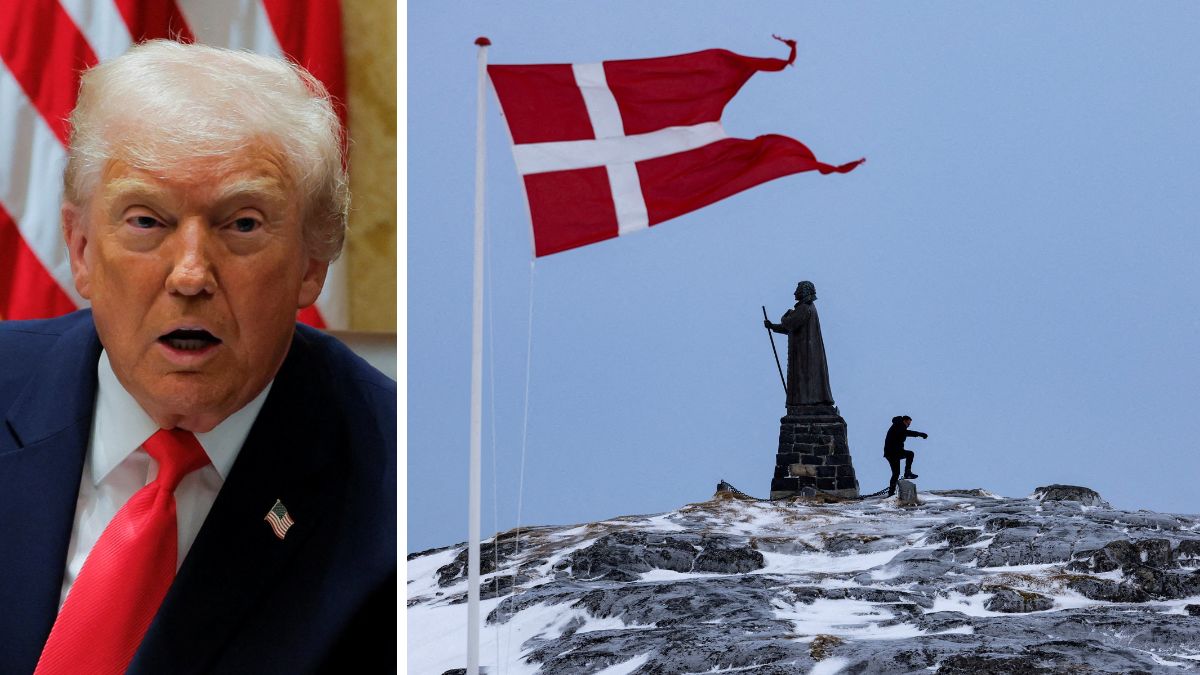
President Donald Trump announced on Friday a deal with Denmark that would deepen the American presence in Greenland, ending, at least for now, a months-long campaign of diplomatic pressure and open talk of annexation. The Greenland Accord, as the pact is being called, is due to be signed on the sidelines of the United Nations General Assembly in New York. It is a security arrangement that Trump has claimed as a territorial triumph, but the gulf in how both parties interpret the deal could prove to be a tough challenge in the days to come.
The terms, as outlined by leaders in Washington, Copenhagen and Nuuk, rest on four pillars. Non-NATO states, Russia and China above all, would be barred from establishing bases, stationing personnel or deploying troops on the island. No non-NATO entity could invest in sensitive infrastructure or strategic economic sectors without written American approval. American officials say the deal also grants permanent access, basing and overflight rights, including the freedom to build additional structures in support of projects such as the proposed Golden Dome missile shield. The fourth pillar, set out in a joint statement, upholds Danish sovereignty and Greenland's self-government and rejects purchase or annexation outright.
That last point could turn out to be a sticking point. Trump says the deal delivers 'permanent control over security, and all other needs, in Greenland' at 'no cost to the United States'. Danish Prime Minister Mette Frederiksen and her Greenlandic counterpart Jens-Frederik Nielsen stress instead that the agreement respects the territorial integrity of the Kingdom of Denmark and the right of Greenlanders to self-determination. Both positions cannot be correct at the same time. The drafting appears designed to let each side keep its own.
The strategic logic is clear, though. Melting sea ice is opening new shipping routes and exposing mineral wealth, while the island sits between North America and Russia, a natural location for missile defence, polar tracking and early-warning radar. Washington has been present there since World War II under a 1951 defence treaty that produced what is now Pituffik Space Base and gave American forces wide latitude to station troops, build facilities and overfly Greenlandic airspace.
The new agreement adds a ban on American adversaries and their investments. The basing rights look more like a reiteration, relabelled for political effect.
How the deal came about matters as much as its contents. During his second term, Trump repeatedly argued that America needed to 'acquire' or 'take' Greenland for defence and mineral security. Denmark set up a foreign ministry 'night watch' to track White House announcements while the Nordic capitals slept. Trump threatened to withdraw American troops from Europe when allies pushed back. Polling suggests 85 per cent of Greenlanders oppose joining the United States, a figure no accord can be expected to move.
For Denmark and NATO, a structured security agreement is preferable to a rupture in the alliance, and it leaves Danish borders intact. The mineral safeguards carry weight of their own, since keeping strategic rivals away from Greenland's rare earths and critical raw materials answers a concern Washington has voiced from the outset.
However, an agreement reached under threats of annexation and troop withdrawal sets an uncomfortable precedent inside NATO, suggesting that pressure works even against long-standing allies. Ratification in Denmark and Greenland is still to come, and any attempt to build new facilities without local concurrence could trigger legal and political clashes that the joint statement's careful language will struggle to contain.
Washington has secured rights it largely held already, and Copenhagen has kept a sovereignty it never lost.
